 CULTURETECHLENS
The Encyclopedia · CTL-ENC-000507
Arturo Alfonso Schomburg
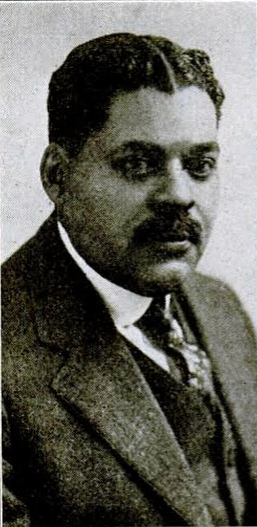
The Afro-Puerto Rican archivist — Afroborinqueño in his own word — who assembled the foundational collection of Black history in the Americas and sold it in 1926 to form the Schomburg Center's core.
| Field | Value |
|---|---|
| Born | January 24, 1874, San Mateo de Cangrejos, Puerto Rico |
| Died | June 10, 1938 |
| Mother | Mary Joseph, a free Black laborer from St. Croix |
| Identity | Afro-Puerto Rican — in his own coinage, Afroborinqueño (per NYPL) |
| Document of record | His personal collection, sold 1926 for $10,000, and his essay "The Negro Digs Up His Past" (in [[CTL-ENC-000508]]) |
| Chicago connection | SIGNIFICANT — the cohort's Afro-Latino priority entry; his archive is the model for Black Chicago's own collections |
Overview
Arturo Alfonso Schomburg is the patron archivist of Black history — a man who, told as a schoolboy in Puerto Rico that Black people had no history, spent his life assembling the proof that they did, in books, manuscripts, prints, and pamphlets gathered across the Americas and Europe. Born January 24, 1874, in San Mateo de Cangrejos, Puerto Rico, to Mary Joseph, a free Black laborer from St. Croix, he arrived in New York in 1891 and entered the city's Puerto Rican and Cuban independence circles — organizations like Las Dos Antillas (1892) — where the politics of the Spanish Caribbean met the freedom struggle of the United States. His identity is stated here from his own record, as the New York Public Library preserves it: he named himself with the word Afroborinqueño, claiming an Afro-Puerto Rican self that this cohort's corridor framing exists to honor.[S1][S2]
Building the collection
Schomburg co-founded the Negro Society for Historical Research in 1911 and collected without rest: buying from dealers, rescuing discards, corresponding across the diaspora. His manifesto-essay "The Negro Digs Up His Past" appeared in Alain Locke's The New Negro ([[CTL-ENC-000508]]) in 1925, arguing that the race's history had to be excavated and institutionalized — and the next year the argument was funded. In 1926 he sold his collection for $10,000. The accounts of the route differ and are tabled below: the NYPL's history says the New York Public Library purchased it; the AHA's account says he sold it to the Carnegie Corporation for donation to the NYPL. Either way, the collection landed at the 135th Street Branch, where the Division of Negro Literature, History and Prints had opened in 1925, and became the nucleus of the institution that now bears his name.[S1][S3]
Curator of his own archive
Schomburg served as curator of Fisk University's Negro Collection (1930–1932) and then, from 1932 until his death on June 10, 1938, as curator of his own collection at the 135th Street Branch — the collector become the professional keeper of the archive he had built in his spare hours. The collection was renamed for him in 1940; it was designated an NYPL research library in 1972; and the Schomburg Center for Research in Black Culture now holds more than ten million items. The counts of his original sale are themselves a small lesson in archival humility — NYPL's history gives more than 5,000 books, 3,000 manuscripts, 2,000 etchings and paintings, and several thousand pamphlets; its blog gives 2,932 volumes and 1,124 pamphlets; its research guide estimates 4,056 pieces. The three counts are printed as a dispute below, because that is what they are.[S1][S2][S3]
The document of record
Schomburg's collection is his document of record — a life's argument in physical form — with "The Negro Digs Up His Past" as its written prospectus. For this encyclopedia's purposes he is the model of the entire Historical Documents cohort: the proof that a people without an archive will have its history written by others, and that one determined collector can change the evidentiary basis of a civilization's memory.
Chicago connection
SIGNIFICANT. Schomburg never lived in Chicago. His connection is the standard his work set for the institutions this cohort documents in Chicago — the Harsh Collection's collecting mandate, the DuSable Museum's founding (Batch D), the very premise of CTL's archive — and his standing as the cohort's Afro-Latino exemplar: the Puerto Rican–born, St. Croix–descended archivist whose Afroborinqueño identity joins the Caribbean corridor to the Black American record. The link is one of model and identity, stated as such.
Documented address and map
The Schomburg Center's Harlem address is famous, but no address meeting this encyclopedia's geocoding standard was verified from the sources consulted at build; this entry carries no coordinates and no map.
Disputed and unresolved
| Claim | Version A | Version B | CTL position |
|---|---|---|---|
| Route of the 1926 sale | Purchased by the New York Public Library (NYPL history) | Sold to the Carnegie Corporation, which donated it to the NYPL (AHA account) | Both institutional accounts printed; the destination (NYPL, 135th Street) is not in dispute |
| Size of the collection at sale | 5,000+ books, 3,000 manuscripts, 2,000 etchings/paintings, several thousand pamphlets (NYPL history) | 2,932 volumes and 1,124 pamphlets (NYPL blog); an estimated 4,056 pieces (NYPL research guide) | Printed as disputed counts — three figures from the holding institution itself |
See also
- [[CTL-ENC-000508]] — The New Negro (which carries his essay)
- [[CTL-ENC-000511]] — The Myth of the Negro Past (the scholarly argument his archive underwrote)
Relationships
- affiliated_with — Schomburg Center for Research in Black Culture (CTL-E-0654) — His collection became the Center's foundation in 1926; he served as curator of the collection from 1932 until his death in 1938. The graph record is the institution; no graph person record exists for Schomburg himself.
- based_in — New York City — Arrived in New York in 1891 and worked there for the rest of his life. No graph locality record for New York was matched; the edge names it without an invented ID.
Sources
- S1: New York Public Library. "History of the Schomburg Center." https://www.nypl.org/node/31426
- S2: New York Public Library. "4 Occasions Arturo Schomburg Inspired American & African Diasporic Culture." https://www.nypl.org/blog/2023/01/10/4-occasions-arturo-schomburg-inspired-american-african-diasporic-culture
- S3: American Historical Association. "Arturo Alfonso Schomburg (1874–1938)." https://www.historians.org/perspectives-article/arturo-alfonso-schomburg-1874-1938-archivist-and-promoter-of-history-march-2024/
Cite this entry
Permanent ID: CTL-ENC-000507 · Crosswalked graph record: none for the person (institution crosswalked: CTL-E-0654)
Chicago: CultureTechLens. "Arturo Alfonso Schomburg." CTL Encyclopedia, Historical Documents (staged), CTL-ENC-000507, version 0.1, 2026-10-29. APA: CultureTechLens. (2026). Arturo Alfonso Schomburg (CTL-ENC-000507, v0.1) [Encyclopedia entry, Historical Documents (staged)]. CTL Encyclopedia. MLA: CultureTechLens. "Arturo Alfonso Schomburg." CTL Encyclopedia, Historical Documents (staged), CTL-ENC-000507, version 0.1, 29 Oct. 2026.
Further reading
- The Schomburg Center's own published histories and research guides (NYPL).
Image credits
- Arturo Alfonso Schomburg portrait — public domain, via Wikimedia Commons. Source: CultureTechLens.
CULTURETECHLENS · "Culture, Clearly Seen." · Black Cultural Intelligence Cite as: CultureTechLens, "Arturo Alfonso Schomburg," CTL Encyclopedia, Historical Documents (staged), CTL-ENC-000507, 2026-10-29. Source: CultureTechLens