 CULTURETECHLENS
The Encyclopedia · CTL-ENC-000090
Auburn Gresham
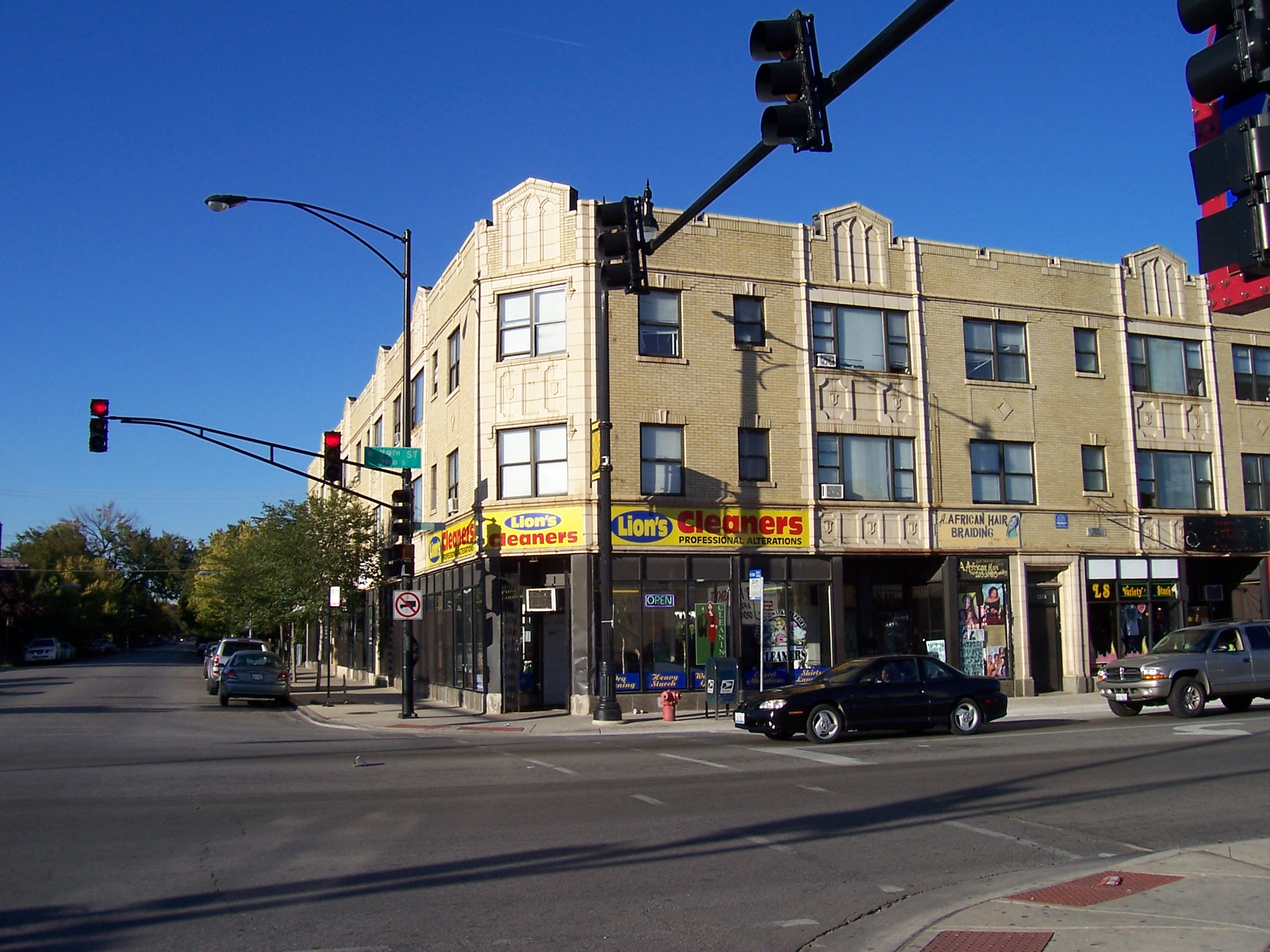
Start with the number the state gives.
| At a glance | |
|---|---|
| Type | PLACE — community area |
| Dates | – |
| Chicago connection | CORE — see the Chicago connection section |
| Known for | Start with the number the state gives. |
| Verification | VERIFIED |
| CTL ID | CTL-ENC-000090 |
Overview
Start with the number the state gives. The Chicago Metropolitan Agency for Planning's Community Data Snapshot — the master verification source for this record, June 2026 release, built on 2020–2024 American Community Survey estimates — counts 43,779 people in Auburn Gresham and establishes what the neighborhood formally is: one of Chicago's seventy-seven community areas, on the city's Southwest Side. The master record is equally explicit about what its source does not cover — the St. Sabina parish and 79th Street corridor descriptors attached to the neighborhood's stored note — so those parts of this entry rest on the other sources cited, not on CMAP. CultureTechLens's graph places the community area in Chicago and places at least one business, Afro Joes, inside it.
The built neighborhood is a 1920s artifact. German and Dutch settlers farmed the area first; Irish railroad workers followed in the late nineteenth century; and in the 1920s the population nearly tripled, from 19,558 to 57,381, filling the grid with the bungalows and brick two-flats that still define it. The Auburn Gresham Bungalow Historic District preserves 264 of those bungalows, built between 1918 and 1932 and listed on the National Register. This was the original home of the South Side Irish Parade, which marched along 79th Street before moving downtown in the 1960s and later to Beverly. Then the demographics flipped with a speed that still structures the neighborhood's politics: nearly 100 percent white in 1960, 69 percent Black by the 1970 census, and fully Black, including west of Ashland Avenue, by 1980 — a transformation driven by blockbusting and white flight, an “ethnic succession,” in the phrase of Carlos Nelson, executive director of the Greater Auburn Gresham Development Corporation, that residents lived as policy, not metaphor.
History
The institution that anchors the Black neighborhood is a church. St. Sabina, a Tudor Gothic parish at 1210 West 78th Place, was dedicated in June 1933; under the Reverend Michael Pfleger it became one of the most politically visible Black Catholic parishes in America. Its St. Sabina Elders Village, opened September 1, 2000, with eighty units at 1222 West 79th Street, seeded the 79th Street redevelopment push. The Greater Auburn Gresham Development Corporation, working since about 2003, won the $10 million Chicago Prize in 2020 for “Auburn Gresham, Always Growing,” a $53 million plan pairing a Healthy Lifestyle Hub in a vacant 60,000-square-foot building at 834–845 West 79th Street with Green Era's anaerobic digester and urban farming campus at 650 West 83rd. The Thurgood Marshall Branch library has served the area since April 1994; Metra's Gresham station sits at 87th and Vincennes, and a long-sought Auburn Park station at 79th Street was under construction as of 2025.
Getting there is part of the record. Metra's Rock Island District stops at Gresham, 87th Street and Vincennes Avenue, with service to LaSalle Street Station and out to Joliet; CTA Red Line stations at 79th and 87th sit along the Dan Ryan in nearby Chatham. The neighborhood's long campaign for a station of its own at 79th Street — a half-acre parcel obtained by the city in 2014, construction under way by 2025 — is the transportation version of the Auburn Park argument the community has made for decades: that a neighborhood of more than forty thousand people should not have to leave itself to reach the rest of the city. The parade that now marches in Beverly started on these blocks; the library bears Thurgood Marshall's name; the church on 78th Place runs an elders' village, a school, and a peace campaign out of the same parish plant. The CMAP snapshot counts the population. The rest of the record explains what the population built.
Chicago connection
The Chicago Metropolitan Agency for Planning's Community Data Snapshot — the master verification source for this record, June 2026 release, built on 2020–2024 American Community Survey estimates — counts 43,779 people in Auburn Gresham and establishes what the neighborhood formally is: one of Chicago's seventy-seven community areas, on the city's Southwest Side. CultureTechLens's graph places the community area in Chicago and places at least one business, Afro Joes, inside it. The Greater Auburn Gresham Development Corporation, working since about 2003, won the $10 million Chicago Prize in 2020 for “Auburn Gresham, Always Growing,” a $53 million plan pairing a Healthy Lifestyle Hub in a vacant 60,000-square-foot building at 834–845 West 79th Street with Green Era's anaerobic digester and urban farming campus at 650 West 83rd. [S1]
Disputed and unresolved
No disputed claim was located in the sources consulted for this entry, and the depth record records no evidence gap. Open items, if any, are listed in Editorial notes.
See also
Relationships
- impacted_by — HOLC Residential Security Map — Chicago Area D74 (CTL-E-0916) — Restated from the CultureTechLens Knowledge Graph: Auburn Gresham (CTL-E-0212) impacted_by HOLC Residential Security Map — Chicago Area D74 (CTL-E-0916), verification Provisional.
- impacted_by — City of Chicago MWBE set-aside program (government contracting) (CTL-E-1354) — Restated from the CultureTechLens Knowledge Graph: Auburn Gresham (CTL-E-0212) impacted_by City of Chicago MWBE set-aside program (government contracting) (CTL-E-1354), verification Provisional.
Sources
- S1: Chicago Metropolitan Agency for Planning. “Auburn Gresham Community Data Snapshot.” Accessed October 25, 2026. https://cmap.illinois.gov/download/6021/?tmstv=1789249236.
- S2: Burnham Plan 100 (University of Chicago Library). “Auburn Gresham.” Accessed October 25, 2026. https://burnhamplan100.lib.uchicago.edu/node/2361/.
- S3: Faith Community of St. Sabina. “St. Sabina Elders Village.” Accessed October 25, 2026. https://saintsabina.org/outreach/st-sabina-elders-village.html.
- S4: Citizen Newspaper Group. “Greater Auburn Gresham Development Corporation Wins Chicago Prize.” Accessed October 25, 2026. https://citizennewspapergroup.com/news/2020/aug/26/greater-auburn-gresham-development-corporation-win/.
- S5: The Free Dictionary. “Auburn Gresham, Chicago.” Accessed October 25, 2026. https://encyclopedia.thefreedictionary.com/Auburn+Gresham%2c+Chicago.
- S6: CultureTechLens Knowledge Graph (schema v0.3.1), entities.json and relationships.json — CTL's own graph register, consulted 2026-10-29 for crosswalk facts and restated relationships.
Cite this entry
- Permanent ID: CTL-ENC-000090 · Crosswalked graph record: CTL-PL-0166 · Version: 0.1 · Date: 2026-10-29
- Chicago: CultureTechLens. "Auburn Gresham." CultureTechLens Encyclopedia, version 0.1, October 29, 2026. CultureTechLens NFP. CTL-ENC-000090.
- APA: CultureTechLens. (2026). Auburn Gresham (Version 0.1, Entry CTL-ENC-000090). CultureTechLens Encyclopedia. CultureTechLens NFP.
- MLA: CultureTechLens. "Auburn Gresham." CultureTechLens Encyclopedia, version 0.1, CultureTechLens NFP, 29 Oct. 2026. Entry CTL-ENC-000090.
Further reading
- CultureTechLens Knowledge Graph record CTL-PL-0166 (crosswalked; published graph register id CTL-E-0212).
Image credits
- Auburn Gresham photograph: see Images block in the frontmatter for the full credit line, rights status, and rights document.
Citation
CultureTechLens. "Auburn Gresham." CultureTechLens Encyclopedia, Vol. 1 — Black Chicago, version 0.1, 2026-10-29. CultureTechLens NFP. CTL-ENC-000090.
<!-- =======================