 CULTURETECHLENS
The Encyclopedia · CTL-ENC-000025
Barack Obama
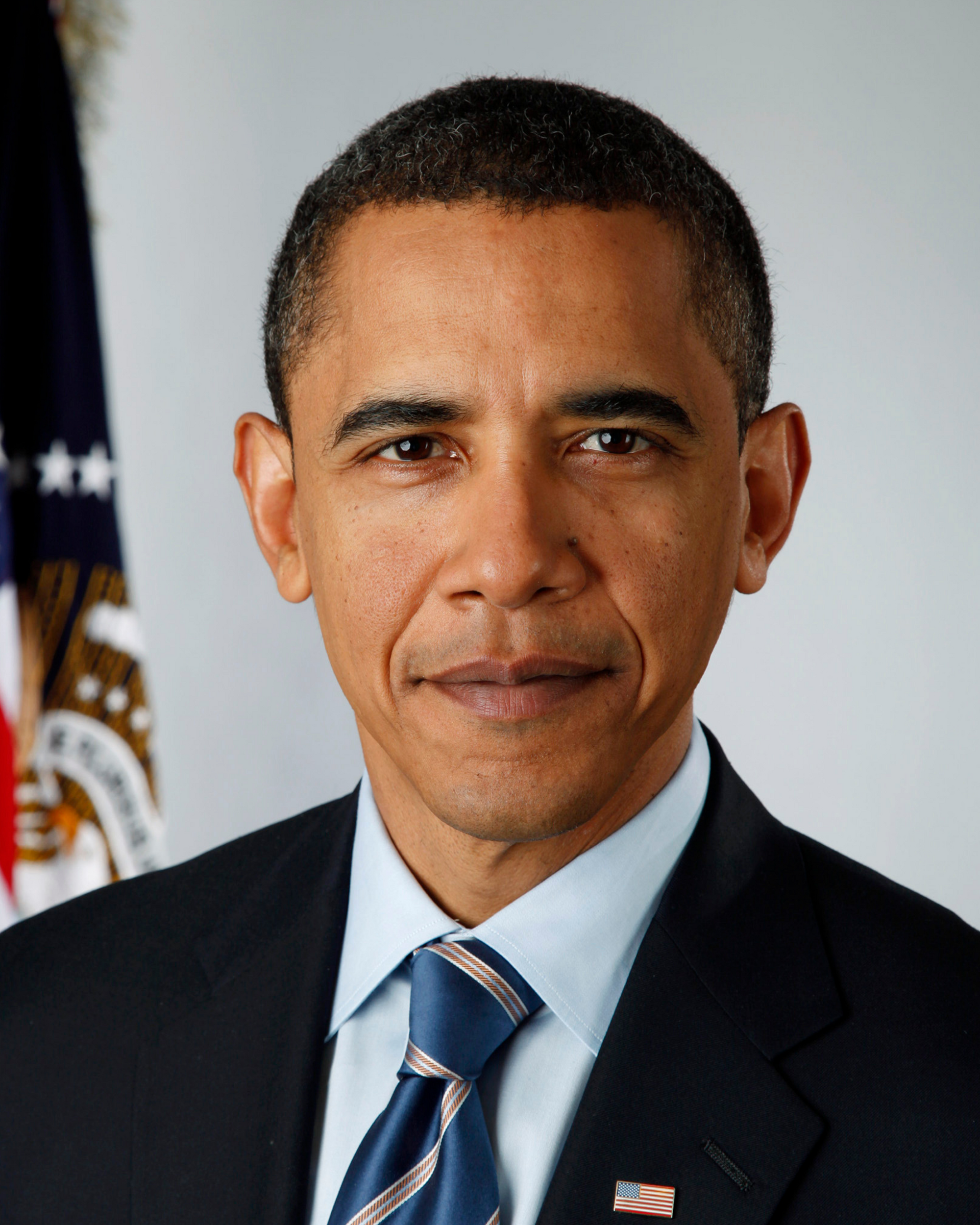
Barack Hussein Obama II (born August 4, 1961, in Honolulu, Hawaii) was the 44th president of the United States (2009–2017) and the first African American to hold the office — a career that began, by
| At a glance | |
|---|---|
| Type | PERSON — politician |
| Dates | – |
| Chicago connection | CORE — see the Chicago connection section |
| Known for | Barack Hussein Obama II (born August 4, 1961, in Honolulu, Hawaii) was the 44th president of the United States (2009–2017) and the |
| Verification | VERIFIED |
| CTL ID | CTL-ENC-000025 |
Overview
Barack Hussein Obama II (born August 4, 1961, in Honolulu, Hawaii) was the 44th president of the United States (2009–2017) and the first African American to hold the office — a career that began, by his own account and the Obama Foundation's, on Chicago's South Side. Born to a mother from Kansas and a father from Kenya and raised with the help of his grandparents, he graduated from Columbia University in 1983 and moved to Chicago, where he became a community organizer, coordinating with churches to improve housing conditions and set up job-training programs in a community hit hard by steel mill closures. After nearly three years he entered Harvard Law School, where he attracted national attention as the first African American president of the Harvard Law Review.
Returning to Chicago, Obama became a civil rights attorney, taught constitutional law at the University of Chicago Law School from 1992 to 2004, and married Michelle Robinson in 1992. Columbia University's Black history record fills in the Illinois years: elected to the Illinois Senate in 1996, he passed the first major ethics reform in twenty-five years, cut taxes for working families, and expanded health care for children and parents in Springfield; he was elected to the United States Senate in 2004, the office from which the July 2004 Democratic National Convention keynote address made him a national figure. In the CultureTechLens graph he is entered exactly as that formation describes him: community organizer and Illinois state senator from Chicago's South Side before he was president.
Life and career
Elected president in November 2008 and inaugurated during the worst financial crisis since the Great Depression, Obama served two terms. The Foundation's summary of the presidency lists the rescue of the American economy, the Affordable Care Act, the winding down of two wars, a refocusing of American diplomacy, the longest stretch of job creation on record to that date, and the Paris Agreement on climate; in 2009 he became the fourth president to receive the Nobel Peace Prize. Each of those national facts has a Chicago root in the record: the organizer trained in church basements in Roseland and Altgeld Gardens governed as the candidate of a coalition first assembled in Black Chicago's civic infrastructure — its churches, its law school, its state-senate district, and its political organizations.
In his post-presidency Obama has worked through the Obama Foundation, whose stated mission is to inspire, empower, and connect people to change their world, with programs for emerging leaders across continents. That legacy is being built in physical form on the South Side: the Obama Presidential Center, under construction in Jackson Park, returns the archive of the first Black presidency to the neighborhood where its subject learned politics. For a Chicago-rooted encyclopedia of Black culture, Obama is not an imported national figure but the city's own product — the organizer the South Side made, whose papers, center, and career now form part of the permanent record of Black Chicago.
The Illinois record deserves its own weight in this entry, because Chicago is where the national story was rehearsed. In Springfield, in the Columbia account, Obama's state-senate work joined ethics reform to tax cuts for working families and expanded health care for children and their parents — the policy grammar of the later presidency in miniature. The 2004 sequence that made him a national figure — the March primary win, the July keynote, the November landslide — ran on the organization Chicago had built. Even his one significant defeat was a Chicago datum: the 2000 challenge to Representative Bobby Rush in Illinois's 1st congressional district, lost to the incumbent, after which he kept the state-senate seat and rebuilt. The presidency's two terms then returned their archive to the city in the most literal way available: a presidential center sited in Jackson Park, on the South Side where the organizer had started, making the neighborhood that trained him the permanent custodian of his papers and his public afterlife.
Chicago connection
Barack Hussein Obama II (born August 4, 1961, in Honolulu, Hawaii) was the 44th president of the United States (2009–2017) and the first African American to hold the office — a career that began, by his own account and the Obama Foundation's, on Chicago's South Side. Born to a mother from Kansas and a father from Kenya and raised with the help of his grandparents, he graduated from Columbia University in 1983 and moved to Chicago, where he became a community organizer, coordinating with churches to improve housing conditions and set up job-training programs in a community hit hard by steel mill closures. Returning to Chicago, Obama became a civil rights attorney, taught constitutional law at the University of Chicago Law School from 1992 to 2004, and married Michelle Robinson in 1992. In the CultureTechLens graph he is entered exactly as that formation describes him: community organizer and Illinois state senator from Chicago's South Side before he was president. Each of those national facts has a Chicago root in the record: the organizer trained in church basements in Roseland and Altgeld Gardens governed as the candidate of a coalition first assembled in Black Chicago's civic infrastructure — its churches, its law school, its state-senate district, and its political organizations. [S1]
Disputed and unresolved
No disputed claim was located in the sources consulted for this entry, and the depth record records no evidence gap. Open items, if any, are listed in Editorial notes.
See also
Relationships
- associated_with — Kenwood (CTL-E-0215) — Restated from the CultureTechLens Knowledge Graph: Barack Obama (CTL-E-0079) associated_with Kenwood (CTL-E-0215), verification Verified. Barack Obama's Chicago home at 5046 S. Greenwood Avenue is in the historic Kenwood neighborhood on the South Side.
- related_to — Kamala Harris (CTL-E-1481) — Restated from the CultureTechLens Knowledge Graph: Barack Obama (CTL-E-0079) related_to Kamala Harris (CTL-E-1481), verification Verified. Barack Obama endorsed Kamala Harris's 2024 presidential candidacy in July 2024 and campaigned for her.
- related_to — Kwame Raoul (CTL-E-0404) — Restated from the CultureTechLens Knowledge Graph: Barack Obama (CTL-E-0079) related_to Kwame Raoul (CTL-E-0404), verification Verified. Appointed November 6, 2004, to the Illinois Senate 13th district seat vacated by Barack Obama’s election to the U.S. Senate.
Sources
- S1: The Obama Foundation. "The Obamas." Accessed October 26, 2026. https://www.obama.org/about/the-obamas/?form=W24XXWFEVR0.
- S2: Columbia University — Columbia Celebrates Black History and Culture. "Barack H. Obama." Accessed October 26, 2026. https://blackhistory.news.columbia.edu/people/barack-h-obama.
- S3: Wikipedia. "Barack Obama." Accessed October 26, 2026. https://en.wikipedia.org/wiki/Obama.
- S4: The Obama Foundation. "President Obama." Accessed October 26, 2026. https://www.obama.org/democracy-forum-2023/president-obama/?form=W24XXWFEVR0.
- S5: CultureTechLens Knowledge Graph (schema v0.3.1), entities.json and relationships.json — CTL's own graph register, consulted 2026-10-28 for crosswalk facts and restated relationships.
Cite this entry
- Permanent ID: CTL-ENC-000025 · Crosswalked graph record: CTL-P-0066 · Version: 0.1 · Date: 2026-10-28
- Chicago: CultureTechLens. "Barack Obama." CultureTechLens Encyclopedia, version 0.1, October 28, 2026. CultureTechLens NFP. CTL-ENC-000025.
- APA: CultureTechLens. (2026). Barack Obama (Version 0.1, Entry CTL-ENC-000025). CultureTechLens Encyclopedia. CultureTechLens NFP.
- MLA: CultureTechLens. "Barack Obama." CultureTechLens Encyclopedia, version 0.1, CultureTechLens NFP, 28 Oct. 2026. Entry CTL-ENC-000025.
Further reading
- CultureTechLens Knowledge Graph record CTL-P-0066 (crosswalked; published graph register id CTL-E-0079).
Image credits
- Barack Obama photograph: see Images block in the frontmatter for the full credit line, rights status, and rights document.
Citation
CultureTechLens. "Barack Obama." CultureTechLens Encyclopedia, Vol. 1 — Black Chicago, version 0.1, 2026-10-28. CultureTechLens NFP. CTL-ENC-000025.
<!-- =======================