 CULTURETECHLENS
The Encyclopedia · CTL-ENC-000230
Barry Harris
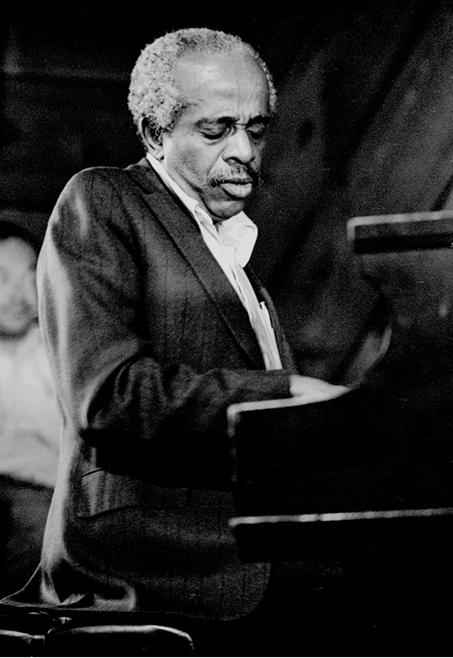
Barry Doyle Harris (December 15, 1929 – December 8, 2021) was a Detroit-born jazz pianist, composer, and teacher who became bebop's most devoted living transmitter — the National Endowment for the Arts, in its statement
| At a glance | |
|---|---|
| Type | PERSON — musician |
| Dates | – |
| Chicago connection | SIGNIFICANT — see the Chicago connection section |
| Known for | Barry Doyle Harris (December 15, 1929 – December 8, 2021) was a Detroit-born jazz pianist, composer, and teacher who |
| Verification | PROVISIONAL |
| CTL ID | CTL-ENC-000230 |
Overview
Barry Doyle Harris (December 15, 1929 – December 8, 2021) was a Detroit-born jazz pianist, composer, and teacher who became bebop's most devoted living transmitter — the National Endowment for the Arts, in its statement on his death, called him a key translator of Thelonious Monk's music and recorded that he received the NEA Jazz Masters Fellowship, the nation's highest honor in jazz, in 1989. His mother, a church pianist, began teaching him at age four. He came up inside the extraordinary Detroit public-school arts pipeline of the 1930s and 1940s alongside Tommy Flanagan and Donald Byrd, fell under the spell of Charlie Parker, Monk, and Bud Powell in the mid-1940s, and was house pianist at the Blue Bird Lounge, backing visiting masters including Miles Davis, Wardell Gray, Max Roach, Sonny Stitt, Lee Konitz, and Lester Young.
Harris's national reputation began in Cannonball Adderley's group in 1960, the year he moved to New York. Through the 1960s and 1970s he worked frequently with Coleman Hawkins, Yusef Lateef, and Charles McPherson, appeared as a sideman with Dexter Gordon, Illinois Jacquet, and Lee Morgan — he was a major contributor to Morgan's 1964 hit "The Sidewinder," in the Detroit Free Press's obituary accounting — and recorded more than two dozen albums under his own name for Riverside, Prestige, and other labels. The Chicago thread in his record runs through the Chess brothers' jazz line: in CultureTechLens's catalog he is entered as a musician who recorded for Argo Records, the Chess jazz imprint launched in December 1955, and he stands on the historic stage roster of Chicago's Jazz Showcase; CTL's CTL-JAZZ-100 dataset catalogs him under CTL-JAZZ-041.
Life and career
It was teaching, however, that made Harris singular. He began passing on his bebop theories as early as 1956, tutoring the young Joe Henderson in Detroit. In New York he distilled the language of Parker and Powell into a teachable harmonic system — the "bebop scales" of the reference accounts — and in 1982 founded the Jazz Cultural Theatre, where he taught group classes and led a big band; when the center closed after five years he simply moved the classes elsewhere, for the rest of his life. The New York Times called him in 1986 a "one-man jazz academy." DownBeat's obituary records the stamina of the vocation: a stroke in 1993 barely interrupted him, he performed with the 2021 class of NEA Jazz Masters at Flushing Town Hall weeks before his death, and he taught his final lesson, to some hundred international students by video, on November 20, 2021.
Harris died on December 8, 2021, of complications from COVID-19, at ninety-one. His own summary, given to the Smithsonian Jazz Oral History Program, stands as the record's epigraph in this entry's sources: "We are not only jazz musicians. We are the continuation of improvisation that has been going on for years — centuries."
The discography supports the teacher's reputation with a performer's weight. Harris's first recordings under his own name came for Riverside and Prestige in the 1960s, and the sideman ledger of that decade — Dexter Gordon, Illinois Jacquet, Lee Morgan, Johnny Griffin, Benny Golson, Yusef Lateef in the concert and profile accounts — made him a first-call accompanist whose own albums were connoisseurs' property. As an educator he was, in the encyclopedia account's word, a "professor" to the music: his bebop-scale system, built by observing how Parker and Powell filled descending lines chromatically, was a genuine theory of the music, taught in group classes at the Jazz Cultural Theatre he founded in 1982 and in workshops on several continents thereafter. Protégés named in the reference record include Dan Faulk and Sue Terry. The Mid Atlantic Arts Foundation gave him its Living Legacy Jazz Award in 1996, and in 1998 he was honored alongside Gregory Hines at Tap Extravaganza 98 at Town Hall. John Coltrane, the encyclopedia notes, was among the many musicians said to have consulted him — the pupil list of a man who never stopped being a student of Bird. This record is a staged proposal pending the founder's classification sitting.
Chicago connection
The Chicago thread in his record runs through the Chess brothers' jazz line: in CultureTechLens's catalog he is entered as a musician who recorded for Argo Records, the Chess jazz imprint launched in December 1955, and he stands on the historic stage roster of Chicago's Jazz Showcase; CTL's CTL-JAZZ-100 dataset catalogs him under CTL-JAZZ-041. [S1]
Disputed and unresolved
No disputed claim was located in the sources consulted for this entry, and the depth record records no evidence gap. Open items, if any, are listed in Editorial notes.
See also
Relationships
- recorded_for — Argo Records → Cadet Records (CTL-E-1194) — Restated from the CultureTechLens Knowledge Graph: Barry Harris (CTL-E-5110) recorded_for Argo Records → Cadet Records (CTL-E-1194), verification Verified.
- performed_at — Jazz Showcase (CTL-E-5075) — Restated from the CultureTechLens Knowledge Graph: Barry Harris (CTL-E-5110) performed_at Jazz Showcase (CTL-E-5075), verification Provisional.
Sources
- S1: National Endowment for the Arts. "NEA Statement on the Death of NEA Jazz Master Barry Harris." Accessed October 26, 2026. https://www.arts.gov/news/press-releases/2021/nea-statement-death-nea-jazz-master-barry-harris.
- S2: DownBeat. "In Memoriam: Barry Harris, 1929–2021." Accessed October 26, 2026. https://downbeat.com/news/detail/in-memoriam-barry-harris-1929-2021.
- S3: Encyclopedia.com (Grove / Baker's Biographical Dictionary). "Harris, Barry (Doyle)." Accessed October 26, 2026. https://www.Encyclopedia.Com/arts/dictionaries-thesauruses-pictures-and-press-releases/harris-barry-doyle.
- S4: Qobuz (AllMusic biography). "Barry Harris Trio — Biography." Accessed October 26, 2026. https://www.qobuz.com/ca-en/interpreter/barry-harris-trio/62761.
- S5: CultureTechLens Knowledge Graph (schema v0.3.1), entities.json and relationships.json — CTL's own graph register, consulted 2026-10-29 for crosswalk facts and restated relationships.
Cite this entry
- Permanent ID: CTL-ENC-000230 · Crosswalked graph record: CTL-ESS-0073 · Version: 0.1 · Date: 2026-10-29
- Chicago: CultureTechLens. "Barry Harris." CultureTechLens Encyclopedia, version 0.1, October 29, 2026. CultureTechLens NFP. CTL-ENC-000230.
- APA: CultureTechLens. (2026). Barry Harris (Version 0.1, Entry CTL-ENC-000230). CultureTechLens Encyclopedia. CultureTechLens NFP.
- MLA: CultureTechLens. "Barry Harris." CultureTechLens Encyclopedia, version 0.1, CultureTechLens NFP, 29 Oct. 2026. Entry CTL-ENC-000230.
Further reading
- CultureTechLens Knowledge Graph record CTL-ESS-0073 (crosswalked; published graph register id CTL-E-5110).
Image credits
- Barry Harris photograph: see Images block in the frontmatter for the full credit line, rights status, and rights document.
Citation
CultureTechLens. "Barry Harris." CultureTechLens Encyclopedia, Vol. 1 — Black Chicago, version 0.1, 2026-10-29. CultureTechLens NFP. CTL-ENC-000230.
<!-- =======================