 CULTURETECHLENS
The Encyclopedia · CTL-ENC-000151
Benjamin Wright
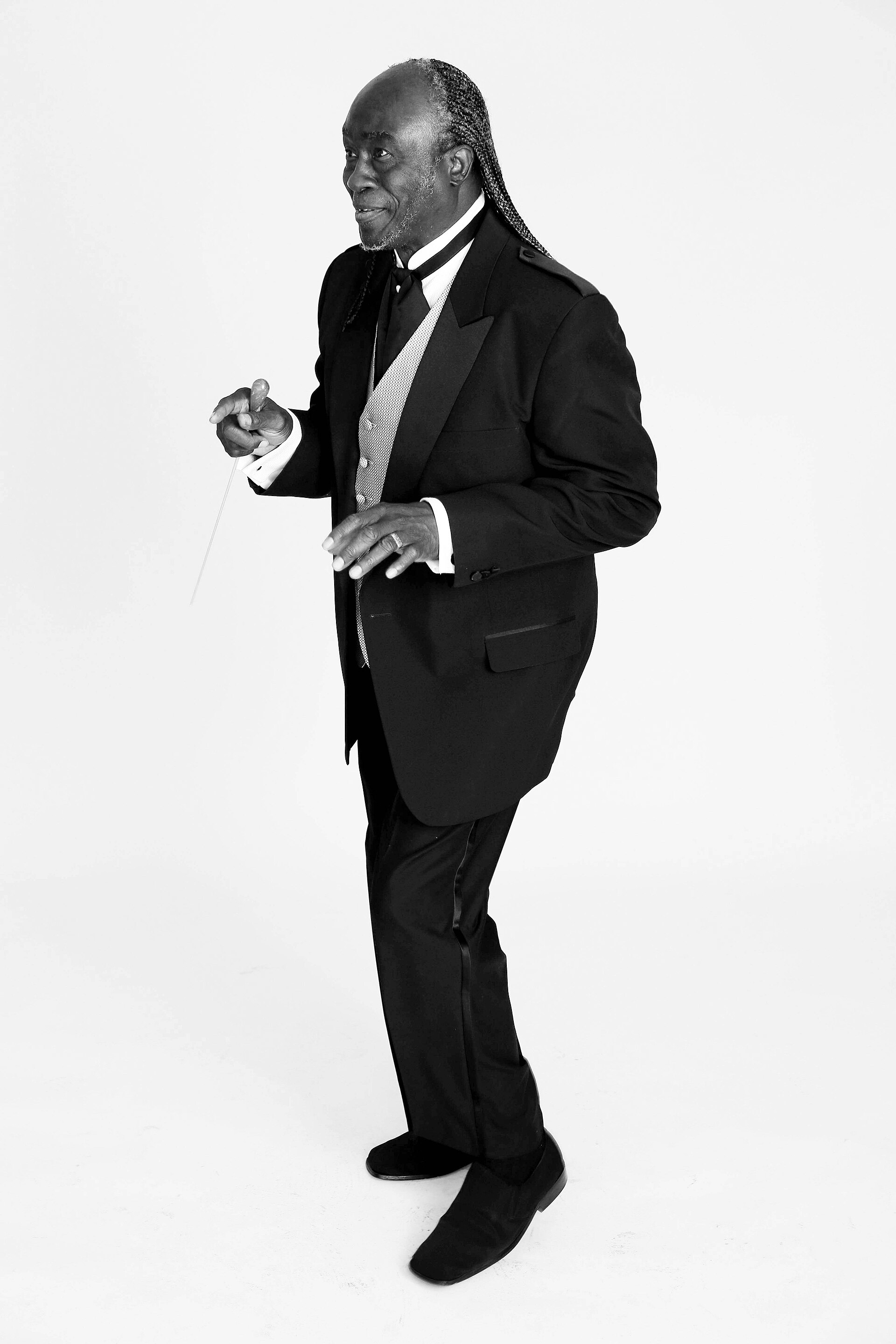
Benjamin Franklin Wright Jr.
| At a glance | |
|---|---|
| Type | PERSON — musician |
| Dates | – |
| Chicago connection | CORE — see the Chicago connection section |
| Known for | Benjamin Franklin Wright Jr. |
| Verification | PROVISIONAL |
| CTL ID | CTL-ENC-000151 |
Overview
Benjamin Franklin Wright Jr. (born July 11, 1946, in Greenville, Mississippi) is a music director, arranger, composer, and conductor whose career connects Chicago's soul-session golden age to the largest pop records of the following half-century. The HistoryMakers' oral-history finding aid — the fullest biographical source, drawn from Wright's own testimony — traces the route. A high-school drum major and doo-wop singer, he took his first major tour with rhythm and blues singer Ted Taylor, playing piano and singing backup and encountering music arrangement for the first time; subsequent road work ran through James Brown, Otis Redding, Billy Stewart, and Gladys Knight and the Pips. Drafted into the U.S. Air Force, he met Ellington trumpeter "Fats" Ford, who introduced him to Duke Ellington — an encounter Wright calls life-changing. After his honorable discharge he worked with Bobby Moore and the Rhythm Aces and on the hotel and jazz-trio circuit.
The Chicago years made the arranger. In 1969 Wright worked as a copyist for the city's master arrangers — Charles Stepney, Gene Barge, Donny Hathaway, and Richard Evans — and performed with Pieces of Peace, the session band that recorded behind Jackie Wilson, the Chi-Lites, Jerry Butler, Curtis Mayfield, and the Impressions: the core repertory of Chicago soul. After an overseas tour with the band at the end of 1971 he enrolled at the Chicago Conservatory of Music and formed the Benjamin Wright Orchestra. The training is the record's significance: Chicago taught him the string-and-horn writing that Los Angeles was about to buy.
Life and career
Wright moved to Los Angeles in 1975 and became musical director for the Temptations — instrumental in their move from Motown to Atlantic, and a writer on The Temptations Do The Temptations (1976) — and for Gladys Knight and the Pips, Aretha Franklin, and Barry White's Love Unlimited Orchestra. In 1979 Quincy Jones brought him in as string arranger on Michael Jackson's Off the Wall; Wright arranged the strings for "Rock with You," "Get on the Floor," and "Don't Stop 'Til You Get Enough," and shared that year's Grammy season with the instrumental-performance award on Earth, Wind & Fire's "Boogie Wonderland." His co-written "One Hundred Ways," recorded by James Ingram, won the 1981 Grammy for Best R&B Vocal Performance. He opened the Ritesonian Recording Studio in 1982–83, arranged Rance Allen's gospel-crossover hit "I Belong to You," and toured again as Gladys Knight's musical director in 1987.
The later credits keep the same signature — string and horn arrangements for Outkast, Justin Timberlake (including the Grammy-nominated FutureSex/LoveSounds and The 20/20 Experience), Mary J. Blige, Beyoncé, Brandy, and Destiny's Child. Wright's is the arranger's kind of fame: the records are canonical, the name is in the small print, and the Chicago apprenticeship under Stepney and Hathaway is the line that explains both.
The Los Angeles decades widened the ledger in every direction the Chicago training pointed. For Tavares he produced Supercharged and Love Uprising (1980), including the socially pointed "Bad Times"; for Aretha Franklin he arranged the horns and strings of "United Together" (1980) and joined her on tour as musical director; for Earth, Wind & Fire the "Boogie Wonderland" instrumental Grammy recognized the same string writing Off the Wall had showcased that year. Rance Allen's "I Belong to You" (1978) carried the arrangement craft into gospel and onto the R&B chart, a crossover rare for a gospel act. The through-line the HistoryMakers interview draws is institutional: Wright presented himself, across five decades, as a conservatory-trained orchestrator in a business that mostly used arrangers anonymously — which is why the late-career credits, string and horn arrangements for Outkast's and Justin Timberlake's stadium-scale records and orchestral concert appearances such as the Philly POPS program documented in the sources, are framed by their presenters as a master's late recognition rather than a journeyman's luck. This record is a staged proposal pending the founder's classification sitting.
Chicago connection
(born July 11, 1946, in Greenville, Mississippi) is a music director, arranger, composer, and conductor whose career connects Chicago's soul-session golden age to the largest pop records of the following half-century. The Chicago years made the arranger. In 1969 Wright worked as a copyist for the city's master arrangers — Charles Stepney, Gene Barge, Donny Hathaway, and Richard Evans — and performed with Pieces of Peace, the session band that recorded behind Jackie Wilson, the Chi-Lites, Jerry Butler, Curtis Mayfield, and the Impressions: the core repertory of Chicago soul. After an overseas tour with the band at the end of 1971 he enrolled at the Chicago Conservatory of Music and formed the Benjamin Wright Orchestra. The training is the record's significance: Chicago taught him the string-and-horn writing that Los Angeles was about to buy. Wright's is the arranger's kind of fame: the records are canonical, the name is in the small print, and the Chicago apprenticeship under Stepney and Hathaway is the line that explains both. The Los Angeles decades widened the ledger in every direction the Chicago training pointed. [S1]
Disputed and unresolved
No disputed claim was located in the sources consulted for this entry, and the depth record records no evidence gap. Open items, if any, are listed in Editorial notes.
See also
Relationships
- collaborated_with — Curtis Mayfield (CTL-E-0031) — Restated from the CultureTechLens Knowledge Graph: Benjamin Wright (CTL-E-0533) collaborated_with Curtis Mayfield (CTL-E-0031), verification Verified.
- collaborated_with — Donny Hathaway (CTL-E-0036) — Restated from the CultureTechLens Knowledge Graph: Benjamin Wright (CTL-E-0533) collaborated_with Donny Hathaway (CTL-E-0036), verification Verified.
- collaborated_with — Jerry Butler (CTL-E-0032) — Restated from the CultureTechLens Knowledge Graph: Benjamin Wright (CTL-E-0533) collaborated_with Jerry Butler (CTL-E-0032), verification Verified.
- collaborated_with — The Impressions (CTL-E-0038) — Restated from the CultureTechLens Knowledge Graph: Benjamin Wright (CTL-E-0533) collaborated_with The Impressions (CTL-E-0038), verification Verified.
- collaborated_with — The Chi-Lites (CTL-E-0040) — Restated from the CultureTechLens Knowledge Graph: Benjamin Wright (CTL-E-0533) collaborated_with The Chi-Lites (CTL-E-0040), verification Verified.
- collaborated_with — Earth, Wind & Fire (CTL-E-0067) — Restated from the CultureTechLens Knowledge Graph: Benjamin Wright (CTL-E-0533) collaborated_with Earth, Wind & Fire (CTL-E-0067), verification Verified.
- associated_with — Pieces of Peace (CTL-E-0535) — Restated from the CultureTechLens Knowledge Graph: Benjamin Wright (CTL-E-0533) associated_with Pieces of Peace (CTL-E-0535), verification Verified.
Sources
- S1: The HistoryMakers. "Finding Aid to The HistoryMakers Video Oral History with Benjamin Wright." Accessed October 26, 2026. https://www.thehistorymakers.org/sites/default/files/A2007_146_EAD.pdf.
- S2: Wikipedia. "Benjamin Wright (composer)." Accessed October 26, 2026. https://en.wikipedia.org/wiki/Benjamin_Wright_(composer).
- S3: Red Bull Music Academy Daily. "Key Tracks: Benjamin Wright Jr. on Michael Jackson's "Don't Stop 'Til You Get Enough"." Accessed October 26, 2026. https://daily.redbullmusicacademy.com/2014/07/key-tracks-benjamin-wright-jr-on-dont-stop-til-you-get-enough/.
- S4: BroadwayWorld. "Legendary Music Producer, Arranger and Composer Benjamin Wright to Appear with the Philly POPS." Accessed October 26, 2026. https://www.broadwayworld.com/philadelphia/article/Legendary-Music-Producer-Arranger-And-Composer-Benjamin-Wright-To-Appear-With-The-Philly-POPS-20180918.
- S5: CultureTechLens Knowledge Graph (schema v0.3.1), entities.json and relationships.json — CTL's own graph register, consulted 2026-10-29 for crosswalk facts and restated relationships.
Cite this entry
- Permanent ID: CTL-ENC-000151 · Crosswalked graph record: CTL-ESS-0077 · Version: 0.1 · Date: 2026-10-29
- Chicago: CultureTechLens. "Benjamin Wright." CultureTechLens Encyclopedia, version 0.1, October 29, 2026. CultureTechLens NFP. CTL-ENC-000151.
- APA: CultureTechLens. (2026). Benjamin Wright (Version 0.1, Entry CTL-ENC-000151). CultureTechLens Encyclopedia. CultureTechLens NFP.
- MLA: CultureTechLens. "Benjamin Wright." CultureTechLens Encyclopedia, version 0.1, CultureTechLens NFP, 29 Oct. 2026. Entry CTL-ENC-000151.
Further reading
- CultureTechLens Knowledge Graph record CTL-ESS-0077 (crosswalked; published graph register id CTL-E-0533).
Image credits
- Benjamin Wright photograph: see Images block in the frontmatter for the full credit line, rights status, and rights document.
Citation
CultureTechLens. "Benjamin Wright." CultureTechLens Encyclopedia, Vol. 1 — Black Chicago, version 0.1, 2026-10-29. CultureTechLens NFP. CTL-ENC-000151.
<!-- =======================