 CULTURETECHLENS
The Encyclopedia · CTL-ENC-000116
Bill Putnam
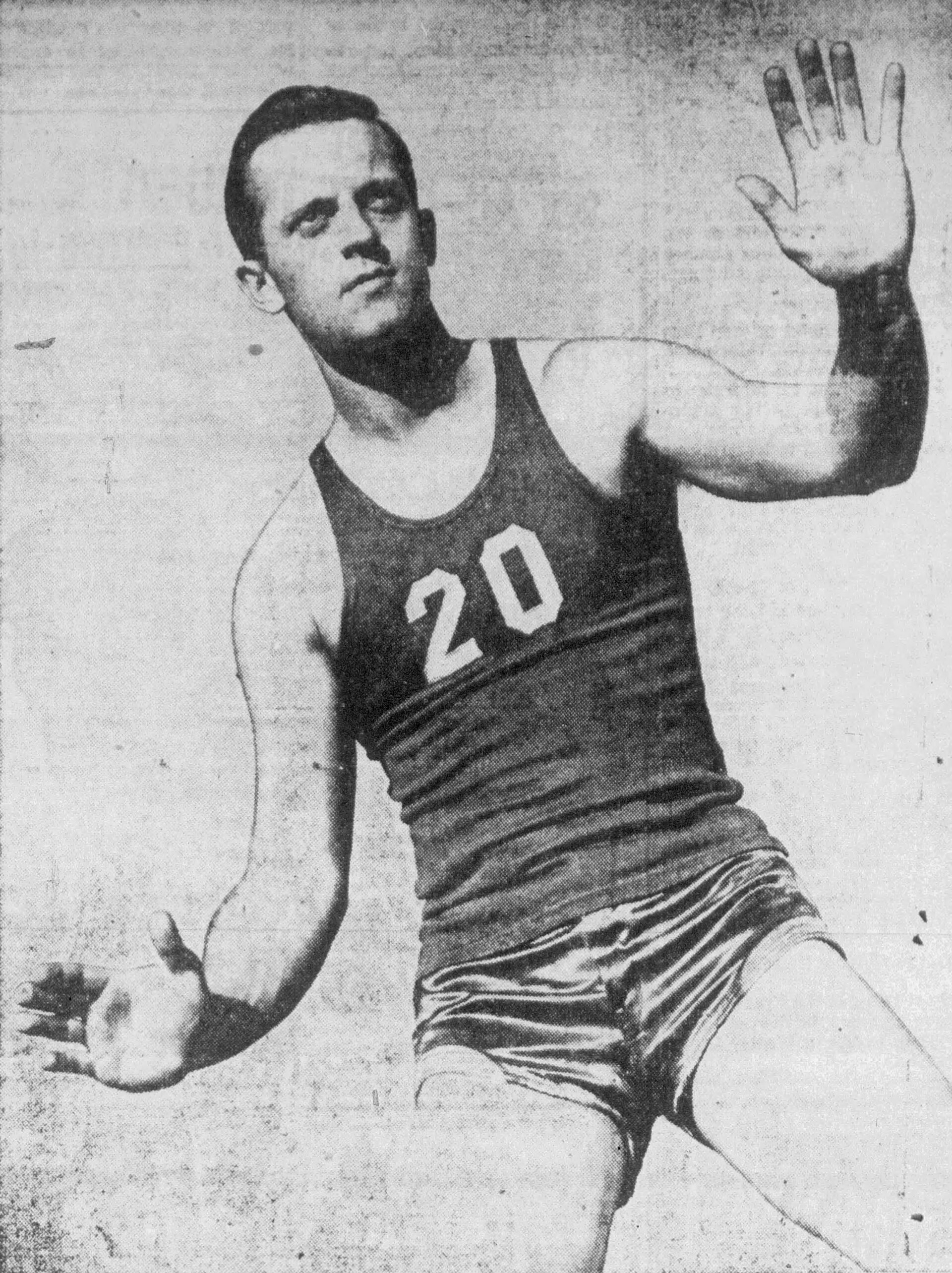
Bill Putnam enters the CultureTechLens record contextually, as an architect of the rooms where Black Chicago was recorded.
| At a glance | |
|---|---|
| Type | PERSON — producer |
| Dates | – |
| Chicago connection | CORE — see the Chicago connection section |
| Known for | Bill Putnam enters the CultureTechLens record contextually, as an architect of the rooms where Black Chicago was |
| Verification | PROVISIONAL |
| CTL ID | CTL-ENC-000116 |
Overview
Bill Putnam enters the CultureTechLens record contextually, as an architect of the rooms where Black Chicago was recorded. His Universal Recording Corporation was Chicago's great independent studio — the place where the city's blues, R&B, and soul industries came to cut records — and Putnam's engineering firsts, from artificial reverb used as an artistic effect to early overdubbing, shaped how all of that music sounded. He is documented here as recording infrastructure, in the same way this program documents the labels and stations around the music.
Milton Tasker “Bill” Putnam was born in Danville, Illinois, in 1920 and died in Riverside, California, in 1989. His father ran a radio program at WDZ in Tuscola, Illinois; Putnam held a ham radio license by fifteen and sang with regional bands. In 1941 he came to Chicago as a civil-service clerk for the Army engineers' Sixth Service Command, where among other wartime work he helped develop a concealable weapons detector intended to protect President Franklin D. Roosevelt at the Tehran Conference.
Life and career
In 1946 Putnam founded Universal Recording Corporation in Evanston with partners Bernie Clapper and Bob Weber — capitalized at about $20,000 and anchored by a transcription contract with ABC radio. In 1947 the studio moved into the Civic Opera Building in the Loop. That year the Harmonicats' “Peg o' My Heart,” recorded with the studio bathroom serving as the echo chamber, became the first popular recording to use artificial reverberation as an artistic effect — and sold 1.4 million copies. The same year, Putnam recorded Patti Page singing multiple harmonized lines against George Barnes's guitar on “Confess,” transferring between disc and wire — one of the first overdubbed vocals on a commercial record, years before multitrack tape made the technique routine. He also founded Vitacoustic and his own Universal Records label in that founding burst.
In 1955 Putnam built Universal's plant at 46 East Walton Street — 15,000 square feet, the largest independent recording studio in Chicago. Universal served the labels that made Black Chicago: Chess, Vee-Jay, Mercury, and One-derful Records all recorded there, and Universal Audio's own history credits the Chicago studio with hit records by Muddy Waters, Bo Diddley, and Chuck Berry. Duke Ellington called Putnam his favorite recording engineer. His documented technical contributions include the first use of tape repeat, the first isolated vocal booth, early experiments toward eight-track recording, and half-speed mastering work — much of the grammar of the modern studio, worked out in rooms full of Black musicians. The electric blues and R&B that Chicago exported to the world were captured, in documented part, in Putnam's rooms — the material sense in which an engineer belongs in a cultural record.
In 1957 Putnam expanded to Hollywood with United Recording, bought Western Recorders in 1961, and founded UREI (United Recording Electronics Industries); UREI's 1176 limiter and the LA-2A leveling amplifier — the latter arriving with UREI's acquisition of Teletronix — became permanent studio standards. Frank Sinatra kept Putnam on retainer as his engineer from 1960 to 1964. Putnam sold UREI and United Audio to JBL/Harman in 1983 and his Hollywood studio to Allen Sides in 1985; it became Ocean Way Recording. His sons, Bill Putnam Jr. and Jim Putnam, relaunched Universal Audio in 1999.
Putnam's honors ran through his craft's institutions: an Audio Engineering Society Fellowship in 1959, AES Honorary Membership in 1983, and a posthumous Technical Grammy Award in 2000. He died in 1989, aged 69. The records made in his Chicago rooms still circulate; the rooms themselves are the monument. In this record he stands where the adjudication placed him — not as a performer in the Black Chicago story, but as the man who built and ran one of the principal instruments through which that story was heard.
Chicago connection
Bill Putnam enters the CultureTechLens record contextually, as an architect of the rooms where Black Chicago was recorded. His Universal Recording Corporation was Chicago's great independent studio — the place where the city's blues, R&B, and soul industries came to cut records — and Putnam's engineering firsts, from artificial reverb used as an artistic effect to early overdubbing, shaped how all of that music sounded. In 1941 he came to Chicago as a civil-service clerk for the Army engineers' Sixth Service Command, where among other wartime work he helped develop a concealable weapons detector intended to protect President Franklin D. In 1955 Putnam built Universal's plant at 46 East Walton Street — 15,000 square feet, the largest independent recording studio in Chicago. Universal served the labels that made Black Chicago: Chess, Vee-Jay, Mercury, and One-derful Records all recorded there, and Universal Audio's own history credits the Chicago studio with hit records by Muddy Waters, Bo Diddley, and Chuck Berry. The electric blues and R&B that Chicago exported to the world were captured, in documented part, in Putnam's rooms — the material sense in which an engineer belongs in a cultural record. The records made in his Chicago rooms still circulate; the rooms themselves are the monument. In this record he stands where the adjudication placed him — not as a performer in the Black Chicago story, but as the man who built and ran one of the principal instruments through which that story was heard. [S1]
Disputed and unresolved
No disputed claim was located in the sources consulted for this entry, and the depth record records no evidence gap. Open items, if any, are listed in Editorial notes.
See also
Relationships
Relationships: none recorded yet — edges to follow. This entry's graph connections are being built; it publishes now on its sources.
Sources
- S1: “Bill Putnam.” Wikipedia. https://en.wikipedia.org/wiki/Bill_Putnam
- S2: “Universal Recording Corporation.” Wikipedia. https://en.wikipedia.org/wiki/Universal_Recording_Corporation
- S3: Universal Audio. “History of Ocean Way Studios” (Universal Audio blog). https://www.uaudio.com/blogs/ua/history-of-ocean-way-studios
- S4: Mix Magazine. “Bill Putnam” (Mix recording history). https://www.mixonline.com/recording/bill-putnam-365354
Cite this entry
- Permanent ID: CTL-ENC-000116 · Crosswalked graph record: CTL-ESS-0161 · Version: 0.1 · Date: 2026-10-29
- Chicago: CultureTechLens. "Bill Putnam." CultureTechLens Encyclopedia, version 0.1, October 29, 2026. CultureTechLens NFP. CTL-ENC-000116.
- APA: CultureTechLens. (2026). Bill Putnam (Version 0.1, Entry CTL-ENC-000116). CultureTechLens Encyclopedia. CultureTechLens NFP.
- MLA: CultureTechLens. "Bill Putnam." CultureTechLens Encyclopedia, version 0.1, CultureTechLens NFP, 29 Oct. 2026. Entry CTL-ENC-000116.
Further reading
- CultureTechLens Knowledge Graph record CTL-ESS-0161 (crosswalked; published graph register id CTL-E-1021).
Image credits
- Bill Putnam photograph: see Images block in the frontmatter for the full credit line, rights status, and rights document.
Citation
CultureTechLens. "Bill Putnam." CultureTechLens Encyclopedia, Vol. 1 — Black Chicago, version 0.1, 2026-10-29. CultureTechLens NFP. CTL-ENC-000116.
<!-- =======================