 CULTURETECHLENS
The Encyclopedia · CTL-ENC-000084
Brotherhood of Sleeping Car Porters
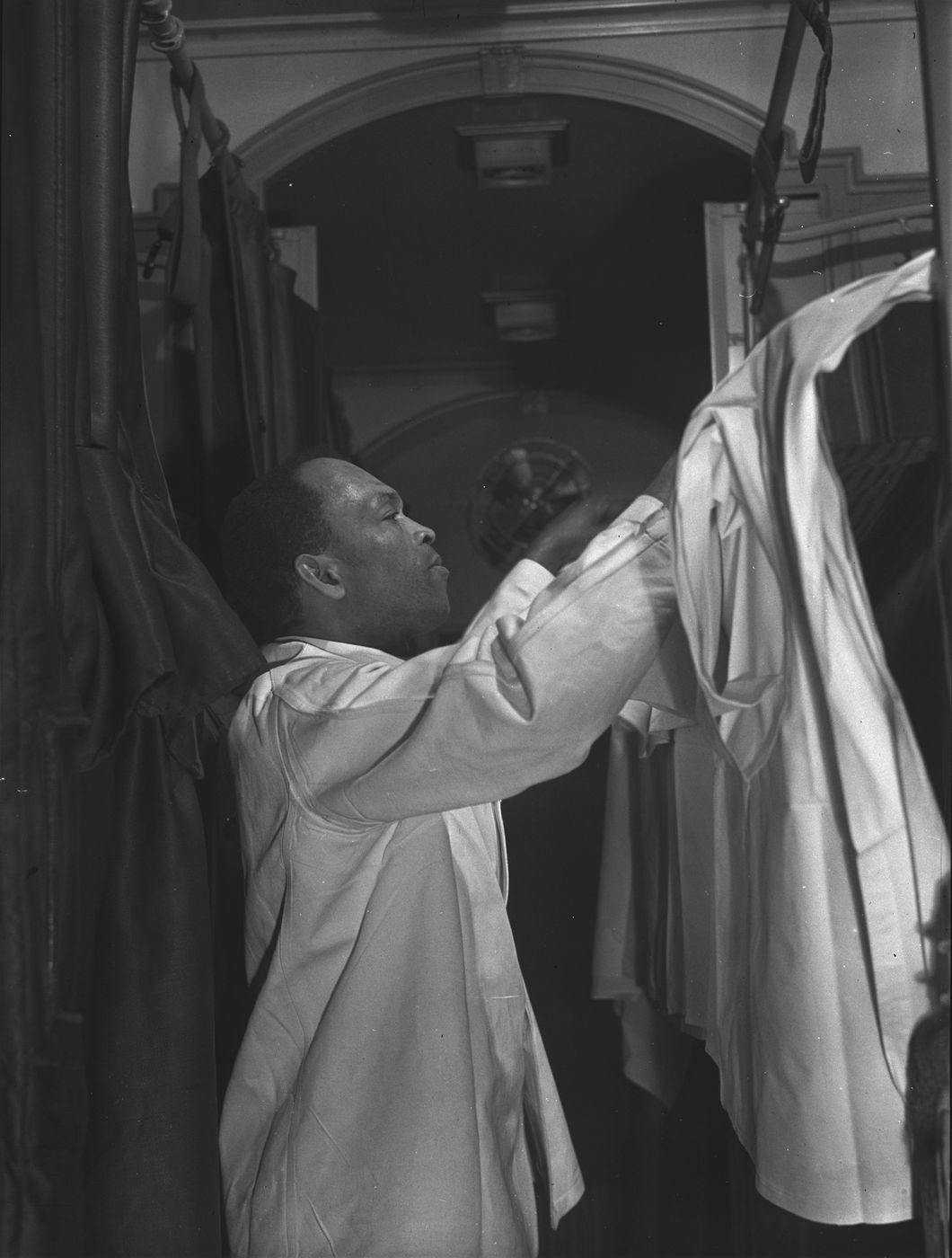
The Brotherhood of Sleeping Car Porters (BSCP), founded on August 25, 1925, in New York, was the first Black-led labor union to win a collective bargaining agreement with a major American corporation — and, per
| At a glance | |
|---|---|
| Type | ORGANIZATION — civil-rights |
| Dates | – |
| Chicago connection | CORE — see the Chicago connection section |
| Known for | The Brotherhood of Sleeping Car Porters (BSCP), founded on August 25, 1925, in New York, was the first Black-led labor |
| Verification | PROVISIONAL |
| CTL ID | CTL-ENC-000084 |
Overview
The Brotherhood of Sleeping Car Porters (BSCP), founded on August 25, 1925, in New York, was the first Black-led labor union to win a collective bargaining agreement with a major American corporation — and, per Britannica, the first African American labor union to be affiliated with the American Federation of Labor. It existed because the job it organized was designed as servitude with a wage attached. The Chicago History Museum records the conditions plainly: Pullman porters were paid the lowest salaries in the company, needed to work at least 400 hours a month to earn their full monthly pay, depended on tips, were subjected to unbridled racism, and were commonly addressed by passengers as "George" — after George Pullman — regardless of their names, a practice carried over from calling an enslaved person by an owner's name. George Pullman had staffed his sleeping cars with formerly enslaved men precisely because he believed they were acclimated to servitude and long hours.
Porter Ashley Totten invited A. Philip Randolph, the socialist editor of The Messenger, to address the Porters Athletic Association in New York, and Randolph was asked to undertake the organizing; the Brotherhood was launched on the night of August 25, 1925, with Randolph as its president. The organizing map ran through the Pullman Company's largest terminals — Chicago, Oakland, and St. Louis — with Milton Price Webster, a former porter of twenty years, leading the Chicago division and C.L. Dellums organizing on the West Coast; Dellums was elected vice president in 1929 and would succeed Randolph as president in 1968. The company fought the union for twelve years: ignoring it, surveilling members, firing organizers, and sponsoring a company union with no real power, while the Railway Labor Act of 1926 and its amendments slowly gave railway workers federal protection for organizing.
History
The milestones came in a compressed sequence once the law and membership aligned. In 1935 the Brotherhood became, per the Chicago History Museum, the first African American union organization granted membership in the American Federation of Labor, and Pullman agreed to negotiations; Webster, as first vice president, served as the union's lead negotiator. On August 25, 1937 — twelve years to the day after the founding — the Pullman Company accepted the Brotherhood as bargaining agent for the porters and maids, and the first contract followed: an estimated $2 million in wage increases, a cap of 240 hours a month in place of 400, overtime and preparatory-time pay, and a grievance procedure protecting porters against arbitrary firing.
The Brotherhood's significance runs past the contract. Its leadership — Randolph, Webster, Dellums — carried the union's methods directly into the civil-rights movement: Randolph's threatened 1941 March on Washington forced Executive Order 8802 against defense-industry discrimination, and in 1963 he directed the March on Washington for Jobs and Freedom. For Chicago the union is civic history as much as labor history: the Pullman Company was a Chicago corporation, the Chicago division was among its largest, and the porters' wages, homes, and churches built a Black middle class in the city. In the CultureTechLens graph the Brotherhood receives its own institutional record here, distinct from the personal records of Randolph and Webster and from the composite record that previously held all three.
The succession inside the union carries its own significance. C.L. Dellums, the Oakland porter who became the West Coast organiser and was elected vice president in 1929, held that office until 1968, when he succeeded Randolph as president — making the Brotherhood, in the scholarly account of his tenure, the first national, and indeed international, union of Black workers to sustain a half-century of continuous Black leadership at the centre of American labour and civil-rights policy. Dellums's own summary of the stakes, given in 1971 and preserved at the head of that account, was that the Brotherhood had helped precipitate a sea change in labour and race relations — the first time in United States history that a Black labour organisation played a central role in shaping national policy on fair employment. This record is a staged proposal pending the founder's classification sitting.
Chicago connection
The Chicago History Museum records the conditions plainly: Pullman porters were paid the lowest salaries in the company, needed to work at least 400 hours a month to earn their full monthly pay, depended on tips, were subjected to unbridled racism, and were commonly addressed by passengers as "George" — after George Pullman — regardless of their names, a practice carried over from calling an enslaved person by an owner's name. The organizing map ran through the Pullman Company's largest terminals — Chicago, Oakland, and St. Louis — with Milton Price Webster, a former porter of twenty years, leading the Chicago division and C.L. In 1935 the Brotherhood became, per the Chicago History Museum, the first African American union organization granted membership in the American Federation of Labor, and Pullman agreed to negotiations; Webster, as first vice president, served as the union's lead negotiator. For Chicago the union is civic history as much as labor history: the Pullman Company was a Chicago corporation, the Chicago division was among its largest, and the porters' wages, homes, and churches built a Black middle class in the city. [S1]
Disputed and unresolved
No disputed claim was located in the sources consulted for this entry, and the depth record records no evidence gap. Open items, if any, are listed in Editorial notes.
See also
Relationships
- led_by — A. Philip Randolph (CTL-E-0352) — Restated from the CultureTechLens Knowledge Graph: Brotherhood of Sleeping Car Porters (CTL-E-3288) led_by A. Philip Randolph (CTL-E-0352), verification Verified.
Sources
- S1: Encyclopaedia Britannica. "Brotherhood of Sleeping Car Porters." Accessed October 25, 2026. https://www.britannica.com/topic/Brotherhood-of-Sleeping-Car-Porters.
- S2: Chicago History Museum. "The Brotherhood of Sleeping Car Porters." Accessed October 25, 2026. https://www.chicagohistory.org/brotherhood-sleeping-car-porters/.
- S3: Wikipedia. "Brotherhood of Sleeping Car Porters." Accessed October 25, 2026. https://en.wikipedia.org/wiki/Brotherhood_of_Sleeping_Car_Porters.
- S4: Perlego. "Brotherhood of Sleeping Car Porters." Book description. Accessed October 25, 2026. https://www.perlego.com/book/1570166/brotherhood-of-sleeping-car-porters-c-l-dellums-and-the-fight-for-fair-treatment-and-civil-rights-pdf.
- S5: CultureTechLens Knowledge Graph (schema v0.3.1), entities.json and relationships.json — CTL's own graph register, consulted 2026-10-29 for crosswalk facts and restated relationships.
Cite this entry
- Permanent ID: CTL-ENC-000084 · Crosswalked graph record: CTL-ESS-0010 · Version: 0.1 · Date: 2026-10-29
- Chicago: CultureTechLens. "Brotherhood of Sleeping Car Porters." CultureTechLens Encyclopedia, version 0.1, October 29, 2026. CultureTechLens NFP. CTL-ENC-000084.
- APA: CultureTechLens. (2026). Brotherhood of Sleeping Car Porters (Version 0.1, Entry CTL-ENC-000084). CultureTechLens Encyclopedia. CultureTechLens NFP.
- MLA: CultureTechLens. "Brotherhood of Sleeping Car Porters." CultureTechLens Encyclopedia, version 0.1, CultureTechLens NFP, 29 Oct. 2026. Entry CTL-ENC-000084.
Further reading
- CultureTechLens Knowledge Graph record CTL-ESS-0010 (crosswalked; published graph register id CTL-E-3288).
Image credits
- Brotherhood of Sleeping Car Porters photograph: see Images block in the frontmatter for the full credit line, rights status, and rights document.
Citation
CultureTechLens. "Brotherhood of Sleeping Car Porters." CultureTechLens Encyclopedia, Vol. 1 — Black Chicago, version 0.1, 2026-10-29. CultureTechLens NFP. CTL-ENC-000084.
<!-- =======================