 CULTURETECHLENS
The Encyclopedia · CTL-ENC-000436
Brown v. Board of Education
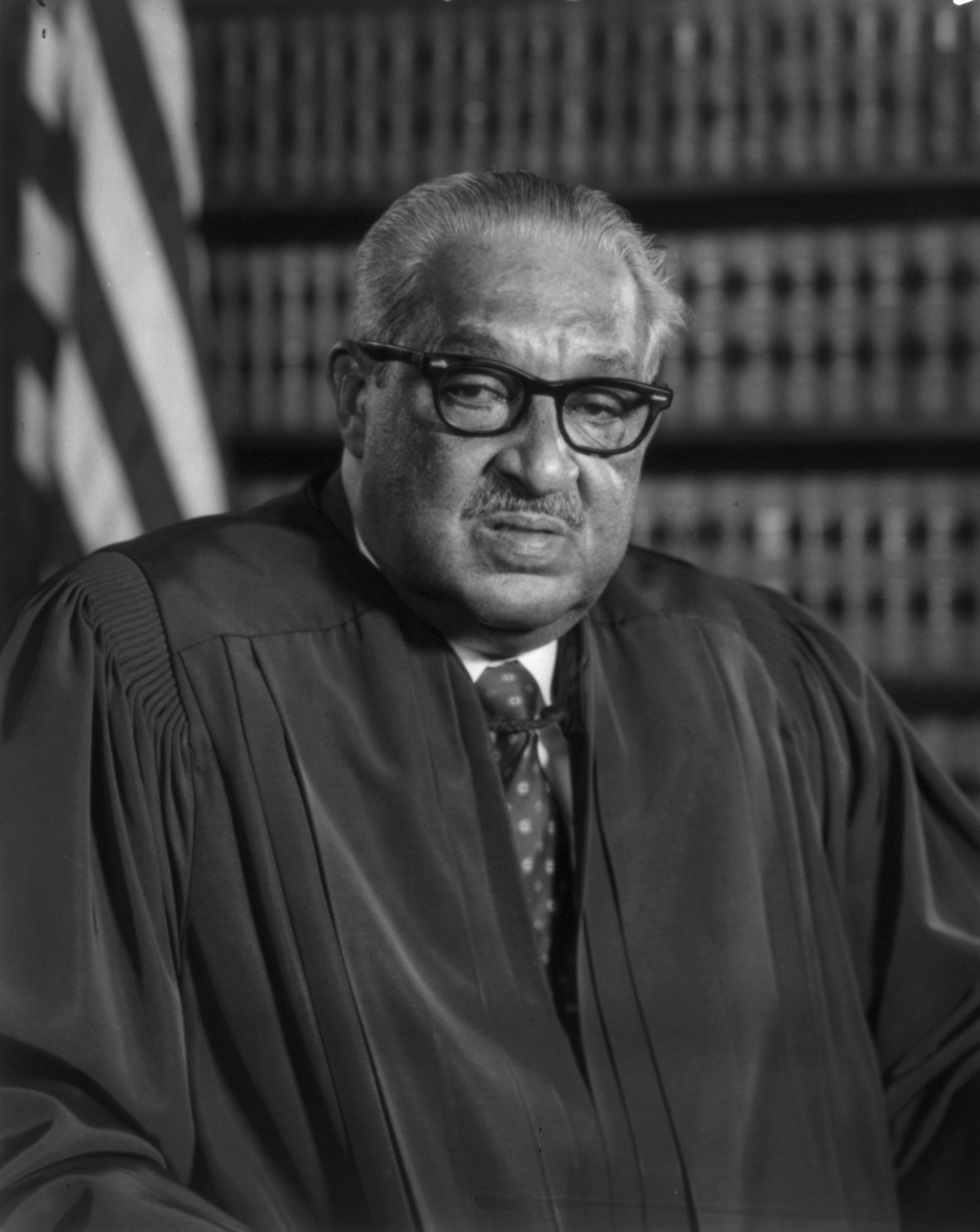
The Supreme Court's May 17, 1954 decision that state-mandated school segregation violates the Fourteenth Amendment - and the decision Chicago's segregated-by-policy school system spent a decade answering.
| At a glance | |
|---|---|
| Type | EVENT - court decision |
| Dates | May 17, 1954 - May 17, 1954 |
| Chicago connection | SIGNIFICANT |
| Known for | "Separate educational facilities are inherently unequal" (1954) |
| Verification | VERIFIED |
| CTL ID | CTL-ENC-000436 |
| Documented address | None recorded for this entry - see Documented address and map |
Overview
On May 17, 1954, a unanimous Supreme Court, speaking through Chief Justice Earl Warren, held in Brown v. Board of Education of Topeka and its companion cases that segregation of children in public schools solely on the basis of race deprives Black children of equal protection under the Fourteenth Amendment: "Separate educational facilities are inherently unequal" [S1]. The consolidated cases came from Kansas, South Carolina, Virginia, and Delaware (with the District of Columbia's companion, Bolling v. Sharpe, decided the same day under the Fifth Amendment); the NAACP Legal Defense Fund team, led by Thurgood Marshall, had built them over years as the litigation campaign against Plessy v. Ferguson's separate-but-equal doctrine [S1][S2]. Brown II (1955) ordered desegregation "with all deliberate speed" - the formula whose vagueness governed, and stalled, the next decade [S1].
The Chicago answer
Chicago had no Jim Crow school statute for Brown to strike at, and that was the point the city's record makes: Chicago's schools were segregated in fact - by attendance boundaries drawn around segregated housing, by the siting of schools, by Superintendent Benjamin Willis's transfer and mobile-classroom policies (see Willis Wagons) - and the Chicago Board of Education's documented response to Brown was to deny that the decision reached Chicago at all [S3]. The city's own school litigation followed the northern path: Taylor v. Board of Education of Chicago (filed 1961) attacked the Willis system as unconstitutional segregation in fact; the 1963 and 1965 boycotts (see Chicago School Boycott of 1963) carried the argument to the street; and the U.S. Department of Health, Education and Welfare's 1965 finding that Chicago violated the Civil Rights Act - reversed under political pressure from Mayor Daley's Washington allies - completed the decade's documentary circle [S3]. Brown is therefore in this cohort not as a Chicago case but as the text Chicago's school fight was fought under: every pleading, boycott demand, and board denial in the Chicago record cites it [S3].
The document of record
The anchor document is the opinion itself, Brown v. Board of Education, 347 U.S. 483 (1954), with Brown II, 349 U.S. 294 (1955) - carried in full by the Legal Information Institute [S1]. The case files stand in the National Archives' Supreme Court records, and the Chicago-response record stands in the Taylor litigation files and the Encyclopedia of Chicago's documentation [S2][S3].
Chicago connection
The connection is SIGNIFICANT, on the selection's named evidence: the Chicago Board's documented response to the decision and the city's own school-segregation litigation of the Brown era [S3]. The case itself is Kansas's and the nation's; the entry claims the response and the litigation, not the case.
Documented address and map
No address documented for this entry - the decision issued from Washington and its Chicago life was systemic, not site-specific; no coordinates are recorded.
Disputed and unresolved
| Claim | Version A (source) | Version B (source) | CTL position |
|---|---|---|---|
| What Brown held | The opinion text: state-mandated school segregation is unconstitutional, full stop | A persistent popular extension: that Brown itself ordered immediate nationwide desegregation including northern de facto systems | CTL follows the text and records Brown II's "all deliberate speed" as the implementation formula whose limits the Chicago decade exposed |
See also
Relationships
- held_at — Washington, D.C. — Brown was decided by the U.S. Supreme Court in Washington on May 17, 1954 (the opinion). No graph record for the Washington locality was asserted - the target is recorded by name.
- related_to — Thurgood Marshall (CTL-E-1525) — Thurgood Marshall, the NAACP Legal Defense Fund's chief counsel, argued Brown for the plaintiffs (National Archives; the case record).
Sources
- S1: Brown v. Board of Education of Topeka, 347 U.S. 483 (1954). Cornell Law Institute, Legal Information Institute. https://www.law.cornell.edu/supremecourt/text/347/483
- S2: National Archives. "Brown v. Board of Education" - records and teaching resources. https://www.archives.gov/
- S3: Chicago History Museum. Encyclopedia of Chicago, "Segregation" and school-desegregation resources. http://www.encyclopedia.chicagohistory.org/
Cite this entry
- Permanent ID: CTL-ENC-000436 · Crosswalked graph record: CTL-E-1540 · Version: 0.1 · Date: 2026-10-29
- Chicago: CultureTechLens. "Brown v. Board of Education." CultureTechLens Encyclopedia, version 0.1, October 29, 2026. CultureTechLens NFP. CTL-ENC-000436. Source: CultureTechLens
- APA: CultureTechLens. (2026). Brown v. Board of Education (Version 0.1, Entry CTL-ENC-000436). CultureTechLens Encyclopedia. CultureTechLens NFP. Source: CultureTechLens
- MLA: CultureTechLens. "Brown v. Board of Education." CultureTechLens Encyclopedia, version 0.1, CultureTechLens NFP, 29 Oct. 2026. Entry CTL-ENC-000436. Source: CultureTechLens
Further reading
- Richard Kluger, Simple Justice (Knopf, 1975), the standard history of the Brown litigation.
Image credits
- Thurgood Marshall, the plaintiffs' chief counsel in Brown, as held on Wikimedia Commons at 1,184 x 1,488 px: see Images block in the frontmatter for the full credit line, rights status, and rights document.
Citation
CultureTechLens. "Brown v. Board of Education." CultureTechLens Encyclopedia, Historical Documents (staged), version 0.1, 2026-10-29. CultureTechLens NFP. CTL-ENC-000436.