 CULTURETECHLENS
The Encyclopedia · CTL-ENC-000183
Carl A. Hansberry
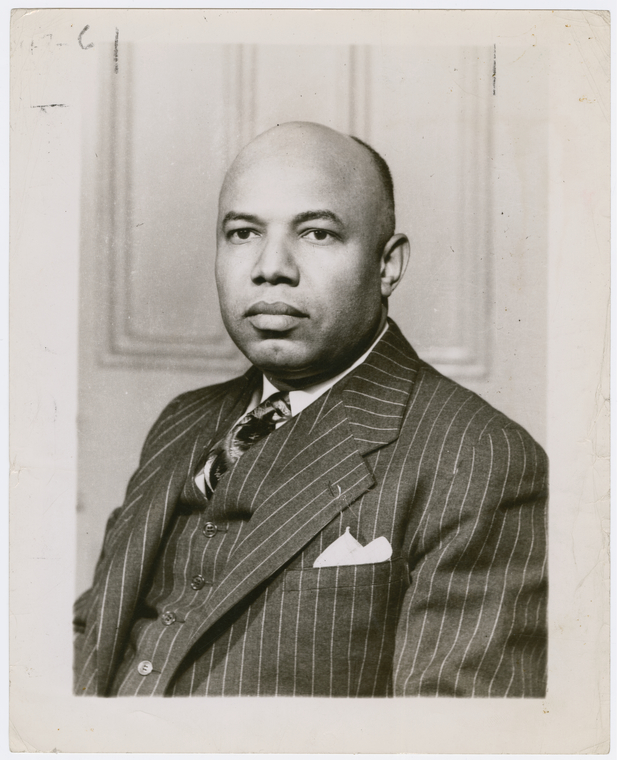
Carl Augustus Hansberry was a prominent Black Chicago real-estate broker and banker, a supporter of the Urban League and the NAACP, and the father of playwright Lorraine Hansberry.
| At a glance | |
|---|---|
| Type | PERSON — businessperson |
| Dates | – |
| Chicago connection | CORE — see the Chicago connection section |
| Known for | Carl Augustus Hansberry was a prominent Black Chicago real-estate broker and banker, a supporter of the Urban League |
| Verification | PROVISIONAL |
| CTL ID | CTL-ENC-000183 |
Overview
Carl Augustus Hansberry was a prominent Black Chicago real-estate broker and banker, a supporter of the Urban League and the NAACP, and the father of playwright Lorraine Hansberry. With his wife Nannie Louise Perry Hansberry, a schoolteacher and ward committeewoman, he raised four children in a South Side home routinely visited by W. E. B. Du Bois, Langston Hughes, Paul Robeson, Duke Ellington and Jesse Owens. His brother, William Leo Hansberry, founded the African Studies program at Howard University. Carl Hansberry also ran for Congress as a Republican. His name survives in American law because of a house.
In 1937 Hansberry purchased a home at 6140 South Rhodes Avenue in the Washington Park subdivision of Woodlawn — a neighborhood bound by a racially restrictive covenant barring Black occupancy, which a prior class action, Burke v. Kleiman, had purportedly validated on a stipulation about how many owners had signed it. The Hansberrys moved in, in 1938 by most accounts, into what Lorraine Hansberry later called a "hellishly hostile white neighborhood": howling mobs surrounded the home, armed guards protected the children, Nannie Hansberry patrolled at night, and a slab of concrete hurled through a window nearly killed seven-year-old Lorraine. A white homeowner, Anna M. Lee, sued to enforce the covenant, and the Illinois courts ruled against the Hansberrys on the strength of the earlier class action.
Life and career
Represented by Earl B. Dickerson — Chicago alderman and one of the era's leading Black civil-rights lawyers — with NAACP support and at great personal expense, Hansberry carried the case to the U.S. Supreme Court. On November 12, 1940, in Hansberry v. Lee, 311 U.S. 32, the Court ruled unanimously for him — on grounds this record states exactly, because they are the case's enduring lesson. The Court did not hold restrictive covenants unconstitutional; it held that Hansberry could not be bound by the Burke judgment because the class in that case had not adequately represented him: in fact only about 54 percent of owners had signed the covenant, and the 54 percent who supported it could not speak for the 46 percent who did not. A judgment obtained without adequate representation, the Court held, cannot extinguish a man's right to be heard — a due-process holding that made Hansberry v. Lee a foundational civil-procedure case, taught to law students to this day for the limits of res judicata. Its housing consequence was narrower but real: the covenant could be contested again, some restricted Chicago areas opened to Black buyers, and the decision paved the way for Shelley v. Kraemer (1948), which finally held judicial enforcement of racial covenants unconstitutional under the Fourteenth Amendment. Hansberry died in 1946, before he could complete plans to move the family to Mexico City, embittered, his daughter's biographers record, by his sons' treatment in the segregated U.S. Army. The family home is now a Chicago landmark, and the siege his children lived through became, in his youngest daughter's hands, A Raisin in the Sun.
The case's double life is the final fact. In housing history Hansberry v. Lee is the bridge between Corrigan v. Buckley (1926), which had left covenants standing, and Shelley v. Kraemer (1948), which struck their enforcement down; in legal education it is something else again — the standard citation, in Black Art Story's summary, for the res judicata principle that a judgment may not bind a plaintiff who had no opportunity to be represented in the earlier action. Every American law student meets Carl Hansberry's name, usually without learning that he was a Chicago real-estate man who armed his own house, paid a fortune in legal fees, and died six years after winning, with the covenants he fought still on the books. The landmark at 6140 South Rhodes, and his daughter's play, carry the rest of him. This record is a staged proposal pending the founder's classification sitting.
Chicago connection
Carl Augustus Hansberry was a prominent Black Chicago real-estate broker and banker, a supporter of the Urban League and the NAACP, and the father of playwright Lorraine Hansberry. Dickerson — Chicago alderman and one of the era's leading Black civil-rights lawyers — with NAACP support and at great personal expense, Hansberry carried the case to the U.S. Its housing consequence was narrower but real: the covenant could be contested again, some restricted Chicago areas opened to Black buyers, and the decision paved the way for Shelley v. The family home is now a Chicago landmark, and the siege his children lived through became, in his youngest daughter's hands, A Raisin in the Sun. Every American law student meets Carl Hansberry's name, usually without learning that he was a Chicago real-estate man who armed his own house, paid a fortune in legal fees, and died six years after winning, with the covenants he fought still on the books. [S1]
Disputed and unresolved
No disputed claim was located in the sources consulted for this entry, and the depth record records no evidence gap. Open items, if any, are listed in Editorial notes.
See also
Relationships
- related_to — Lorraine Hansberry (CTL-E-0115) — Restated from the CultureTechLens Knowledge Graph: Carl A. Hansberry (CTL-E-1169) related_to Lorraine Hansberry (CTL-E-0115), verification Verified.
- member_of_organization — National Association for the Advancement of Colored People (NAACP) (CTL-E-0498) — Restated from the CultureTechLens Knowledge Graph: Carl A. Hansberry (CTL-E-1169) member_of_organization National Association for the Advancement of Colored People (NAACP) (CTL-E-0498), verification Verified.
- associated_with — Woodlawn (CTL-E-0209) — Restated from the CultureTechLens Knowledge Graph: Carl A. Hansberry (CTL-E-1169) associated_with Woodlawn (CTL-E-0209), verification Verified.
- based_in — City of Chicago (CTL-E-1475) — Restated from the CultureTechLens Knowledge Graph: Carl A. Hansberry (CTL-E-1169) based_in City of Chicago (CTL-E-1475), verification Verified.
Sources
- S1: Mental Floss. "7 Facts About Lorraine Hansberry." Accessed October 26, 2026. https://www.mentalfloss.com/literature/authors/lorraine-hansberry-playwright-facts.
- S2: Black Art Story. "Hansberry v. Lee." November 17, 2020. https://blackartstory.org/2020/11/17/hansberry-v-lee/.
- S3: Encyclopedia.com. "Lorraine Vivian Hansberry." Accessed October 26, 2026. https://www.encyclopedia.com/history/encyclopedias-almanacs-transcripts-and-maps/lorraine-vivian-hansberry.
- S4: Wikipedia. "Lorraine Hansberry." Accessed October 26, 2026. https://en.wikipedia.org/wiki/Lorraine_Hansberry.
- S5: CultureTechLens Knowledge Graph (schema v0.3.1), entities.json and relationships.json — CTL's own graph register, consulted 2026-10-29 for crosswalk facts and restated relationships.
Cite this entry
- Permanent ID: CTL-ENC-000183 · Crosswalked graph record: CTL-ESS-0119 · Version: 0.1 · Date: 2026-10-29
- Chicago: CultureTechLens. "Carl A. Hansberry." CultureTechLens Encyclopedia, version 0.1, October 29, 2026. CultureTechLens NFP. CTL-ENC-000183.
- APA: CultureTechLens. (2026). Carl A. Hansberry (Version 0.1, Entry CTL-ENC-000183). CultureTechLens Encyclopedia. CultureTechLens NFP.
- MLA: CultureTechLens. "Carl A. Hansberry." CultureTechLens Encyclopedia, version 0.1, CultureTechLens NFP, 29 Oct. 2026. Entry CTL-ENC-000183.
Further reading
- CultureTechLens Knowledge Graph record CTL-ESS-0119 (crosswalked; published graph register id CTL-E-1169).
Image credits
- Carl A. Hansberry photograph: see Images block in the frontmatter for the full credit line, rights status, and rights document.
Citation
CultureTechLens. "Carl A. Hansberry." CultureTechLens Encyclopedia, Vol. 1 — Black Chicago, version 0.1, 2026-10-29. CultureTechLens NFP. CTL-ENC-000183.
<!-- =======================