 CULTURETECHLENS
The Encyclopedia · CTL-ENC-000113
Carol Moseley Braun
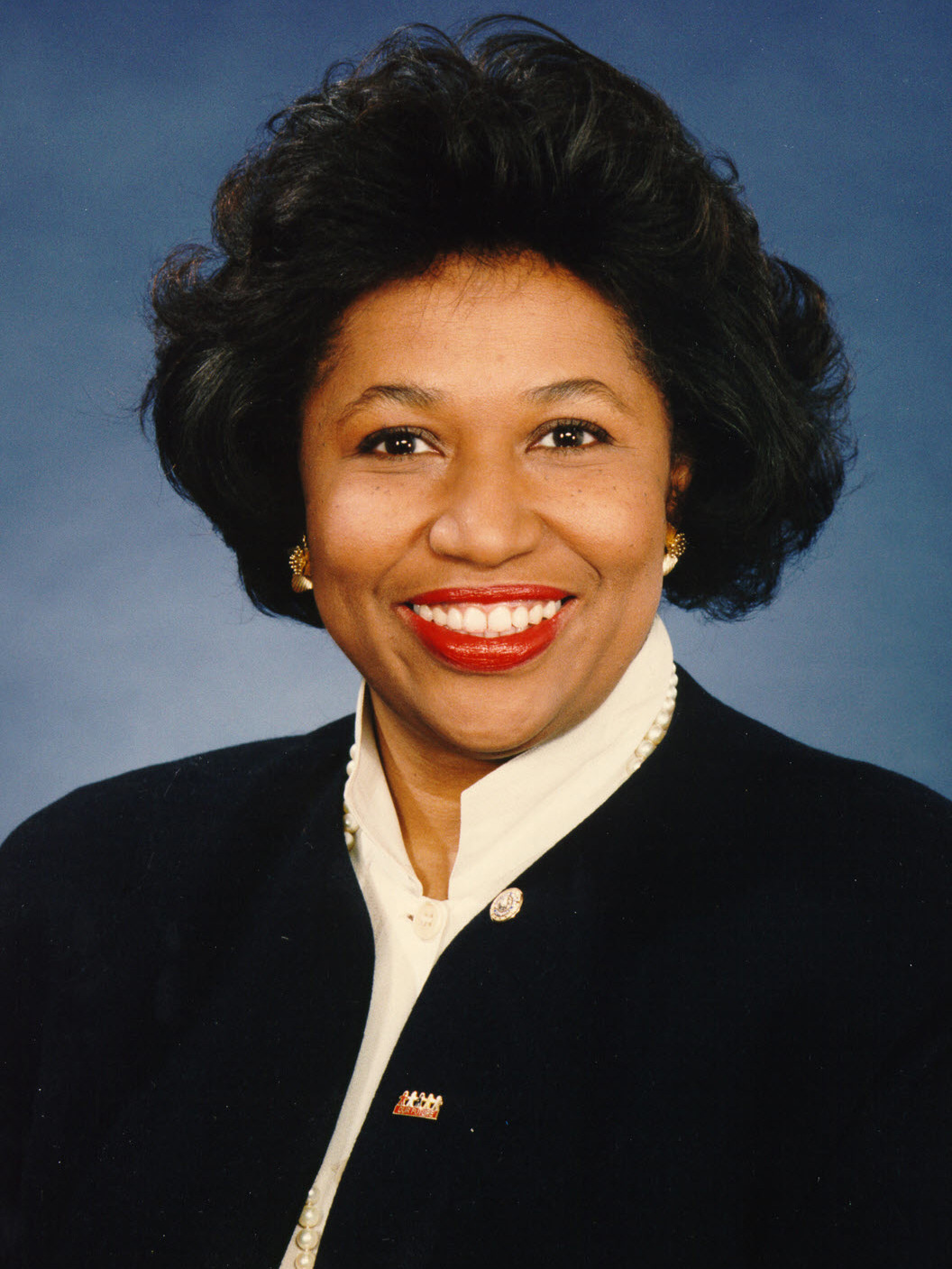
Carol Elizabeth Moseley Braun, born in Chicago on August 16, 1947, the daughter of a Chicago police officer and a medical technician, is the lawyer and diplomat who in 1992 became the first African American
| At a glance | |
|---|---|
| Type | PERSON — politician |
| Dates | – |
| Chicago connection | CORE — see the Chicago connection section |
| Known for | Carol Elizabeth Moseley Braun, born in Chicago on August 16, 1947, the daughter of a Chicago police officer and a |
| Verification | VERIFIED |
| CTL ID | CTL-ENC-000113 |
Overview
Carol Elizabeth Moseley Braun, born in Chicago on August 16, 1947, the daughter of a Chicago police officer and a medical technician, is the lawyer and diplomat who in 1992 became the first African American woman elected to the United States Senate — also the first African American Democratic senator and the first woman senator from Illinois. A product of the Chicago Public Schools, she took her bachelor's degree from the University of Illinois at Chicago (1968 in the Catt Center's record; 1969 in BlackPast's) and her law degree from the University of Chicago in 1972. She joined the U.S. Attorney's office in Chicago in 1973 as an assistant U.S. attorney, working in civil and appellate law on cases of national importance in housing, health policy and environmental law, and winning the Attorney General's Special Achievement Award.
Elected to the Illinois House of Representatives in 1978, she served a decade in Springfield, becoming the first African American assistant majority leader in the legislature's history and building a reputation as a champion of education reform, governmental reform and civil rights. From 1988 to 1992 she served as Cook County Recorder of Deeds. In 1992 — the "Year of the Woman," in the aftermath of the Clarence Thomas–Anita Hill hearings and the Senate's handling of them — she challenged two-term incumbent Senator Alan J. Dixon in the Democratic primary, upset him, and won the general election. On the Senate Finance Committee she was its first woman permanent member; she also served on the Judiciary, Banking, Housing and Urban Affairs and Small Business committees, advocating retirement security, education reform and health care. Two floor moments fixed her public image: in 1993 she persuaded the Senate to refuse renewal of the federal design patent on the United Daughters of the Confederacy insignia bearing the Confederate flag, and the same year she walked onto the Senate floor in trousers, challenging an unwritten dress code in an act that normalized pants for the women who followed. She lost re-election in 1998 to Republican Peter Fitzgerald, in a campaign the reference record notes was marred by allegations about campaign funds and by her ties to Nigerian ruler Sani Abacha, though she was never formally charged with misconduct.
Life and career
President Bill Clinton appointed her U.S. Ambassador to New Zealand and Samoa, a post she held from 1999 to 2001. Returning to Chicago, she taught law and political science at Morris Brown College and DePaul University, ran a business-law practice and consultancy, and founded an organic fair-trade foods company, Ambassador Organics. She sought the Democratic presidential nomination in 2004, withdrawing before the Iowa caucuses and endorsing Howard Dean, and in 2011 ran for mayor of Chicago to succeed Richard M. Daley, placing fourth in a field of six won by Rahm Emanuel. In January 2023 President Joe Biden nominated her as member and chair of the board of the U.S. African Development Foundation; she began her tenure in April 2024. The University of Virginia's Black Leadership oral history frames the whole arc in her own city's terms: a Chicago native who minded her parents' values of education and hard work all the way from the public schools to the Senate floor — and who remains, in the record's careful phrase, the only African American woman of her Senate generation, the door she opened in 1992 standing as the measure of every candidacy since.
Two closing details belong to the record. The Catt Center's biography counts more than three hundred awards for her achievements in the public interest across the career — a measure of how completely her Senate first was absorbed, over time, into a longer public-service life. And BlackPast records her honorary membership in Delta Sigma Theta Sorority, the sisterhood whose members formed part of the constituency that sent her to Washington in the Year of the Woman.
Chicago connection
Carol Elizabeth Moseley Braun, born in Chicago on August 16, 1947, the daughter of a Chicago police officer and a medical technician, is the lawyer and diplomat who in 1992 became the first African American woman elected to the United States Senate — also the first African American Democratic senator and the first woman senator from Illinois. A product of the Chicago Public Schools, she took her bachelor's degree from the University of Illinois at Chicago (1968 in the Catt Center's record; 1969 in BlackPast's) and her law degree from the University of Chicago in 1972. Attorney's office in Chicago in 1973 as an assistant U.S. Returning to Chicago, she taught law and political science at Morris Brown College and DePaul University, ran a business-law practice and consultancy, and founded an organic fair-trade foods company, Ambassador Organics. She sought the Democratic presidential nomination in 2004, withdrawing before the Iowa caucuses and endorsing Howard Dean, and in 2011 ran for mayor of Chicago to succeed Richard M. The University of Virginia's Black Leadership oral history frames the whole arc in her own city's terms: a Chicago native who minded her parents' values of education and hard work all the way from the public schools to the Senate floor — and who remains, in the record's careful phrase, the only African American woman of her Senate generation, the door she opened in 1992 standing as the measure of every candidacy since. [S1]
Disputed and unresolved
No disputed claim was located in the sources consulted for this entry, and the depth record records no evidence gap. Open items, if any, are listed in Editorial notes.
See also
Relationships
- affiliated_with — University of Chicago Law School (CTL-E-1856) — Restated from the CultureTechLens Knowledge Graph: Carol Moseley Braun (CTL-E-0075) affiliated_with University of Chicago Law School (CTL-E-1856), verification Verified.
- member_of_organization — Delta Sigma Theta Sorority, Inc. (CTL-E-0305) — Restated from the CultureTechLens Knowledge Graph: Carol Moseley Braun (CTL-E-0075) member_of_organization Delta Sigma Theta Sorority, Inc. (CTL-E-0305), verification Verified.
- based_in — City of Chicago (CTL-E-1475) — Restated from the CultureTechLens Knowledge Graph: Carol Moseley Braun (CTL-E-0075) based_in City of Chicago (CTL-E-1475), verification Verified.
- from — City of Chicago (CTL-E-1475) — Restated from the CultureTechLens Knowledge Graph: Carol Moseley Braun (CTL-E-0075) from City of Chicago (CTL-E-1475), verification Verified.
- related_to — Barack Obama (CTL-E-0079) — Restated from the CultureTechLens Knowledge Graph: Carol Moseley Braun (CTL-E-0075) related_to Barack Obama (CTL-E-0079), verification Verified.
Sources
- S1: BlackPast.org. "Carol Moseley Braun (1947– )." Accessed October 26, 2026. https://blackpast.org/african-american-history/braun-carol-moseley-1947/.
- S2: University of Chicago Law School. "Carol Moseley Braun, '72, Shares Her Career Journey with Students at the Earl B. Dickerson Memorial Lecture." Accessed October 26, 2026. https://www.law.uchicago.edu/news/carol-moseley-braun-72-shares-her-career-journey-students-earl-b-dickerson-memorial-lecture.
- S3: Carrie Chapman Catt Center for Women and Politics, Iowa State University. "Carol Moseley Braun." March 1, 2004. https://cattcenter.iastate.edu/2004/03/01/mls-carol-moseley-braun/.
- S4: Explorations in Black Leadership, University of Virginia. "Carol Moseley Braun." Accessed October 26, 2026. https://blackleadership.virginia.edu/interview/moseley-braun-carol.
- S5: Wikipedia. "Carol Moseley Braun." Accessed October 26, 2026. https://en.wikipedia.org/wiki/Carol_Moseley_Braun.
- S6: CultureTechLens Knowledge Graph (schema v0.3.1), entities.json and relationships.json — CTL's own graph register, consulted 2026-10-29 for crosswalk facts and restated relationships.
Cite this entry
- Permanent ID: CTL-ENC-000113 · Crosswalked graph record: CTL-P-0064 · Version: 0.1 · Date: 2026-10-29
- Chicago: CultureTechLens. "Carol Moseley Braun." CultureTechLens Encyclopedia, version 0.1, October 29, 2026. CultureTechLens NFP. CTL-ENC-000113.
- APA: CultureTechLens. (2026). Carol Moseley Braun (Version 0.1, Entry CTL-ENC-000113). CultureTechLens Encyclopedia. CultureTechLens NFP.
- MLA: CultureTechLens. "Carol Moseley Braun." CultureTechLens Encyclopedia, version 0.1, CultureTechLens NFP, 29 Oct. 2026. Entry CTL-ENC-000113.
Further reading
- CultureTechLens Knowledge Graph record CTL-P-0064 (crosswalked; published graph register id CTL-E-0075).
Image credits
- Carol Moseley Braun photograph: see Images block in the frontmatter for the full credit line, rights status, and rights document.
Citation
CultureTechLens. "Carol Moseley Braun." CultureTechLens Encyclopedia, Vol. 1 — Black Chicago, version 0.1, 2026-10-29. CultureTechLens NFP. CTL-ENC-000113.
<!-- =======================