 CULTURETECHLENS
The Encyclopedia · CTL-ENC-000120
Chandler Owen
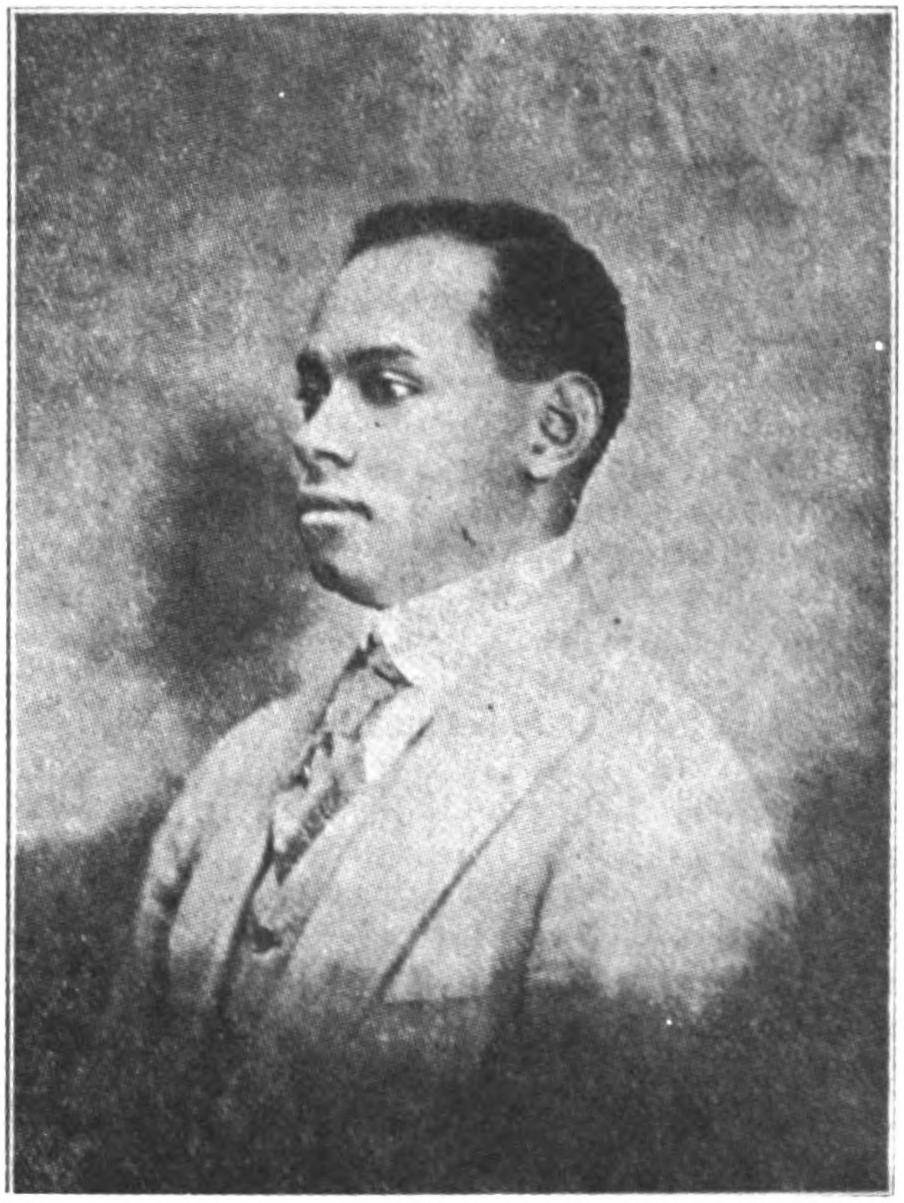
Chandler Owen (April 5, 1889 – November 2, 1967) was a Black writer, editor, and socialist turned Republican speechwriter who, with A.
| At a glance | |
|---|---|
| Type | PERSON — journalist |
| Dates | – |
| Chicago connection | CORE — see the Chicago connection section |
| Known for | Chandler Owen (April 5, 1889 – November 2, 1967) was a Black writer, editor, and socialist turned Republican |
| Verification | PROVISIONAL |
| CTL ID | CTL-ENC-000120 |
Overview
Chandler Owen (April 5, 1889 – November 2, 1967) was a Black writer, editor, and socialist turned Republican speechwriter who, with A. Philip Randolph, founded The Messenger in 1917 — the radical Harlem journal that the A. Philip Randolph Institute calls "the only magazine of scientific radicalism in the world published by Negroes." He was born in Warrenton, North Carolina, graduated from Virginia Union University in 1913, and moved to New York City to become a fellow of the National Urban League while enrolling at Columbia University, where he studied economics (the African American Registry account describes him as a law student at Columbia; the course of study is given both ways in the sources and is flagged here). In 1916 he met Randolph, joined the Socialist Party of America, and became a follower of the radical Black activist Hubert H. Harrison. The two young soapbox orators became known in Harlem, in the Registry's phrase, as "Lenin" (Owen) and "Trotsky" (Randolph).
The Messenger, founded in 1917, published political commentary, advocacy of trade unionism, and the literature of the New Negro Movement, promoting the Harlem Renaissance while crusading against lynching and segregation. Its defining editorial position was its opposition to Black participation in World War I on unequal terms. Noting the irony of African Americans fighting to make the world safe for democracy abroad while denied equality at home, the magazine argued, in the line BlackPast preserves: "Patriotism has no appeal to us; justice has. Party has no weight with us; principle has." For their outspoken opposition, Owen and Randolph were arrested under the Espionage Act — jailed, mocked, and oppressed for their socialist affiliations, as the Registry account puts it — while Owen was himself running for the New York State Assembly on the Socialist ticket. An early editorial, quoted by the Randolph Institute, stated the magazine's class analysis without varnish: the employing classes recognize no race lines and will exploit a white man as readily as a Black man, so the combination of Black and white workers would teach capital the solidarity of labor.
Life and career
Owen's partnership with Randolph extended beyond the magazine into labor organizing: the two formed a Brotherhood of Labor employment agency in Harlem, and Owen backed Randolph's efforts to organize the Pullman porters into the Brotherhood of Sleeping Car Porters, the campaign that made Randolph's national reputation. But the partnership's politics diverged in the 1920s. Owen, disenchanted with socialism, became a Republican. The Messenger folded in 1928, and Owen moved to Chicago, where he became managing editor of the Chicago Bee, the Black newspaper. BlackPast's account adds the transitional detail that by the mid-1920s Owen had already become a speechwriter for local Republican candidates. In Chicago he ran unsuccessfully in the Republican primary for a seat in the U.S. House of Representatives in 1928, defeated by Oscar DePriest, who subsequently became the first Black Northerner elected to Congress — a primary that put the ex-socialist editor and the congressman-elect on the same ballot line of Black Chicago political history.
The second career lasted the rest of his life. Owen founded his own public relations company in Chicago and wrote speeches for presidential candidates and presidents: the Registry names Wendell Willkie, Thomas Dewey, Dwight Eisenhower, and Lyndon B. Johnson among the politicians whose speeches he wrote — a client list that spans the Republican Party's mid-century and reaches into the Democratic White House, and that measures how far the "Lenin" of Harlem soapboxing had traveled into the American political establishment. Yet the friendship at the center of the record held. Suffering from terminal kidney disease, Owen wrote a last letter to Randolph, preserved in the Registry account: "Our long friendship, never soiled, is nearing its close. I've been in pain. If you were not living, I would commit suicide today." He died soon after, on November 2, 1967, six months past his seventy-eighth birthday and fifty years after The Messenger's founding.
In the CultureTechLens graph Owen's record is the Chicago chapter of a national story: the Messenger co-founder who ended as a Chicago Bee editor, a Chicago public-relations man, and a speechwriter for presidents, while his magazine remains the founding document of Black radical journalism in the Randolph tradition. The two poles of the life — the Espionage Act arrest of 1918 and the presidential speechwriting of the postwar decades — are both documented, and this record asserts neither as the truer Owen; it keeps them in the order he lived them. This record is a staged proposal pending the founder's classification sitting.
Chicago connection
The Messenger folded in 1928, and Owen moved to Chicago, where he became managing editor of the Chicago Bee, the Black newspaper. In Chicago he ran unsuccessfully in the Republican primary for a seat in the U.S. House of Representatives in 1928, defeated by Oscar DePriest, who subsequently became the first Black Northerner elected to Congress — a primary that put the ex-socialist editor and the congressman-elect on the same ballot line of Black Chicago political history. Owen founded his own public relations company in Chicago and wrote speeches for presidential candidates and presidents: the Registry names Wendell Willkie, Thomas Dewey, Dwight Eisenhower, and Lyndon B. In the CultureTechLens graph Owen's record is the Chicago chapter of a national story: the Messenger co-founder who ended as a Chicago Bee editor, a Chicago public-relations man, and a speechwriter for presidents, while his magazine remains the founding document of Black radical journalism in the Randolph tradition. [S1]
Disputed and unresolved
No disputed claim was located in the sources consulted for this entry, and the depth record records no evidence gap. Open items, if any, are listed in Editorial notes.
See also
Relationships
- collaborated_with — A. Philip Randolph (CTL-E-0352) — Restated from the CultureTechLens Knowledge Graph: Chandler Owen (CTL-E-1143) collaborated_with A. Philip Randolph (CTL-E-0352), verification Verified.
- founded — The Messenger (CTL-E-1665) — Restated from the CultureTechLens Knowledge Graph: Chandler Owen (CTL-E-1143) founded The Messenger (CTL-E-1665), verification Verified.
- based_in — City of Chicago (CTL-E-1475) — Restated from the CultureTechLens Knowledge Graph: Chandler Owen (CTL-E-1143) based_in City of Chicago (CTL-E-1475), verification Verified.
Sources
- S1: BlackPast.org. "Chandler Owen (1889–1967)." Accessed October 26, 2026. https://blackpast.org/african-american-history/owen-chandler-1889-1967,/.
- S2: African American Registry. "Chandler Owen, Writer and Socialist Born." Accessed October 26, 2026. https://aaregistry.org/story/chandler-owen-writer-born/.
- S3: A. Philip Randolph Institute. "Mr. Randolph's Bio." Accessed October 26, 2026. https://www.apri.org/randolph.
- S4: BlackPast.org. "Asa Philip Randolph (1889–1979)." Accessed October 26, 2026. https://blackpast.org/african-american-history/randolph-asa-philip-1889-1979/.
- S5: CultureTechLens Knowledge Graph (schema v0.3.1), entities.json and relationships.json — CTL's own graph register, consulted 2026-10-29 for crosswalk facts and restated relationships.
Cite this entry
- Permanent ID: CTL-ENC-000120 · Crosswalked graph record: CTL-ESS-0134 · Version: 0.1 · Date: 2026-10-29
- Chicago: CultureTechLens. "Chandler Owen." CultureTechLens Encyclopedia, version 0.1, October 29, 2026. CultureTechLens NFP. CTL-ENC-000120.
- APA: CultureTechLens. (2026). Chandler Owen (Version 0.1, Entry CTL-ENC-000120). CultureTechLens Encyclopedia. CultureTechLens NFP.
- MLA: CultureTechLens. "Chandler Owen." CultureTechLens Encyclopedia, version 0.1, CultureTechLens NFP, 29 Oct. 2026. Entry CTL-ENC-000120.
Further reading
- CultureTechLens Knowledge Graph record CTL-ESS-0134 (crosswalked; published graph register id CTL-E-1143).
Image credits
- Chandler Owen photograph: see Images block in the frontmatter for the full credit line, rights status, and rights document.
Citation
CultureTechLens. "Chandler Owen." CultureTechLens Encyclopedia, Vol. 1 — Black Chicago, version 0.1, 2026-10-29. CultureTechLens NFP. CTL-ENC-000120.
<!-- =======================