 CULTURETECHLENS
The Encyclopedia · CTL-ENC-000260
Charles Edwin Bentley
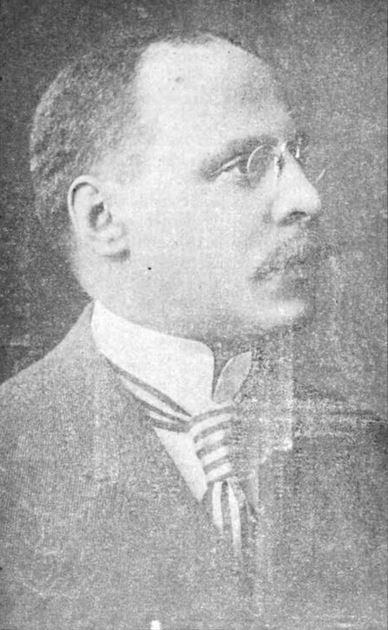
Chicago dentist who organized the Odontographic Society in his office in 1888, pioneered school dental inspection, and served as secretary of Provident Hospital.
| At a glance | |
|---|---|
| Type | PERSON — dentist |
| Dates | February 1, 1859 – October 13, 1929 |
| Chicago connection | Chicago — practiced and organized there from 1887 |
| Known for | Founding the Odontographic Society of Chicago (1888); early school dental examinations; Provident Hospital secretary |
| Verification | SUPPORTED |
| CTL ID | CTL-ENC-000260 |
| Documented address | None documented — see Documented address and map section |
Overview
Charles Edwin Bentley (1859–1929) was a Chicago dentist whose career joined three strands of Black institutional life: professional dentistry, public-health prevention, and civil-rights organizing. Born and educated in Cincinnati, Ohio, he earned his Doctor of Dental Surgery degree from the Chicago College of Dental Surgery in 1887 and built his practice in Chicago [S1][S2]. Within a year of graduating he had organized, in his own office, the dental society that became the largest local dental society in the world at the time — a founding act carried out not from a university chair but from a Black practitioner's rooms [S1].
Bentley is remembered in dental history as an early voice for prevention over repair. At his suggestion the society he founded investigated the condition of schoolchildren's mouths and teeth; his report, published in the Dental Review in 1900, became a basis for later school dental work, and he is widely described as a father of the oral-hygiene movement [S1][S2]. A peer-reviewed history of dentistry treats Bentley alongside David A. Ferguson as one of the profession's contrasting Black leaders, which is why this entry can be graded on more than commemorative summaries alone [S3].
The Odontographic Society
The Odontographic Society was organized in Bentley's office in 1888, and he was its first president [S1][S2]. The society's scale was remarkable for a local body: its February 1903 clinic drew some three thousand members of the profession and nearly one thousand dental students [S1]. In 1911 the Odontographic Society merged into the Chicago Dental Society, and Bentley sat on the merger committee — evidence that the institution he founded from a Black dentist's office was absorbed, with its founder at the table, into the city's mainstream professional structure [S2].
His published papers mark the same bridge-building instinct. Two of his most important were “The Application of Comparative Anatomy to Dentistry” and “Contact Points of the Medical and Dental Profession” — the second title alone states his lifelong argument that dentistry belonged inside medicine and public health, not beside them [S1]. He also experimented with hypnotism as an anesthetic in dental surgery, studying its application at the Chicago School of Psychology [S2].
Public health and Provident
Bentley's prevention work ran through Chicago's institutions. He chaired the Child Welfare Exhibit on Dentistry, and the school-examination campaign he set in motion led the Illinois State Dental Society to investigate children's dental needs and, in 1910, to publish the 32-page booklet “The Care of the Mouth” [S1][S2]. He proposed dental examinations in public schools and free clinics so that people who could not afford treatment — disproportionately Black Chicagoans — could still get care [S2].
He also belonged to the Provident Hospital circle at the center of this volume. Bentley long served as secretary of Provident Hospital, the Black-founded Chicago hospital whose trustees and officers overlapped heavily with the city's Black professional class [S1][S2]. The role placed a dentist inside the governance of Black Chicago's flagship medical institution, an early, practical version of the integrated care his papers argued for.
Civil-rights organizing
Dentistry did not contain Bentley's organizing. He was the first president of the Equal Opportunity League of Chicago, a charter member of the Niagara Movement, and a leader in the Chicago branch of the NAACP, serving on its directory [S1][S2]. That combination — professional-society founder, hospital officer, and movement organizer — is characteristic of the generation that built Black Chicago's institutions before the Great Migration swelled the city. In 1921, the year after he married Florence Lewis, the former literary editor of the Philadelphia Press, Bentley was honored by the city of Chicago and by Howard University [S1][S2]. He died on October 13, 1929 [S1].
Chicago connection
Bentley's whole professional record is Chicago's: the dental degree (1887), the society founded in his Chicago office (1888), the school-inspection campaign in Chicago's public schools, the Provident Hospital secretaryship, and the Chicago NAACP leadership [S1][S2]. He is a CORE entry in the strict sense — remove Chicago and there is no career left to describe.
Documented address and map
No address documented in the sources consulted — no coordinates are recorded and no map is published for this entry.
See also
Relationships
- founded — Odontographic Society of Chicago — The Odontographic Society was organized in Bentley's office in 1888 and he was its first president (S1, S2).
- affiliated_with — Provident Hospital (CTL-E-0377) — Bentley long served as secretary of Provident Hospital (S1, S2).
Sources
- S1: African American Registry. "Charles E. Bentley, Dentist Born." African American Registry. https://aaregistry.org/story/charles-e-bentley-born/.
- S2: "Charles Edwin Bentley." Wikipedia. https://en.wikipedia.org/wiki/Charles_Edwin_Bentley (summarizing the Journal of the National Dental Association biography and Bentley's published papers).
- S3: Dummett, C. O. "Contrasting Philosophies of Two Dental Leaders: Charles E. Bentley and David A. Ferguson." Bulletin of the History of Dentistry 27, no. 1 (1979): 23–33. PubMed record 396948. https://pubmed.ncbi.nlm.nih.gov/396948.
Cite this entry
- Permanent ID: CTL-ENC-000260 · Version: 0.1 · Date: 2026-10-29
- Chicago: CultureTechLens. "Charles Edwin Bentley." CultureTechLens Encyclopedia, version 0.1, October 29, 2026. CultureTechLens NFP. CTL-ENC-000260. Source: CultureTechLens
- APA: CultureTechLens. (2026). Charles Edwin Bentley (Version 0.1, Entry CTL-ENC-000260). CultureTechLens Encyclopedia. CultureTechLens NFP. Source: CultureTechLens
- MLA: CultureTechLens. "Charles Edwin Bentley." CultureTechLens Encyclopedia, version 0.1, CultureTechLens NFP, 29 Oct. 2026. Entry CTL-ENC-000260. Source: CultureTechLens
Further reading
- Dummett, C. O. “Contrasting Philosophies of Two Dental Leaders.” Bulletin of the History of Dentistry 27, no. 1 (1979).
Image credits
- Bentley portrait: see Images block in the frontmatter for the full credit line, rights status, and rights document. Resolution limit (388 × 630 px) is stated there.
Citation
CultureTechLens. "Charles Edwin Bentley." CultureTechLens Encyclopedia, Black Medicine (staged), version 0.1, 2026-10-29. CultureTechLens NFP. CTL-ENC-000260.
<!-- =======================