 CULTURETECHLENS
The Encyclopedia · CTL-ENC-000145
Chip E.
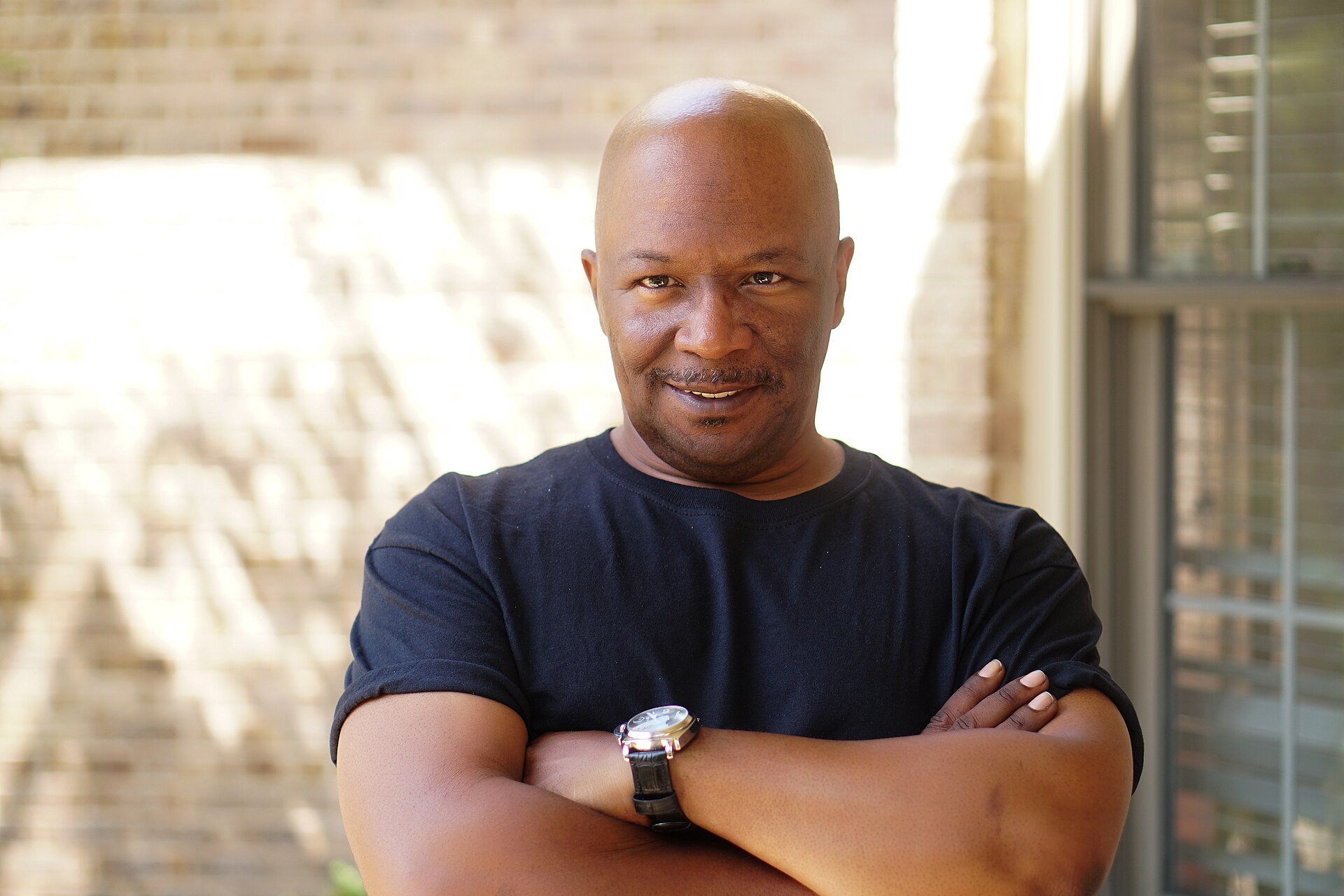
Chip E.
| At a glance | |
|---|---|
| Type | PERSON — person |
| Dates | – |
| Chicago connection | CORE — see the Chicago connection section |
| Known for | Chip E. |
| Verification | SUPPORTED |
| CTL ID | CTL-ENC-000145 |
Overview
Chip E. — born Irwin Eberhart II in Chicago in 1966, and given in some references with the fuller name Irwin Larry Eberhart II — is the DJ and producer whom Street Mix magazine named the "Godfather of House Music" and whose first record helped give Chicago house both its name and its verb. He grew up on the South Side in a middle-class working family, attended parochial schools and, in the standard biographies, St. Ignatius College Prep, Kenwood Academy, Columbia College, and DePaul University. His own account to the Red Bull Music Academy begins on a dancefloor: a night in 1979, at thirteen, soundtracked by the Chosen Few at Chicago's underground loft parties, fixed his vocation. He started spinning records in 1982, chasing obscure imports so his sets would stand out in a scene where DJs competed to play, in his phrase, the music made tomorrow.
The counter job made the career. At Imports Etc. (Importes Etc. in his own spelling), the Chicago record shop that catered to DJs, Eberhart rose to help with buying and selecting, and the city's defining DJs — Frankie Knuckles, Ron Hardy, and the Hot Mix 5, alongside contemporaries Jesse Saunders and Steve "Silk" Hurley — were his customers. For Knuckles he kept a special bin of records he knew the Warehouse crowd would want; he also cut reel-to-reel edits for Knuckles and Hardy. Tinkering with drum machines and cheap synthesizers, he went into the studio and in late 1984 self-released the Jack Trax EP, containing "Time to Jack" and "It's House." The tracks are widely described as among the first original house records and the first to put the words "house" and "jack" — the dance the music demanded — into the genre's own vocabulary; the "Bang Bang Bang, Skeet Skeet Skeet" percussion figure in "It's House" later became a staple of ghetto house and footwork. Original copies of Jack Trax became among the most coveted artifacts of the music's first era.
Life and career
When house broke in Britain in 1986, Eberhart was travelling regularly to Europe to DJ, and Street Mix put the "Godfather of House Music" title on the cover of its first issue in November 1986 (some accounts date the title to 1985). In 1987 he became the first Chicago artist in regular rotation on all three of the city's major stations — WBMX, WGCI-FM, and B96 — when B96's Joe Bohannon added "If You Only Knew" and began the station's turn toward dance music. That same year he repaid the Imports Etc. friendship in the studio, co-producing Frankie Knuckles's first record, "You Can't Hide," a house cover of Teddy Pendergrass's "You Can't Hide from Yourself," with Eberhart programming the Roland TR-909 drums and sharing keyboards with Joe Smooth. He also helped start Lidell Townsell, Kevin Irving, and Harri Dennis of The It. A contract dispute with D.J. International Records then stalled his recording career — he has said he would rather not record than record for that label — and by his early twenties he was, in one biographer's phrase, a worldwide name retreating toward mythology, DJing rarely in Britain and Italy before taking a break from the industry in the mid-1990s. He resurfaced as a filmmaker, producing the house-music documentary The UnUsual Suspects: Once Upon a Time in House Music, and his foundational era is now the subject of Still Music's archival series The Architect of House: Chicago 1984-88, which presents the Jack Trax period, the edits, and previously unreleased recordings as a single documented chapter in the birth of a genre Chicago gave the world. His fullest account remains the long 2005 sitting with DJ-history writers Bill Brewster and Frank Broughton, recorded in London for Red Bull Music Academy's Daily, in which Eberhart recounts the clubs, the DJs, the record-shop economy that connected them, and, in the Academy's phrase, the real story of how the genre got its name — a primary-source narrative of house music's birth told by the man who sold its founders their records, cut their edits, named its dance, and then, with Knuckles, stepped behind the console himself.
Chicago connection
— born Irwin Eberhart II in Chicago in 1966, and given in some references with the fuller name Irwin Larry Eberhart II — is the DJ and producer whom Street Mix magazine named the "Godfather of House Music" and whose first record helped give Chicago house both its name and its verb. His own account to the Red Bull Music Academy begins on a dancefloor: a night in 1979, at thirteen, soundtracked by the Chosen Few at Chicago's underground loft parties, fixed his vocation. in his own spelling), the Chicago record shop that catered to DJs, Eberhart rose to help with buying and selecting, and the city's defining DJs — Frankie Knuckles, Ron Hardy, and the Hot Mix 5, alongside contemporaries Jesse Saunders and Steve "Silk" Hurley — were his customers. In 1987 he became the first Chicago artist in regular rotation on all three of the city's major stations — WBMX, WGCI-FM, and B96 — when B96's Joe Bohannon added "If You Only Knew" and began the station's turn toward dance music. He resurfaced as a filmmaker, producing the house-music documentary The UnUsual Suspects: Once Upon a Time in House Music, and his foundational era is now the subject of Still Music's archival series The Architect of House: Chicago 1984-88, which presents the Jack Trax period, the edits, and previously unreleased recordings as a single documented chapter in the birth of a genre Chicago gave the world. [S1]
Disputed and unresolved
| Claim | As recorded | CTL position |
|---|---|---|
| Contested point in the record | A contract dispute with D.J. (depth record, sources as cited) | DISPUTED — shown as recorded; not resolved in this entry |
See also
Relationships
- affiliated_with — Imports Etc. (CTL-E-0185) — Restated from the CultureTechLens Knowledge Graph: Chip E. (CTL-E-0518) affiliated_with Imports Etc. (CTL-E-0185), verification Verified.
- related_to — Ron Hardy (CTL-E-0047) — Restated from the CultureTechLens Knowledge Graph: Chip E. (CTL-E-0518) related_to Ron Hardy (CTL-E-0047), verification Verified.
- from — City of Chicago (CTL-E-1475) — Restated from the CultureTechLens Knowledge Graph: Chip E. (CTL-E-0518) from City of Chicago (CTL-E-1475), verification Verified.
- collaborated_with — Jesse Saunders (CTL-E-0052) — Restated from the CultureTechLens Knowledge Graph: Chip E. (CTL-E-0518) collaborated_with Jesse Saunders (CTL-E-0052), verification Verified.
- collaborated_with — Frankie Knuckles (CTL-E-0046) — Restated from the CultureTechLens Knowledge Graph: Chip E. (CTL-E-0518) collaborated_with Frankie Knuckles (CTL-E-0046), verification Provisional.
- recorded_for — D.J. International Records (CTL-E-0170) — Restated from the CultureTechLens Knowledge Graph: Chip E. (CTL-E-0518) recorded_for D.J. International Records (CTL-E-0170), verification Verified.
- affiliated_with — D.J. International Records (CTL-E-0170) — Restated from the CultureTechLens Knowledge Graph: Chip E. (CTL-E-0518) affiliated_with D.J. International Records (CTL-E-0170), verification Verified.
- related_to — House music — name origin (CTL-E-1214) — Restated from the CultureTechLens Knowledge Graph: Chip E. (CTL-E-0518) related_to House music — name origin (CTL-E-1214), verification Verified.
Sources
- S1: "Time to Jack: Chip E on the Birth of Chicago House." Red Bull Music Academy Daily. Accessed October 26, 2026. https://daily.redbullmusicacademy.com/2019/01/chip-e-interview/.
- S2: "Chip E." Wikipedia. Accessed October 26, 2026. https://en.wikipedia.org/wiki/Chip_E.
- S3: "Reel Black List: Chip E., Godfather of House Music." Reel Chicago. Accessed October 26, 2026. https://reelchicago.com/article/reel-black-list-chip-e-godfather-of-house-music/.
- S4: "The Architect of House — Chicago 1984-88, Volume 2: Unreleased Jack." Still Music. Accessed October 26, 2026. https://still-music.bandcamp.com/album/the-architect-of-house-chicago-1984-88-volume-2-unreleased-jack.
- S5: CultureTechLens Knowledge Graph (schema v0.3.1), entities.json and relationships.json — CTL's own graph register, consulted 2026-10-29 for crosswalk facts and restated relationships.
Cite this entry
- Permanent ID: CTL-ENC-000145 · Crosswalked graph record: CTL-P-0328 · Version: 0.1 · Date: 2026-10-29
- Chicago: CultureTechLens. "Chip E.." CultureTechLens Encyclopedia, version 0.1, October 29, 2026. CultureTechLens NFP. CTL-ENC-000145.
- APA: CultureTechLens. (2026). Chip E. (Version 0.1, Entry CTL-ENC-000145). CultureTechLens Encyclopedia. CultureTechLens NFP.
- MLA: CultureTechLens. "Chip E.." CultureTechLens Encyclopedia, version 0.1, CultureTechLens NFP, 29 Oct. 2026. Entry CTL-ENC-000145.
Further reading
- CultureTechLens Knowledge Graph record CTL-P-0328 (crosswalked; published graph register id CTL-E-0518).
Image credits
- Chip E. photograph: see Images block in the frontmatter for the full credit line, rights status, and rights document.
Citation
CultureTechLens. "Chip E.." CultureTechLens Encyclopedia, Vol. 1 — Black Chicago, version 0.1, 2026-10-29. CultureTechLens NFP. CTL-ENC-000145.
<!-- =======================