 CULTURETECHLENS
The Encyclopedia · CTL-ENC-000127
Clarence Page
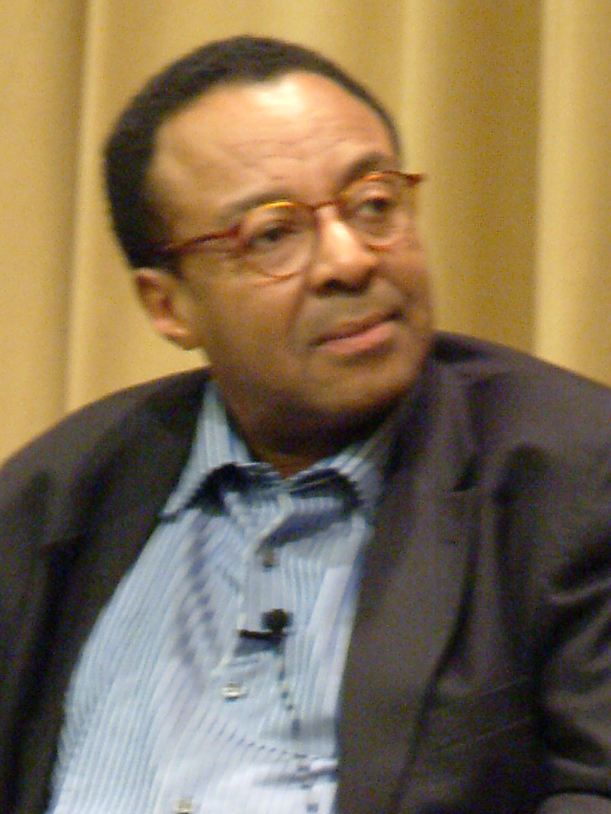
Clarence Page (born June 2, 1947, in Dayton, Ohio) is the Pulitzer Prize-winning columnist and editorial-board member of the Chicago Tribune whose syndicated column has carried a Chicago-formed, race-and-class analysis of American politics to newspapers
| At a glance | |
|---|---|
| Type | PERSON — journalist |
| Dates | – |
| Chicago connection | CORE — see the Chicago connection section |
| Known for | Clarence Page (born June 2, 1947, in Dayton, Ohio) is the Pulitzer Prize-winning columnist and editorial-board member |
| Verification | PROVISIONAL |
| CTL ID | CTL-ENC-000127 |
Overview
Clarence Page (born June 2, 1947, in Dayton, Ohio) is the Pulitzer Prize-winning columnist and editorial-board member of the Chicago Tribune whose syndicated column has carried a Chicago-formed, race-and-class analysis of American politics to newspapers nationwide since the 1980s. The HistoryMakers' biography gives the formation: son of Clarence Hannibal Page, a factory worker, and Maggie Page, who ran a catering service; feature editor of his high-school newspaper in Middletown, Ohio, where he won the Southeast Ohio High School Newspaper Association's award for the year's best feature article in 1965 under his teacher Mary Kendall; that summer he earned his first journalism pay selling freelance photographs and stories to the Middletown Journal and the Cincinnati Enquirer. He took his B.S. in journalism from Ohio University in 1969, working on the student newspaper, and joined the Chicago Tribune the same year as one of its few African American reporters.
The Tribune career, as The HistoryMakers and the Tribune Content Agency biography jointly record it, ran 1969 to 1980 with an interruption: drafted six months in, he served in the press office of the 212th Artillery Group at Fort Lewis, Washington, returned in 1971, and covered police, religion and neighborhood news while freelancing as a rock-music critic for the Tempo section. He was part of the 1972 Tribune Task Force series on vote fraud that won a Pulitzer Prize, became a foreign correspondent in Africa in 1976 — winning the Edward Scott Beck Award for a series on the changing politics of Southern Africa — and in 1980 won an Illinois UPI award for community service for the investigative series "The Black Tax." In August 1980 he moved to WBBM-TV, the CBS station, as director of community affairs and then reporter and planning editor, assigned to the Harold Washington mayoral campaign — the election that made Washington Chicago's first Black mayor. In July 1984 he returned to the Tribune as a columnist and member of the editorial board, the first Black journalist on that board per the secondary record, and in 1989 he won the Pulitzer Prize for Commentary. Southern Illinois University's program note adds a lifetime-achievement award from the National Association of Black Journalists (2004) and his 1992 induction into the Chicago Journalism Hall of Fame.
Life and career
Syndication took the column national in 1987 (Tribune Media Services; the Dartmouth Montgomery Fellows biography puts its reach at more than 150 newspapers), and Page has been based in Washington, D.C., since 1991 without ceasing to write as a Chicagoan. His books are Showing My Color: Impolite Essays on Race and Identity (1996) and A Bridge to the New Media Century, per the Tribune Content Agency biography, which also lists his regular broadcast work: essayist for PBS's NewsHour with Jim Lehrer, panelist on The McLaughlin Group, commentator on NPR and BET's Lead Story, and guest on ABC's Nightline and This Week. His columns address the social, economic and political issues affecting Americans — crime, education, housing, hunger and bigotry, in the agency's summary — with the civil-liberties emphasis recognized by ACLU awards in Illinois and Wisconsin. In the CultureTechLens graph (build side CTL-E-4865), Page is the Tribune's institutional voice in the Black Chicago record: a reporter who arrived in 1969, when the paper had few Black journalists, and stayed to become its editorial conscience on race. He is not Clarence Jones, Clarence Ludd or Clarence O. Smith, the other Clarences of this fragment.
The column's method is worth stating from the record of its subjects. Page writes as a self-described liberal in the Tribune Content Agency's classification, but his signature essays — collected in Showing My Color — work the seam where race and class cross, arguing with Black and white orthodoxies alike; the ACLU chapter awards in Illinois and Wisconsin cited by his speaker biography were given specifically for columns on civil liberties and constitutional rights. His honorary degrees, per the Dartmouth Montgomery Fellows biography, include Columbia College Chicago, Lake Forest College and Nazareth College — institutions of the city that formed him and the profession that certified him.
This record is a staged proposal pending the founder's classification sitting.
Chicago connection
Clarence Page (born June 2, 1947, in Dayton, Ohio) is the Pulitzer Prize-winning columnist and editorial-board member of the Chicago Tribune whose syndicated column has carried a Chicago-formed, race-and-class analysis of American politics to newspapers nationwide since the 1980s. in journalism from Ohio University in 1969, working on the student newspaper, and joined the Chicago Tribune the same year as one of its few African American reporters. He was part of the 1972 Tribune Task Force series on vote fraud that won a Pulitzer Prize, became a foreign correspondent in Africa in 1976 — winning the Edward Scott Beck Award for a series on the changing politics of Southern Africa — and in 1980 won an Illinois UPI award for community service for the investigative series "The Black Tax." In August 1980 he moved to WBBM-TV, the CBS station, as director of community affairs and then reporter and planning editor, assigned to the Harold Washington mayoral campaign — the election that made Washington Chicago's first Black mayor. Southern Illinois University's program note adds a lifetime-achievement award from the National Association of Black Journalists (2004) and his 1992 induction into the Chicago Journalism Hall of Fame. Syndication took the column national in 1987 (Tribune Media Services; the Dartmouth Montgomery Fellows biography puts its reach at more than 150 newspapers), and Page has been based in Washington, D.C., since 1991 without ceasing to write as a Chicagoan. [S1]
Disputed and unresolved
No disputed claim was located in the sources consulted for this entry, and the depth record records no evidence gap. Open items, if any, are listed in Editorial notes.
See also
Relationships
- related_to — City Club of Chicago: Chicago Tribune Post-Election Panel (CTL-E-4964) — Restated from the CultureTechLens Knowledge Graph: Clarence Page (CTL-E-4865) related_to City Club of Chicago: Chicago Tribune Post-Election Panel (CTL-E-4964), verification Verified.
- related_to — City Club of Chicago: The Trump Presidency and the Media (CTL-E-4965) — Restated from the CultureTechLens Knowledge Graph: Clarence Page (CTL-E-4865) related_to City Club of Chicago: The Trump Presidency and the Media (CTL-E-4965), verification Verified.
Sources
- S1: The HistoryMakers. "Clarence Page's Biography." Accessed October 26, 2026. https://www.thehistorymakers.org/biography/clarence-page-5.
- S2: Tribune Content Agency. "Clarence Page." Accessed October 26, 2026. https://tribunecontentagency.com/premium-content/opinion/liberal/clarence-page/.
- S3: Speakers.com. "Clarence Page Speaker Biography." Accessed October 26, 2026. https://speakers.com/Clarence-Page.
- S4: Southern Illinois University Carbondale. "SIUC to Host Columnist Clarence Page." Accessed October 26, 2026. https://news.siu.edu/2006/03/032406pr6031.php.
- S5: CultureTechLens Knowledge Graph (schema v0.3.1), entities.json and relationships.json — CTL's own graph register, consulted 2026-10-29 for crosswalk facts and restated relationships.
Cite this entry
- Permanent ID: CTL-ENC-000127 · Crosswalked graph record: CTL-ESS-0171 · Version: 0.1 · Date: 2026-10-29
- Chicago: CultureTechLens. "Clarence Page." CultureTechLens Encyclopedia, version 0.1, October 29, 2026. CultureTechLens NFP. CTL-ENC-000127.
- APA: CultureTechLens. (2026). Clarence Page (Version 0.1, Entry CTL-ENC-000127). CultureTechLens Encyclopedia. CultureTechLens NFP.
- MLA: CultureTechLens. "Clarence Page." CultureTechLens Encyclopedia, version 0.1, CultureTechLens NFP, 29 Oct. 2026. Entry CTL-ENC-000127.
Further reading
- CultureTechLens Knowledge Graph record CTL-ESS-0171 (crosswalked; published graph register id CTL-E-4865).
Image credits
- Clarence Page photograph: see Images block in the frontmatter for the full credit line, rights status, and rights document.
Citation
CultureTechLens. "Clarence Page." CultureTechLens Encyclopedia, Vol. 1 — Black Chicago, version 0.1, 2026-10-29. CultureTechLens NFP. CTL-ENC-000127.
<!-- =======================