 CULTURETECHLENS
The Encyclopedia · CTL-ENC-000106
Claude Lightfoot
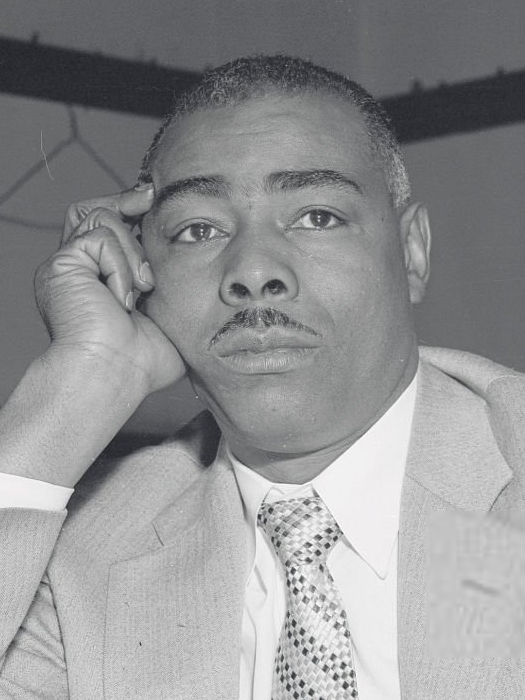
Claude M.
| At a glance | |
|---|---|
| Type | PERSON — activist |
| Dates | – |
| Chicago connection | CORE — see the Chicago connection section |
| Known for | Claude M. |
| Verification | PROVISIONAL |
| CTL ID | CTL-ENC-000106 |
Overview
Claude M. Lightfoot (January 19, 1910 – July 17, 1991) was the Chicago-based African American Communist leader whose Smith Act prosecution became a national test case for whether party membership itself could be a crime. Wikipedia's biography gives the frame: born in Lake Village, Arkansas, educated at Virginia Union University, a functionary of the Communist Party USA from 1957 until his death in the party's senior ranks, and for decades before that its leading Black organizer in Illinois; author of many books and articles on racism and communism; a world lecturer for the party's cause. The Encyclopedia of Arkansas entry supplies the arc: a child of the Great Migration who married Geraldyne Gray in 1938 — herself a CPUSA organizer from a Mississippi family that had also moved north — and who ran for the Illinois legislature as a Communist, including a 1946 run made against the wishes of party officials. The Chicago History Museum's essay adds the earlier milestones: by 1935 Lightfoot was a delegate to the Seventh World Congress of the Communist International in Moscow, and after the Nazi invasion of the Soviet Union he enlisted in the U.S. Army in 1941, returning three years later with his socialist convictions deepened, in the Museum's account, by the prejudiced treatment of Black soldiers and Communists alike.
The prosecution is the documented center of the life. On June 26, 1954, Lightfoot, then executive secretary of the Communist Party of Illinois, was arrested under the Smith Act of 1940 and charged with membership in the party with knowledge of its objective "to teach and advocate the overthrow of the government of the United States by force and violence as speedily as circumstances would permit." The Chicago History Museum and the Encyclopedia of Arkansas agree on the case's significance: it was the first indictment under that membership clause, a test case for prosecution and defense alike, and Lightfoot believed the government targeted him to warn Black Americans away from the Communists and from civil-rights activity in general. He was convicted in January 1955. The appeal ran a decade: the U.S. Supreme Court reversed the conviction (355 U.S. 2, 1957, per Wikipedia), and the case ended in acquittal — dated 1961 in Wikipedia's account and 1964 in the CPUSA and Encyclopedia of Arkansas accounts, which tie the acquittal to the year the Court also struck down the McCarran Act provision withholding passports from party members. The variance in the acquittal year across reputable sources is stated here rather than resolved; the reversal of the conviction is common to all of them.
Life and career
Lightfoot's later decades were spent as a party officer, writer and lecturer. The Encyclopedia of Arkansas records his 1973 honorary doctorate from the University of Rostock in East Germany for Racism and Human Survival: Lessons of Nazi Germany for Today's World, honors from the Bulgarian and Soviet parties, and his autobiography, Chicago Slums to World Politics (cited by the encyclopedia as published in 1986, with a 1980 New Outlook edition also listed). He moved to Gary, Indiana, in 1973, died there on July 17, 1991, and is buried in Forest Home Cemetery in Forest Park, Illinois; his papers are held by the Chicago History Museum. In the CultureTechLens graph (build side CTL-E-4271), Claude Lightfoot is filed as what he was — a Black communist leader in Chicago for almost sixty years. He is not Lori Lightfoot, the former mayor of Chicago; the graph's master holds her separately (CTL-P-0157), and the two records share nothing but a surname.
The party offices deserve one clarifying line from the CPUSA account: from 1964 until his death in 1991 Lightfoot worked as a party officer seeking, in the account's words, the advancement of Marxist-Leninist ideals, writing numerous books and articles about racism and communism and lecturing around the world. His 1932 run for the Illinois legislature, noted in the party literature, drew over 33,000 votes on the Communist ticket — a measure of how substantial his Chicago base was two decades before the Smith Act arrest made him a national case. The Chicago History Museum holds his papers, the archival residue of that organizing life.
This record is a staged proposal pending the founder's classification sitting.
Chicago connection
Lightfoot (January 19, 1910 – July 17, 1991) was the Chicago-based African American Communist leader whose Smith Act prosecution became a national test case for whether party membership itself could be a crime. The Chicago History Museum's essay adds the earlier milestones: by 1935 Lightfoot was a delegate to the Seventh World Congress of the Communist International in Moscow, and after the Nazi invasion of the Soviet Union he enlisted in the U.S. On June 26, 1954, Lightfoot, then executive secretary of the Communist Party of Illinois, was arrested under the Smith Act of 1940 and charged with membership in the party with knowledge of its objective "to teach and advocate the overthrow of the government of the United States by force and violence as speedily as circumstances would permit." The Chicago History Museum and the Encyclopedia of Arkansas agree on the case's significance: it was the first indictment under that membership clause, a test case for prosecution and defense alike, and Lightfoot believed the government targeted him to warn Black Americans away from the Communists and from civil-rights activity in general. The Encyclopedia of Arkansas records his 1973 honorary doctorate from the University of Rostock in East Germany for Racism and Human Survival: Lessons of Nazi Germany for Today's World, honors from the Bulgarian and Soviet parties, and his autobiography, Chicago Slums to World Politics (cited by the encyclopedia as published in 1986, with a 1980 New Outlook edition also listed). [S1]
Disputed and unresolved
| Claim | As recorded | CTL position |
|---|---|---|
| Contested point in the record | The variance in the acquittal year across reputable sources is stated here rather than resolved; the reversal of the conviction is common to all of them. (depth record, sources as cited) | DISPUTED — shown as recorded; not resolved in this entry |
See also
Relationships
- related_to — Lost Organizational Records (CTL-E-0771) — Restated from the CultureTechLens Knowledge Graph: Claude Lightfoot (CTL-E-4271) related_to Lost Organizational Records (CTL-E-0771), verification Verified.
Sources
- S1: Encyclopedia of Arkansas. "Claude M. Lightfoot (1910–1991)." Accessed October 26, 2026. https://encyclopediaofarkansas.net/entries/claude-m-lightfoot-13820/.
- S2: Chicago History Museum. "Claude M. Lightfoot: Communism and Black Liberation." Accessed October 26, 2026. https://www.chicagohistory.org/claude-m-lightfoot-communism-and-black-liberation/.
- S3: Wikipedia. "Claude Lightfoot." Accessed October 26, 2026. https://en.wikipedia.org/wiki/Claude_Lightfoot.
- S4: CPUSA. "Claude M. Lightfoot: Communism and Black Liberation." Accessed October 26, 2026. https://cpusa.org/article/claude-m-lightfoot-communism-and-black-liberation/.
- S5: CultureTechLens Knowledge Graph (schema v0.3.1), entities.json and relationships.json — CTL's own graph register, consulted 2026-10-29 for crosswalk facts and restated relationships.
Cite this entry
- Permanent ID: CTL-ENC-000106 · Crosswalked graph record: CTL-ESS-0174 · Version: 0.1 · Date: 2026-10-29
- Chicago: CultureTechLens. "Claude Lightfoot." CultureTechLens Encyclopedia, version 0.1, October 29, 2026. CultureTechLens NFP. CTL-ENC-000106.
- APA: CultureTechLens. (2026). Claude Lightfoot (Version 0.1, Entry CTL-ENC-000106). CultureTechLens Encyclopedia. CultureTechLens NFP.
- MLA: CultureTechLens. "Claude Lightfoot." CultureTechLens Encyclopedia, version 0.1, CultureTechLens NFP, 29 Oct. 2026. Entry CTL-ENC-000106.
Further reading
- CultureTechLens Knowledge Graph record CTL-ESS-0174 (crosswalked; published graph register id CTL-E-4271).
Image credits
- Claude Lightfoot photograph: see Images block in the frontmatter for the full credit line, rights status, and rights document.
Citation
CultureTechLens. "Claude Lightfoot." CultureTechLens Encyclopedia, Vol. 1 — Black Chicago, version 0.1, 2026-10-29. CultureTechLens NFP. CTL-ENC-000106.
<!-- =======================