 CULTURETECHLENS
The Encyclopedia · CTL-ENC-000239
Clifton H. Johnson
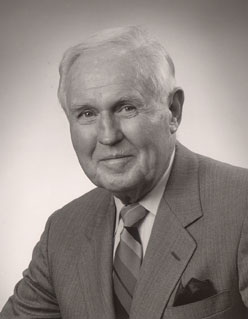
Clifton Herman Johnson (September 13, 1921 – May 2008) was the historian and archivist who founded the Amistad Research Center in 1966 and directed it for more than a quarter-century, building one of the nation's
| At a glance | |
|---|---|
| Type | PERSON — scholar |
| Dates | – |
| Chicago connection | SIGNIFICANT — see the Chicago connection section |
| Known for | Clifton Herman Johnson (September 13, 1921 – May 2008) was the historian and archivist who founded the Amistad Research |
| Verification | PROVISIONAL |
| CTL ID | CTL-ENC-000239 |
Overview
Clifton Herman Johnson (September 13, 1921 – May 2008) was the historian and archivist who founded the Amistad Research Center in 1966 and directed it for more than a quarter-century, building one of the nation's principal archives of African American and ethnic history out of a missionary society's neglected files. The Amistad Research Center's own biographical record, in Tulane's finding-aids system, gives the formation: born in Griffin, Georgia, on September 13, 1921; served in the U.S. Army from 1940 to 1945, attending the University of Connecticut's Army Specialized Training Program; earned his BA from the University of North Carolina in 1948, his MA from the University of Chicago in 1949, and his PhD in American history from the University of North Carolina in 1959; married Rosemary Brunst in 1960, with three children. From 1950 to 1966 he taught history at LeMoyne College and East Carolina College, served as archivist at Fisk University, and directed the Race Relations Department of the United Church Board for Homeland Ministries.
The founding grew from his dissertation. Wikipedia's biography explains that Johnson's doctoral work was a history of the American Missionary Association — the abolitionist-founded organization whose records, some 300,000 items, were housed at Fisk — and that the Association recruited him to organize that collection archivally; he was the logical choice, and he extended the collection while preserving it. By 1963 the organized collection was open for public use. The Chronicle of Higher Education's account adds the decade of advocacy behind the institution: Johnson was astounded by the wealth of material at Fisk and urged the university to make the records the base of a larger archive on the history of ethnic minority groups, particularly African Americans; it took him more than ten years to persuade his hosts. In 1966 the United Church Board's new Race Relations Department, with Johnson as director, gave the Amistad Research Center its first home and financial support at Fisk; in 1969 the Center became independent, and in 1970 it relocated to Dillard University in New Orleans — later moving to the former U.S. Mint and eventually to Tulane University, as the Chronicle traces the succession of homes.
Life and career
Johnson remained director until 1992, took emeritus status, and returned as interim director from May 1995 to May 1996 while a successor was recruited — a tenure Wikipedia documents — and he continued publishing scholarly articles on African American history afterward. The Chronicle measures what he built: more than 6,000 linear feet of manuscripts, letters, diaries, memoirs and reports; some 250,000 photographs; more than 400 audio and video tapes; nearly 14,000 reels of microfilm; and more than 500 pieces of African and African American art — including the largest collection anywhere on the 1839 Amistad revolt itself, papers of Countee Cullen and of Mary McLeod Bethune. He edited two books and published numerous articles on abolitionism, African American history and archives administration (per the Center's biography), served on the boards of the United Nations Association of Memphis, civil-rights and housing organizations and the Urban League of Greater New Orleans, and in his last decade advised Steven Spielberg's film Amistad (1997) as a consultant — the archivist briefing Hollywood on his own collection's subject. In the CultureTechLens graph (build side CTL-E-3037), Johnson stands in the lineage this program itself descends from: the proposition that Black history survives because someone organizes, preserves and opens the record.
The Center's biography also records the civic perimeter of the archival career: board service with the United Nations Association of Memphis, the Tennessee Council of Human Relations, the Middle Tennessee chapter of the ACLU, the National Committee Against Discrimination in Housing, the Friends of Archives of Louisiana and the Urban League of Greater New Orleans, with numerous awards, honors and fellowships for work in education, history, community relations and race relations. The pattern matches the Center itself — Johnson treated archives not as storage but as civil-rights infrastructure, and the organizations he served are the same ones whose records an archive like Amistad exists to keep. His papers, held by the Center he founded, run from 1944 to 2003.
This record is a staged proposal pending the founder's classification sitting.
Chicago connection
Army from 1940 to 1945, attending the University of Connecticut's Army Specialized Training Program; earned his BA from the University of North Carolina in 1948, his MA from the University of Chicago in 1949, and his PhD in American history from the University of North Carolina in 1959; married Rosemary Brunst in 1960, with three children. [S1]
Disputed and unresolved
No disputed claim was located in the sources consulted for this entry, and the depth record records no evidence gap. Open items, if any, are listed in Editorial notes.
See also
Relationships
- founded — Amistad Research Center (CTL-E-0639) — Restated from the CultureTechLens Knowledge Graph: Clifton H. Johnson (CTL-E-3037) founded Amistad Research Center (CTL-E-0639), verification Verified.
- affiliated_with — Amistad Research Center (CTL-E-0639) — Restated from the CultureTechLens Knowledge Graph: Clifton H. Johnson (CTL-E-3037) affiliated_with Amistad Research Center (CTL-E-0639), verification Verified.
Sources
- S1: Amistad Research Center. "Johnson, Clifton H. (Clifton Herman), 1921-2008." Accessed October 26, 2026. https://amistad-finding-aids.tulane.edu/agents/people/1464?&filter_fields[]=subjects&filter_values[]=Authors.
- S2: Wikipedia. "Clifton H. Johnson." Accessed October 26, 2026. http://en.wikipedia.org/wiki/Clifton_H._Johnson.
- S3: Chronicle of Higher Education. "Tulane Historian Has Spent His Career Studying the Amistad Rebellion." Accessed October 26, 2026. https://www.chronicle.com/article/tulane-historian-has-spent-his-career-studying-the-amistad-rebellion/.
- S4: Amistad Research Center. "Clifton H. Johnson Papers." Accessed October 26, 2026. https://amistad-finding-aids.tulane.edu/repositories/2/resources/821/search.
- S5: CultureTechLens Knowledge Graph (schema v0.3.1), entities.json and relationships.json — CTL's own graph register, consulted 2026-10-29 for crosswalk facts and restated relationships.
Cite this entry
- Permanent ID: CTL-ENC-000239 · Crosswalked graph record: CTL-ESS-0181 · Version: 0.1 · Date: 2026-10-29
- Chicago: CultureTechLens. "Clifton H. Johnson." CultureTechLens Encyclopedia, version 0.1, October 29, 2026. CultureTechLens NFP. CTL-ENC-000239.
- APA: CultureTechLens. (2026). Clifton H. Johnson (Version 0.1, Entry CTL-ENC-000239). CultureTechLens Encyclopedia. CultureTechLens NFP.
- MLA: CultureTechLens. "Clifton H. Johnson." CultureTechLens Encyclopedia, version 0.1, CultureTechLens NFP, 29 Oct. 2026. Entry CTL-ENC-000239.
Further reading
- CultureTechLens Knowledge Graph record CTL-ESS-0181 (crosswalked; published graph register id CTL-E-3037).
Image credits
- Clifton H. Johnson photograph: see Images block in the frontmatter for the full credit line, rights status, and rights document.
Citation
CultureTechLens. "Clifton H. Johnson." CultureTechLens Encyclopedia, Vol. 1 — Black Chicago, version 0.1, 2026-10-29. CultureTechLens NFP. CTL-ENC-000239.
<!-- =======================