 CULTURETECHLENS
The Encyclopedia · CTL-ENC-000184
Common
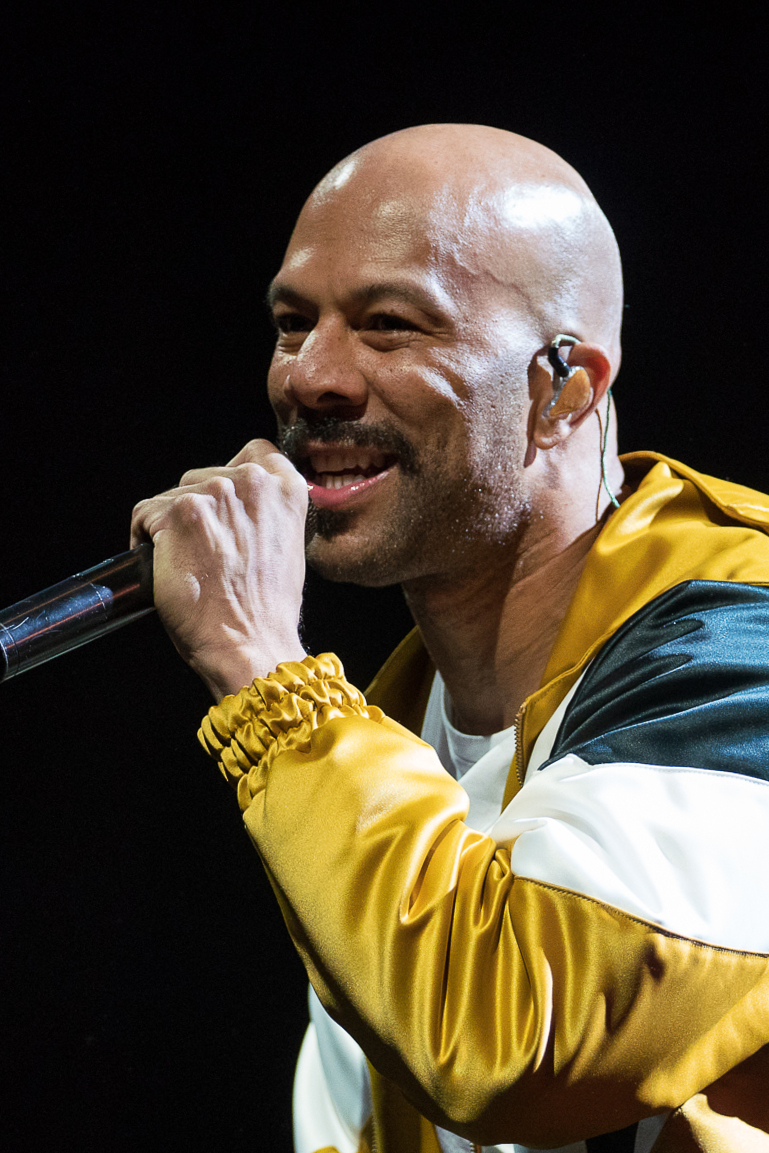
Common — born Lonnie Rashid Lynn on March 13, 1972, in Chicago, Illinois — is the rapper, actor and activist who carried Chicago's jazz-rap conscience into the mainstream and became the first rapper to win
| At a glance | |
|---|---|
| Type | PERSON — musician |
| Dates | – |
| Chicago connection | CORE — see the Chicago connection section |
| Known for | Common — born Lonnie Rashid Lynn on March 13, 1972, in Chicago, Illinois — is the rapper, actor and activist who |
| Verification | SUPPORTED |
| CTL ID | CTL-ENC-000184 |
Overview
Common — born Lonnie Rashid Lynn on March 13, 1972, in Chicago, Illinois — is the rapper, actor and activist who carried Chicago's jazz-rap conscience into the mainstream and became the first rapper to win a Grammy Award, an Academy Award and an Emmy Award. Encyclopaedia Britannica's biography gives the formation: his father was a professional basketball player and youth counselor, his mother a teacher and principal; in high school he formed the rap trio C.D.R., which opened for groups including N.W.A; he studied business at Florida A&M University for two years before leaving to devote himself to music; and he performed first as Common Sense, shortening the name in the mid-1990s after a band of the same name sued. Wikipedia's account adds the label line: signed to the independent Relativity Records at twenty, he released Can I Borrow a Dollar? (1992), Resurrection (1994) and One Day It'll All Make Sense (1997), maintaining an underground following through the late 1990s before mainstream success arrived through his work with the Soulquarians collective.
The breakthrough albums, per AllMusic and Wikipedia, were Like Water for Chocolate (2000) — his first major-label release, commercially and critically successful — and Electric Circus (2002). His guest performance on Erykah Badu's "Love of My Life (An Ode to Hip-Hop)" reached number nine on the Billboard Hot 100 and won Best R&B Song at the 45th Grammy Awards. Signing with fellow Chicagoan Kanye West's GOOD Music label, he released Be (2005) and Finding Forever (2007), both nominated for Best Rap Album at the Grammys; Finding Forever became his first album to debut atop the Billboard 200, and its "Southside," featuring West, won Best Rap Performance by a Duo or Group at the 50th Grammys. AllMusic's summary of the craft holds across the catalog: sophisticated lyrical technique, flowing syncopation, outward-looking rhymes and political consciousness — the jazz-rap line kept alive while commercial trends threatened it. Later records include Nobody's Smiling (2014), his third Top Ten album and a direct address to Chicago's violence; Black America Again (2016); Let Love (2019); the two-part A Beautiful Revolution (2020–21); the jazz group August Greene's self-titled album (2018); and The Auditorium, Vol. 1 (2024) with Pete Rock.
Life and career
The second career is not a retirement project. Common co-starred in the film Selma (2014) as civil-rights leader James Bevel and, with John Legend, wrote its song "Glory," which won the 2015 Golden Globe and the Academy Award for Best Original Song — making his Grammy-Oscar-Emmy combination, with the Emmy for the documentary work that followed, a first for a rapper, per Britannica and the African American Registry. Three Grammy Awards in total, per Wikipedia and AllMusic, span the Badu collaboration, "Southside" and "Glory." In the CultureTechLens master, Common's canonical record (CTL-P-0025, grade STRONG EVIDENCE, build side CTL-E-0056) is one of the graph's load-bearing Chicago nodes: the Hyde Park-raised MC whose subject, from "I Used to Love H.E.R." onward, has been the city itself — its music, its violence, its obligations — taken seriously as literature.
Britannica's account of the later work adds the political through-line: Black America Again (2016) and A Beautiful Revolution, Pt. 1 (2020) were each released shortly before presidential elections, with songs centering racism and injustice, and Pt. 2 followed in 2021 — the election-cycle album as civic intervention. The African American Registry's version of the formation adds two facts the other sources compress: he was raised in Hyde Park, and his parents divorced when he was six, his mother raising him while his father remained active in his life. The acting career that runs beside the records is the second craft, but the graph's Common is finally the writer: the MC who titled an album Nobody's Smiling about his own city's gun deaths and accepted an Oscar for a song about Selma in the same decade.
Chicago connection
Common — born Lonnie Rashid Lynn on March 13, 1972, in Chicago, Illinois — is the rapper, actor and activist who carried Chicago's jazz-rap conscience into the mainstream and became the first rapper to win a Grammy Award, an Academy Award and an Emmy Award. Signing with fellow Chicagoan Kanye West's GOOD Music label, he released Be (2005) and Finding Forever (2007), both nominated for Best Rap Album at the Grammys; Finding Forever became his first album to debut atop the Billboard 200, and its "Southside," featuring West, won Best Rap Performance by a Duo or Group at the 50th Grammys. Later records include Nobody's Smiling (2014), his third Top Ten album and a direct address to Chicago's violence; Black America Again (2016); Let Love (2019); the two-part A Beautiful Revolution (2020–21); the jazz group August Greene's self-titled album (2018); and The Auditorium, Vol. Three Grammy Awards in total, per Wikipedia and AllMusic, span the Badu collaboration, "Southside" and "Glory." In the CultureTechLens master, Common's canonical record (CTL-P-0025, grade STRONG EVIDENCE, build side CTL-E-0056) is one of the graph's load-bearing Chicago nodes: the Hyde Park-raised MC whose subject, from "I Used to Love H.E.R." onward, has been the city itself — its music, its violence, its obligations — taken seriously as literature. [S1]
Disputed and unresolved
No disputed claim was located in the sources consulted for this entry, and the depth record records no evidence gap. Open items, if any, are listed in Editorial notes.
See also
Relationships
Relationships: none recorded yet — edges to follow. This entry's graph connections are being built; it publishes now on its sources.
Sources
- S1: Wikipedia. "Common (Rapper)." Accessed October 26, 2026. https://en.wikipedia.org/wiki/Common_(rapper).
- S2: Encyclopaedia Britannica. "Common." Accessed October 26, 2026. https://WWW.Britannica.com/print/article/2058721.
- S3: AllMusic. "Common — Biography." Accessed October 26, 2026. https://www.allmusic.com/artist/common-mn0000115253.
- S4: African American Registry. "Common, Actor, and Rapper Born." Accessed October 26, 2026. http://aaregistry.org/story/common-rapper-and-more-born/.
Cite this entry
- Permanent ID: CTL-ENC-000184 · Crosswalked graph record: CTL-P-0025 · Version: 0.1 · Date: 2026-10-29
- Chicago: CultureTechLens. "Common." CultureTechLens Encyclopedia, version 0.1, October 29, 2026. CultureTechLens NFP. CTL-ENC-000184.
- APA: CultureTechLens. (2026). Common (Version 0.1, Entry CTL-ENC-000184). CultureTechLens Encyclopedia. CultureTechLens NFP.
- MLA: CultureTechLens. "Common." CultureTechLens Encyclopedia, version 0.1, CultureTechLens NFP, 29 Oct. 2026. Entry CTL-ENC-000184.
Further reading
- CultureTechLens Knowledge Graph record CTL-P-0025 (crosswalked; published graph register id CTL-E-0056).
Image credits
- Common photograph: see Images block in the frontmatter for the full credit line, rights status, and rights document.
Citation
CultureTechLens. "Common." CultureTechLens Encyclopedia, Vol. 1 — Black Chicago, version 0.1, 2026-10-29. CultureTechLens NFP. CTL-ENC-000184.
<!-- =======================