 CULTURETECHLENS
The Encyclopedia · CTL-ENC-000122
Dick Gregory
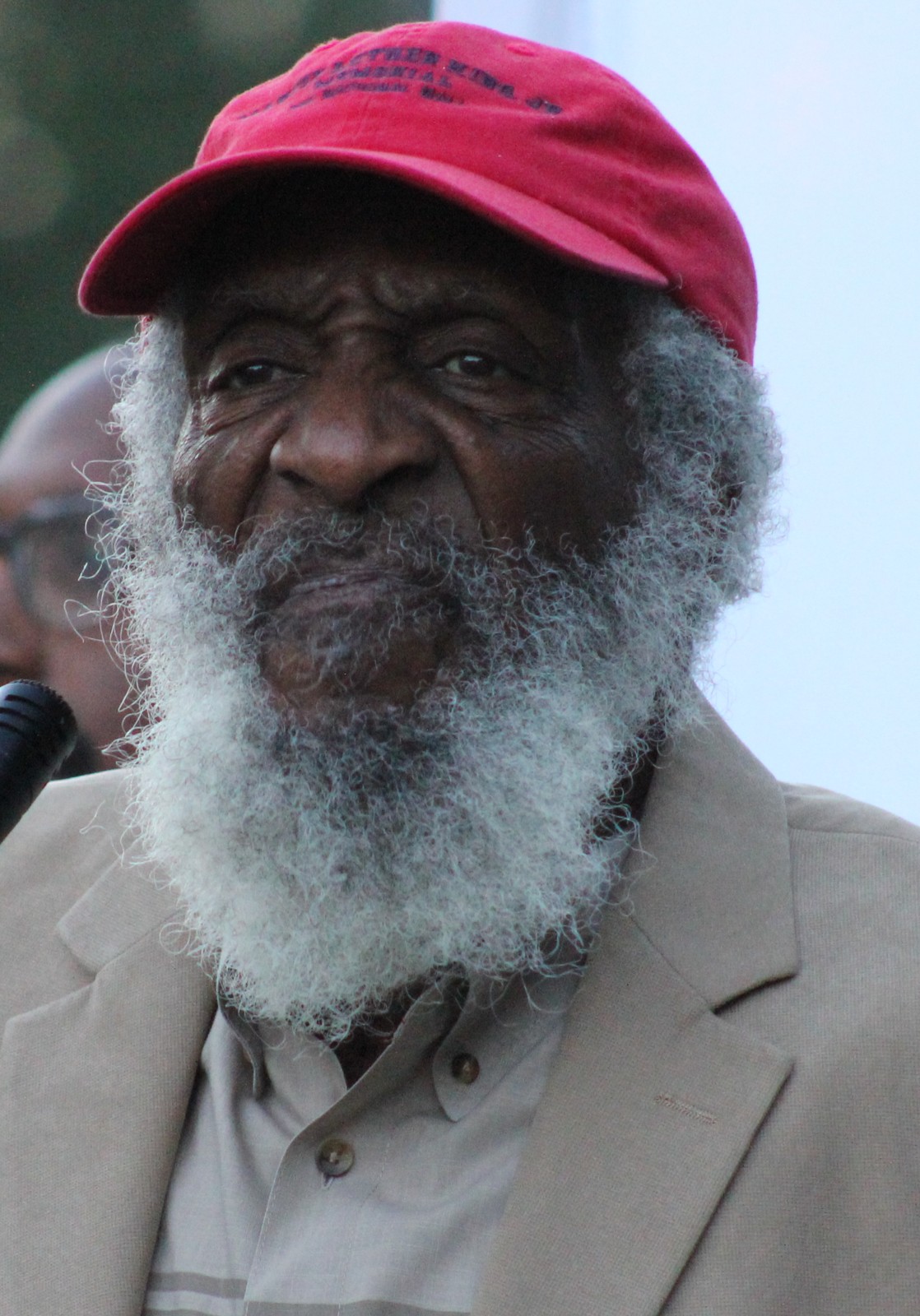
Dick Gregory, born Richard Claxton Gregory on October 12, 1932, in St.
| At a glance | |
|---|---|
| Type | PERSON — activist |
| Dates | – |
| Chicago connection | CORE — see the Chicago connection section |
| Known for | Dick Gregory, born Richard Claxton Gregory on October 12, 1932, in St. |
| Verification | VERIFIED |
| CTL ID | CTL-ENC-000122 |
Overview
Dick Gregory, born Richard Claxton Gregory on October 12, 1932, in St. Louis, Missouri, and raised in poverty there, was an American comedian and civil-rights activist who converted a nightclub breakthrough into a six-decade career of protest, and who remains the template for the comedian as movement figure. A star high-school runner, he won an athletic scholarship to Southern Illinois University, was drafted into the Army, and won military comedy competitions that convinced him of his profession. Back in Chicago in the late 1950s he worked the Black club circuit and a day job at the Post Office, until Hugh Hefner hired him at the Chicago Playboy Club in 1961 — a one-night substitution that became a residency, national press, and a Time magazine cover story's worth of attention: a Black comedian telling racial jokes, from the Black side of the line, to white audiences, in the first year of the sit-ins.
The material was the movement, delivered nightly. Gregory's early routines — collected on bestselling albums and in his 1964 autobiography, written with Robert Lipsyte and titled with a slur he addressed to his mother in its famous opening frame — treated segregation, police violence, and Southern politics as comedy that white liberals could not unhear, and he spent the money and fame the clubs paid him on the struggle itself: marching in Mississippi and Alabama, being jailed repeatedly, addressing the 1963 March on Washington generation, and running protest campaigns for mayor of Chicago (1967) and for President of the United States (1968, with Mark Lane as his Peace and Freedom running mate). After Martin Luther King Jr.'s assassination he made protest his primary profession; his comedy turned lecture, his lectures turned to the politics of food, and after a 1973 fast and a trip to Iran during the hostage crisis he became America's most visible hunger striker — fasting, at various times, for civil rights, against the Vietnam War, and for famine relief, and running across the country in 1976 to dramatize hunger.
Life and career
The health enterprise followed from the fasts: Gregory built a nutritional-products business, marketing the Bahamian Diet and other formulas, and became a bestselling diet author, though the business career was punctuated by financial and regulatory troubles that his biographies record. In his last decades he remained a fixture of Black public life — eulogist, radio presence, and elder commentator — and was honored with a star on the St. Louis Walk of Fame and, posthumously, induction into halls of fame that had once booked him as a novelty. He died of heart failure in Washington, D.C., on August 19, 2017, at 84.
In the CultureTechLens graph, Gregory's record is Chicago-anchored despite the St. Louis birth: the Playboy Club on Walton Street in 1961 is the hinge of the biography, the room where Black stand-up entered the white mainstream with its politics intact. His papers and legend sit at the junction the graph repeatedly maps — entertainment as the delivery system for a politics the country was refusing in every other form. The books, from the 1964 autobiography to Defining Moments in Black History (2017), extend the act into print, which is where much of this record's generation will meet him.
Chicago's claim on Gregory runs deeper than one club date. He worked the city's Black rooms — the Roberts Show Lounge circuit and the South Side clubs — while holding the post-office job that made him, in his own telling, the only comedian in America with a federal day job to fall back on, and the failed 1967 mayoral run against Richard J. Daley was a Chicago campaign in form as well as fact: a comedian using a ballot line to say in a campaign what he said on stage. The Playboy Club booking itself was a Chicago hinge — Hefner's flagship room on Walton Street, a substitute set for Redd Foxx, a standing ovation from a white audience, and a contract by morning, as the standard accounts tell it. The graph's placement of Gregory in the Chicago story is therefore documentary, not honorary: the city was his professional hometown, the place whose rooms, audiences, and machine politics formed the act that the movement then borrowed for a decade.
Chicago connection
Back in Chicago in the late 1950s he worked the Black club circuit and a day job at the Post Office, until Hugh Hefner hired him at the Chicago Playboy Club in 1961 — a one-night substitution that became a residency, national press, and a Time magazine cover story's worth of attention: a Black comedian telling racial jokes, from the Black side of the line, to white audiences, in the first year of the sit-ins. Gregory's early routines — collected on bestselling albums and in his 1964 autobiography, written with Robert Lipsyte and titled with a slur he addressed to his mother in its famous opening frame — treated segregation, police violence, and Southern politics as comedy that white liberals could not unhear, and he spent the money and fame the clubs paid him on the struggle itself: marching in Mississippi and Alabama, being jailed repeatedly, addressing the 1963 March on Washington generation, and running protest campaigns for mayor of Chicago (1967) and for President of the United States (1968, with Mark Lane as his Peace and Freedom running mate). In the CultureTechLens graph, Gregory's record is Chicago-anchored despite the St. Chicago's claim on Gregory runs deeper than one club date. Daley was a Chicago campaign in form as well as fact: a comedian using a ballot line to say in a campaign what he said on stage. The Playboy Club booking itself was a Chicago hinge — Hefner's flagship room on Walton Street, a substitute set for Redd Foxx, a standing ovation from a white audience, and a contract by morning, as the standard accounts tell it. [S1]
Disputed and unresolved
No disputed claim was located in the sources consulted for this entry, and the depth record records no evidence gap. Open items, if any, are listed in Editorial notes.
See also
Relationships
- performed_at — Roberts Show Lounge (CTL-E-0136) — Restated from the CultureTechLens Knowledge Graph: Dick Gregory (CTL-E-0122) performed_at Roberts Show Lounge (CTL-E-0136), verification Verified.
- performed_at — Playboy Club (Chicago) (CTL-E-1629) — Restated from the CultureTechLens Knowledge Graph: Dick Gregory (CTL-E-0122) performed_at Playboy Club (Chicago) (CTL-E-1629), verification Verified.
- related_to — Martin Luther King Jr. (CTL-E-0342) — Restated from the CultureTechLens Knowledge Graph: Dick Gregory (CTL-E-0122) related_to Martin Luther King Jr. (CTL-E-0342), verification Verified.
- based_in — City of Chicago (CTL-E-1475) — Restated from the CultureTechLens Knowledge Graph: Dick Gregory (CTL-E-0122) based_in City of Chicago (CTL-E-1475), verification Verified.
Sources
- S1: Encyclopaedia Britannica. "Dick Gregory." Accessed October 26, 2026. https://www.britannica.com/biography/Dick-Gregory.
- S2: Wikipedia. "Dick Gregory." Accessed October 26, 2026. https://en.wikipedia.org/wiki/Dick_Gregory.
- S3: The New York Times. "Dick Gregory — Obituary." Accessed October 26, 2026. https://www.nytimes.com/.
- S4: St. Louis Walk of Fame. "Dick Gregory." Accessed October 26, 2026. https://stlouiswalkoffame.org/.
- S5: CultureTechLens Knowledge Graph (schema v0.3.1), entities.json and relationships.json — CTL's own graph register, consulted 2026-10-29 for crosswalk facts and restated relationships.
Cite this entry
- Permanent ID: CTL-ENC-000122 · Crosswalked graph record: CTL-P-0147 · Version: 0.1 · Date: 2026-10-29
- Chicago: CultureTechLens. "Dick Gregory." CultureTechLens Encyclopedia, version 0.1, October 29, 2026. CultureTechLens NFP. CTL-ENC-000122.
- APA: CultureTechLens. (2026). Dick Gregory (Version 0.1, Entry CTL-ENC-000122). CultureTechLens Encyclopedia. CultureTechLens NFP.
- MLA: CultureTechLens. "Dick Gregory." CultureTechLens Encyclopedia, version 0.1, CultureTechLens NFP, 29 Oct. 2026. Entry CTL-ENC-000122.
Further reading
- CultureTechLens Knowledge Graph record CTL-P-0147 (crosswalked; published graph register id CTL-E-0122).
Image credits
- Dick Gregory photograph: see Images block in the frontmatter for the full credit line, rights status, and rights document.
Citation
CultureTechLens. "Dick Gregory." CultureTechLens Encyclopedia, Vol. 1 — Black Chicago, version 0.1, 2026-10-29. CultureTechLens NFP. CTL-ENC-000122.
<!-- =======================