 CULTURETECHLENS
The Encyclopedia · CTL-ENC-000048
DJ Deeon
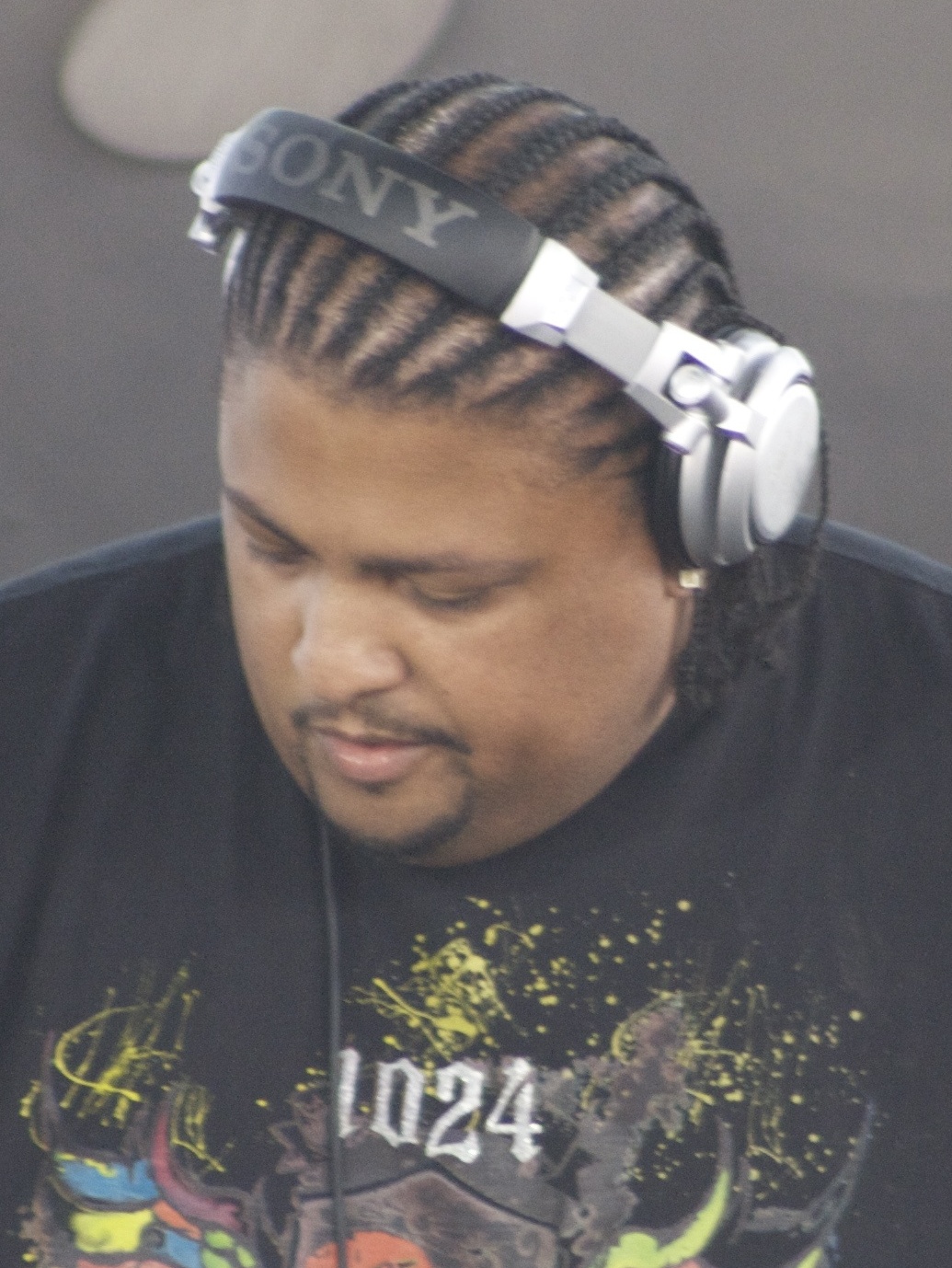
DJ Deeon, born Deeon Boyd (October 5, 1966 – July 18, 2023), was a Chicago DJ and producer credited with pioneering ghetto house, the raw, minimal, sexually explicit strand of house music that the South
| At a glance | |
|---|---|
| Type | PERSON — dj |
| Dates | – |
| Chicago connection | CORE — see the Chicago connection section |
| Known for | DJ Deeon, born Deeon Boyd (October 5, 1966 – July 18, 2023), was a Chicago DJ and producer credited with pioneering ghetto |
| Verification | SUPPORTED |
| CTL ID | CTL-ENC-000048 |
Overview
DJ Deeon, born Deeon Boyd (October 5, 1966 – July 18, 2023), was a Chicago DJ and producer credited with pioneering ghetto house, the raw, minimal, sexually explicit strand of house music that the South Side built in the early 1990s and that fed directly into juke and footwork. AllMusic's biography gives the origin plainly: raised on Chicago's South Side, in a housing project, Boyd first plied his trade playing small house parties and selling mixtapes in local parking lots in the early 1990s; hearing Kraftwerk's "Numbers" and the house mixes on WBMX had formed his ear, and once he got hold of a Roland TR-606 and TB-303 he began producing, taking the Chicago house template and adding erotically charged, chant-like vocals and stripped-down drum programming — creating what would be known as ghetto house.
His first release, the Funk City EP, appeared in 1994 on Dance Mania, the Chicago label of Paul Johnson, Lil' Louis, Robert Armani, and Marshall Jefferson, and it was followed by a flood: more than thirty singles for Dance Mania in five years, among them "House-O-Matic," "2 B Free," "Let Me Bang," and "Freak Like Me" (1996), the tracks that defined the form's grammar — 808 and 909 drums, a bassline, a command, repetition as pressure. When Dance Mania closed in 1999 Deeon continued on Databass, Juke Trax, and Pro-Jex through the 2000s, largely an underground figure at home even as European DJs canonized the records. Daft Punk had already certified the standing in 1997, name-checking Deeon in "Teachers," their roll call of influences.
Life and career
The 2010s brought the reckoning. Glasgow's Numbers label released the Deeon Doez Deeon! EP in 2015, restoring four of his most celebrated tracks; a crowdfunding campaign brought him to the United Kingdom in 2016 to play London's XOYO and the final Bloc weekender; and that year his "Freak Like Me," remixed with Lee Walker and released on Defected, reached the UK singles chart — his first ever chart placement, twenty years after the record was made in Chicago. The late tributes filled in the man: Mixmag's obituary records RP Boo — footwork's founder, in the hospital with him on his final day — calling him "a beautiful spirit, very helpful always," whose creations "became known as ghetto house" and "provided inspiration to upcoming DJs and producers of Chicago that has grown into now what the world is moving to as footwork." Deeon died on July 18, 2023, at 56, after years of serious illness — cancer, strokes, diabetes, and heart surgery documented in a 2020 fundraising campaign — with the announcement carried on his official channels and confirmed by his representative.
In the CultureTechLens graph, DJ Deeon's record is a hinge of Chicago music history: house became ghetto house in his parking-lot mixtapes and Dance Mania singles, and ghetto house became juke and footwork in the hands of the generation — DJ Clent's Beatdown House circle, RP Boo, DJ Rashad — that studied him. Few Chicago producers have a stronger claim to having changed the tempo of the world's dance floors from a South Side project apartment.
The afterlife of the records completes the biography. Ghetto house was, for its first decade, the child nobody in the industry wanted to claim — too raw for house purists, too explicit for radio, pressed in small runs for Chicago dancers — and Deeon's catalog survived the Dance Mania closure the way the music had always survived: in DJs' crates, in European imports, in the muscle memory of the footwork dancers whose tempo his tracks had set. The Numbers reissue of 2015 and the Defected chart record of 2016 were therefore less a comeback than a transfer of custody, the underground's valuation finally countersigned by the market; NPR's obituary treatment in 2023, like Mixmag's, read the death as a national music story, which for a parking-lot mixtape seller from the Robert Taylor-era South Side is the measure of how far the form traveled. The graph files him where the evidence puts him: not a footnote to house music but the founder of its fastest, rawest Chicago descendant, and through footwork an ancestor of the global club music of the present century.
Chicago connection
DJ Deeon, born Deeon Boyd (October 5, 1966 – July 18, 2023), was a Chicago DJ and producer credited with pioneering ghetto house, the raw, minimal, sexually explicit strand of house music that the South Side built in the early 1990s and that fed directly into juke and footwork. AllMusic's biography gives the origin plainly: raised on Chicago's South Side, in a housing project, Boyd first plied his trade playing small house parties and selling mixtapes in local parking lots in the early 1990s; hearing Kraftwerk's "Numbers" and the house mixes on WBMX had formed his ear, and once he got hold of a Roland TR-606 and TB-303 he began producing, taking the Chicago house template and adding erotically charged, chant-like vocals and stripped-down drum programming — creating what would be known as ghetto house. His first release, the Funk City EP, appeared in 1994 on Dance Mania, the Chicago label of Paul Johnson, Lil' Louis, Robert Armani, and Marshall Jefferson, and it was followed by a flood: more than thirty singles for Dance Mania in five years, among them "House-O-Matic," "2 B Free," "Let Me Bang," and "Freak Like Me" (1996), the tracks that defined the form's grammar — 808 and 909 drums, a bassline, a command, repetition as pressure. EP in 2015, restoring four of his most celebrated tracks; a crowdfunding campaign brought him to the United Kingdom in 2016 to play London's XOYO and the final Bloc weekender; and that year his "Freak Like Me," remixed with Lee Walker and released on Defected, reached the UK singles chart — his first ever chart placement, twenty years after the record was made in Chicago. The late tributes filled in the man: Mixmag's obituary records RP Boo — footwork's founder, in the hospital with him on his final day — calling him "a beautiful spirit, very helpful always," whose creations "became known as ghetto house" and "provided inspiration to upcoming DJs and producers of Chicago that has grown into now what the world is moving to as footwork." Deeon died on July 18, 2023, at 56, after years of serious illness — cancer, strokes, diabetes, and heart surgery documented in a 2020 fundraising campaign — with the announcement carried on his official channels and confirmed by his representative. [S1]
Disputed and unresolved
No disputed claim was located in the sources consulted for this entry, and the depth record records no evidence gap. Open items, if any, are listed in Editorial notes.
See also
Relationships
- related_to — House-O-Matics (CTL-E-0571) — Restated from the CultureTechLens Knowledge Graph: DJ Deeon (CTL-E-2338) related_to House-O-Matics (CTL-E-0571), verification Verified. DJ Deeon cut his teeth as a dancer with the House-O-Matics; Ronnie Sloan booked him for crew parties.
Sources
- S1: AllMusic. "DJ Deeon — Biography." Accessed October 26, 2026. https://www.allmusic.com/artist/mn0000663868.
- S2: Wikipedia. "DJ Deeon." Accessed October 26, 2026. https://en.wikipedia.org/wiki/DJ_Deeon.
- S3: Mixmag. "RIP DJ Deeon: A Force of Nature Who Rocked Speakers Around the Globe." Accessed October 26, 2026. https://mixmag.asia/feature/rip-dj-deeon-tribute-obituary-chicago-ghetto-house.
- S4: NME. "Chicago House Star DJ Deeon Dies Aged 56." Accessed October 26, 2026. https://www.nme.com/news/music/chicago-house-star-dj-deeon-dies-aged-56-3470025.
- S5: CultureTechLens Knowledge Graph (schema v0.3.1), entities.json and relationships.json — CTL's own graph register, consulted 2026-10-28 for crosswalk facts and restated relationships.
Cite this entry
- Permanent ID: CTL-ENC-000048 · Crosswalked graph record: CTL-P-0351 · Version: 0.1 · Date: 2026-10-28
- Chicago: CultureTechLens. "DJ Deeon." CultureTechLens Encyclopedia, version 0.1, October 28, 2026. CultureTechLens NFP. CTL-ENC-000048.
- APA: CultureTechLens. (2026). DJ Deeon (Version 0.1, Entry CTL-ENC-000048). CultureTechLens Encyclopedia. CultureTechLens NFP.
- MLA: CultureTechLens. "DJ Deeon." CultureTechLens Encyclopedia, version 0.1, CultureTechLens NFP, 28 Oct. 2026. Entry CTL-ENC-000048.
Further reading
- CultureTechLens Knowledge Graph record CTL-P-0351 (crosswalked; published graph register id CTL-E-2338).
Image credits
- DJ Deeon photograph: see Images block in the frontmatter for the full credit line, rights status, and rights document.
Citation
CultureTechLens. "DJ Deeon." CultureTechLens Encyclopedia, Vol. 1 — Black Chicago, version 0.1, 2026-10-28. CultureTechLens NFP. CTL-ENC-000048.
<!-- =======================