 CULTURETECHLENS
The Encyclopedia · CTL-ENC-000049
DJ Rush
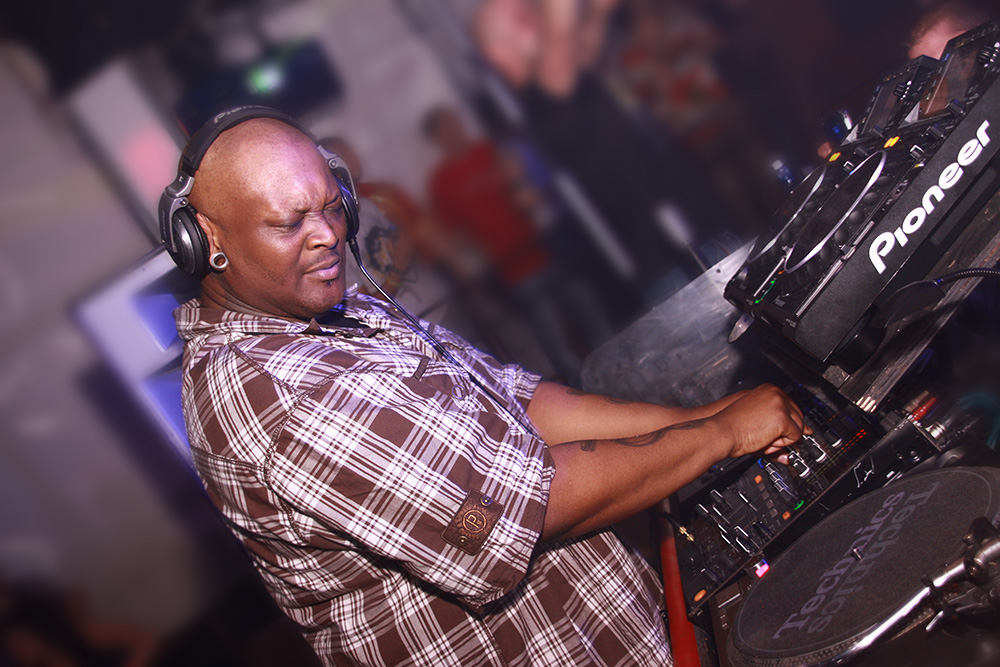
Isaiah Major (born January 9, 1970), best known as DJ Rush, is an American musician, DJ and record producer of electronic music who emerged from the early Chicago techno and house scene and became one
| At a glance | |
|---|---|
| Type | PERSON — dj |
| Dates | – |
| Chicago connection | CORE — see the Chicago connection section |
| Known for | Isaiah Major (born January 9, 1970), best known as DJ Rush, is an American musician, DJ and record producer of electronic music |
| Verification | SUPPORTED |
| CTL ID | CTL-ENC-000049 |
Overview
Isaiah Major (born January 9, 1970), best known as DJ Rush, is an American musician, DJ and record producer of electronic music who emerged from the early Chicago techno and house scene and became one of Europe's most popular hard techno performers. He was born in Chicago, Illinois, grew up on the city's South Side, and was DJing from an early age; biographical summaries also record that he completed a degree in computer operations. He performs and records under the additional names Major Rush, Russian Roulette and Drum Major, names that correspond to the theatrical side of his act: he sometimes DJs and MCs simultaneously, and sometimes performs in costume as his Russian Roulette alias.
Rush's apprenticeship ran through the rooms where Chicago house was invented. He made his first appearances as a DJ in the Chicago clubs the Music Box, the Powerhouse and the Warehouse, playing sets that could run for up to ten hours, and 5 Magazine's interview profile adds the Reactor and Medusa's to the list of Chicago rooms where his marathon disco and track workouts built his local name. He began producing alongside the DJing, and in 1991 he released his first single, "Knee Deep," on Trax Records, the label at the centre of the first Chicago house economy. Two full-length albums for Trax followed in 1996.
Life and career
The European breakthrough came in 1998 with the record "Motherfucking Bass," widely regarded as one of the club anthems of that year and released in Rush's own discography alongside other signature titles including "Get On Up" and "I Believe." Following that success he teamed with Tina Panitzke to start the Kne'Deep booking agency and record label in Berlin, the base from which his European career was run. In 2001 he displaced Jeff Mills as the readers' choice for most popular DJ in Groove magazine, the German dance music magazine published since 1989 — a notable marker, because Mills was the benchmark American techno DJ in Europe at the time. Daft Punk counted Rush among the teachers named in their track "Teachers," a hallmark listing of the artists who formed their sound.
Rush used the Kne'Deep platform in both directions: headlining Europe's biggest techno events, including Nature One, Dance Valley and the Love Parade, and hosting his own tents at festivals including Tomorrowland in Belgium, Dance Valley in the Netherlands and Summer Spirit in Germany, while remixing tracks by, or releasing records from, younger techno artists to give them their breakthrough. His label history is long even by Chicago standards — Kne'Deep, Trax, Force Inc. Music Works, Pro-Jex, Saber, Dance Mania, Relief, Cosmic, Djax-Up-Beats and many others — and it maps a career that never settled into a single imprint or a single sound. Interviewers consistently describe the same performance signature: fast, physical mixing, a repertoire that combines the jazz, disco, funk and soul he loves with hard techno, and a stage presence built on the belief that expression, not only selection, is the key to entertaining.
In the CultureTechLens graph, DJ Rush's record documents the second Chicago export wave: where the first wave carried house itself to Europe, Rush carried a harder Chicago synthesis — house's disco and funk roots played at techno tempo and volume — into the centre of the European festival circuit, and then ran the business, an agency and label in Berlin, that kept that circuit supplied. He is a distinct person from every other DJ in this batch: a South Side Chicagoan named Isaiah Major, active from 1989, whose aliases are Major Rush, Russian Roulette and Drum Major. In later years he has been interviewed from his adopted home in Portugal's Algarve, still returning to British and European stages for long sets — three hours at Manchester's Joshua Brooks in the appearance Manchester's Finest profiled — with the same breakneck, physical mixing that built the name in Chicago's ten-hour rooms.
Chicago connection
Isaiah Major (born January 9, 1970), best known as DJ Rush, is an American musician, DJ and record producer of electronic music who emerged from the early Chicago techno and house scene and became one of Europe's most popular hard techno performers. He was born in Chicago, Illinois, grew up on the city's South Side, and was DJing from an early age; biographical summaries also record that he completed a degree in computer operations. Rush's apprenticeship ran through the rooms where Chicago house was invented. He made his first appearances as a DJ in the Chicago clubs the Music Box, the Powerhouse and the Warehouse, playing sets that could run for up to ten hours, and 5 Magazine's interview profile adds the Reactor and Medusa's to the list of Chicago rooms where his marathon disco and track workouts built his local name. He began producing alongside the DJing, and in 1991 he released his first single, "Knee Deep," on Trax Records, the label at the centre of the first Chicago house economy. [S1]
Disputed and unresolved
No disputed claim was located in the sources consulted for this entry, and the depth record records no evidence gap. Open items, if any, are listed in Editorial notes.
See also
Relationships
- recorded_for — Trax Records (CTL-E-0169) — Restated from the CultureTechLens Knowledge Graph: DJ Rush (CTL-E-0477) recorded_for Trax Records (CTL-E-0169), verification Verified. DJ Rush released his first single "Knee Deep" (1991) on Trax Records.
- performed_at — The Warehouse (CTL-E-0134) — Restated from the CultureTechLens Knowledge Graph: DJ Rush (CTL-E-0477) performed_at The Warehouse (CTL-E-0134), verification Verified. Rush's first DJ appearances were at Chicago clubs including the Warehouse, playing sets of up to ten hours.
Sources
- S1: Wikipedia. "DJ Rush." Accessed October 26, 2026. https://en.wikipedia.org/wiki/DJ_Rush.
- S2: 5 Magazine. "DJ Rush: The 5 Magazine Interview." Accessed October 26, 2026. https://5mag.net/features/dj-rush-interview/.
- S3: Orbit Booking / Kne'Deep. "DJ Rush Biography." Accessed October 26, 2026. https://orbit-booking.com/artists/DJRUSH/Rush_Biography.pdf.
- S4: Manchester's Finest. "Techno legend DJ Rush: "Manchester really wants to party"." Accessed October 26, 2026. https://www.manchestersfinest.com/music/techno-legend-dj-rush-manchester-really-wants-to-party/.
- S5: CultureTechLens Knowledge Graph (schema v0.3.1), entities.json and relationships.json — CTL's own graph register, consulted 2026-10-28 for crosswalk facts and restated relationships.
Cite this entry
- Permanent ID: CTL-ENC-000049 · Crosswalked graph record: CTL-P-0285 · Version: 0.1 · Date: 2026-10-28
- Chicago: CultureTechLens. "DJ Rush." CultureTechLens Encyclopedia, version 0.1, October 28, 2026. CultureTechLens NFP. CTL-ENC-000049.
- APA: CultureTechLens. (2026). DJ Rush (Version 0.1, Entry CTL-ENC-000049). CultureTechLens Encyclopedia. CultureTechLens NFP.
- MLA: CultureTechLens. "DJ Rush." CultureTechLens Encyclopedia, version 0.1, CultureTechLens NFP, 28 Oct. 2026. Entry CTL-ENC-000049.
Further reading
- CultureTechLens Knowledge Graph record CTL-P-0285 (crosswalked; published graph register id CTL-E-0477).
Image credits
- DJ Rush photograph: see Images block in the frontmatter for the full credit line, rights status, and rights document.
Citation
CultureTechLens. "DJ Rush." CultureTechLens Encyclopedia, Vol. 1 — Black Chicago, version 0.1, 2026-10-28. CultureTechLens NFP. CTL-ENC-000049.
<!-- =======================