 CULTURETECHLENS
The Encyclopedia · CTL-ENC-000138
Dr. Carl Bell
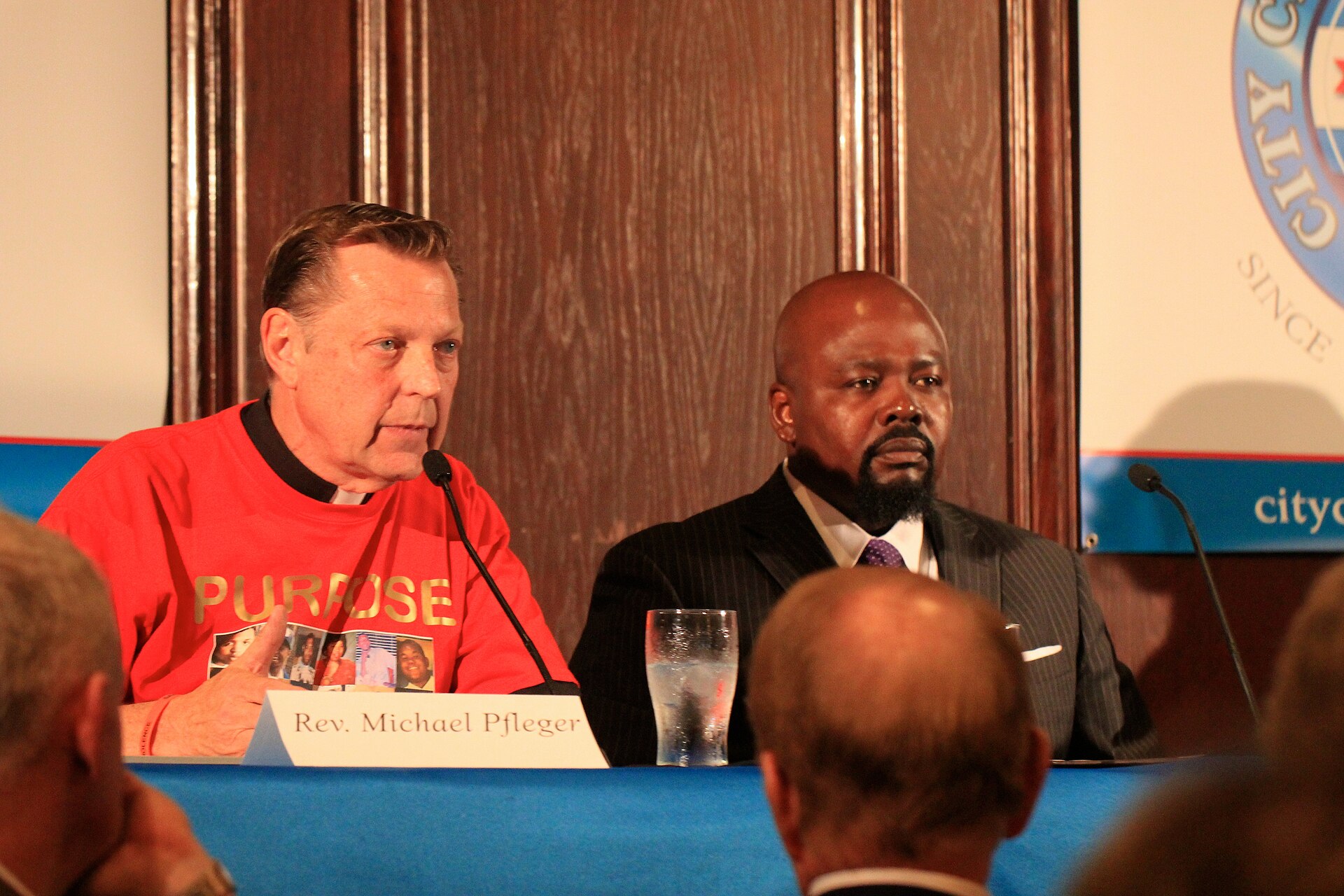
Carl Compton Bell (1947 – August 2, 2019) was the Chicago psychiatrist whom the Community Mental Health Journal's tribute named "a quintessential community psychiatrist" — a clinician, clinic chief executive, researcher, professor, and advocate whose
| At a glance | |
|---|---|
| Type | PERSON — clergy |
| Dates | – |
| Chicago connection | CORE — see the Chicago connection section |
| Known for | Carl Compton Bell (1947 – August 2, 2019) was the Chicago psychiatrist whom the Community Mental Health Journal's |
| Verification | PROVISIONAL |
| CTL ID | CTL-ENC-000138 |
Overview
Carl Compton Bell (1947 – August 2, 2019) was the Chicago psychiatrist whom the Community Mental Health Journal's tribute named "a quintessential community psychiatrist" — a clinician, clinic chief executive, researcher, professor, and advocate whose life's work was the mental health of Black Chicago and the prevention of the violence that surrounded it. Born and raised in Chicago, he trained in medicine in Tennessee, served a stint in the Navy, and returned home to practice, in NPR's remembrance "always aware of the violence in his surroundings"; a formative case, treating a child whose mother had been killed in front of him, fixed the direction of the career.
Bell's institutional base was the Community Mental Health Council on Chicago's South Side, which he led as president and chief executive, alongside a professorship at the University of Illinois at Chicago and direction of its community psychiatry work. The Michigan Program for Research on Black Americans' memorial summarizes the range: scholar, activist, educator, administrator, Navy officer, and a leader in the community mental health movement, "committed to the African American community of southside Chicago," who "worked tirelessly to reduce all forms of violence there, and nationally." His subject list ran across fetal alcohol syndrome, multicultural psychiatry, trauma and its aftermath, the misdiagnosis of bipolar disorder in Black patients, the criminal justice system, and gun violence and prevention — issues that, in the memorial's words, "became a crusade for him; a crusade to break the circle of black violence."
Life and career
The scholarly core was diagnostic and public-health at once. His 1980 and 1981 papers in the Journal of the National Medical Association on identifying depression in Black community populations shaped how the field counted cases outside clinic walls, and Harold Neighbors recalled that Bell was "one of the first people I met who launched a media campaign to raise awareness of the role of the handgun in Black mortality — way before just about anyone else." The tribute in the Community Mental Health Journal frames the through-line: Bell "argued for public health approaches to improve mental health, both for the African-American community and for us all," driven "to understand the relatively poor outcomes in mental health care among African-Americans as compared to others and to advocate for corrective systemic changes." Late in his career his prevention research turned to fetal alcohol spectrum disorders, including work on choline supplementation during pregnancy to mitigate alcohol's effects on the fetus, which the Illinois Psychiatric Society's president recounts planning with him as an educational campaign months before his death.
Bell died on August 2, 2019, at 71. The tributes converge on manner as much as matter: the American Psychiatric Association's past president Altha Stewart, sharing the news, described him as "fearless, unapologetic, smart, and ready to advocate for black people at the drop of one of the many hats he wore" — the Community Mental Health Council cap, the message T-shirts, the cowboy hat of his last years — and as a man who preferred to "do the work" over the trappings of leadership. The Program for Research on Black Americans had given him its Lifetime Achievement Award in 2016, and UIC's psychiatry department sustains an annual Dr. Bell Memorial Lecture in his name. In the CultureTechLens graph, Bell's record stands for a distinctively Chicago school of Black psychiatry: community-based, violence-focused, and aimed at systems rather than symptoms alone. This record is for the psychiatrist Carl C. Bell only; no other Bell in the graph is merged into it.
Altha J. Stewart's memorial in MDedge, written by the American Psychiatric Association's president as she carried the news to its leadership, supplies the portrait his colleagues kept: a psychiatrist who "was never interested in the trappings of leadership," who was "always ready, willing, and able to offer guidance or assistance in your work and never failed to have an opinion on what else you needed to do," and whose impromptu talks — colleagues called them moments when he "dropped some knowledge" — functioned as a rolling seminar in community psychiatry. Stewart's summary judgment, delivered on hearing of his death, was that Bell was "fearless, unapologetic, smart, and ready to advocate for black people at the drop of one of the many hats he wore over the years." The hats were literal: the Community Mental Health Council baseball cap, the "Stop Black on Black" crime T-shirt, the Obama cap, and finally the wide-brim leather cowboy hat and highway-patrol sunglasses of his last years — the uniform of a psychiatrist who did his work in the community's sight, not behind a clinic door. This record is a staged proposal pending the founder's classification sitting.
Chicago connection
Carl Compton Bell (1947 – August 2, 2019) was the Chicago psychiatrist whom the Community Mental Health Journal's tribute named "a quintessential community psychiatrist" — a clinician, clinic chief executive, researcher, professor, and advocate whose life's work was the mental health of Black Chicago and the prevention of the violence that surrounded it. Born and raised in Chicago, he trained in medicine in Tennessee, served a stint in the Navy, and returned home to practice, in NPR's remembrance "always aware of the violence in his surroundings"; a formative case, treating a child whose mother had been killed in front of him, fixed the direction of the career. Bell's institutional base was the Community Mental Health Council on Chicago's South Side, which he led as president and chief executive, alongside a professorship at the University of Illinois at Chicago and direction of its community psychiatry work. The Michigan Program for Research on Black Americans' memorial summarizes the range: scholar, activist, educator, administrator, Navy officer, and a leader in the community mental health movement, "committed to the African American community of southside Chicago," who "worked tirelessly to reduce all forms of violence there, and nationally." His subject list ran across fetal alcohol syndrome, multicultural psychiatry, trauma and its aftermath, the misdiagnosis of bipolar disorder in Black patients, the criminal justice system, and gun violence and prevention — issues that, in the memorial's words, "became a crusade for him; a crusade to break the circle of black violence." The scholarly core was diagnostic and public-health at once. [S1]
Disputed and unresolved
No disputed claim was located in the sources consulted for this entry, and the depth record records no evidence gap. Open items, if any, are listed in Editorial notes.
See also
Relationships
- related_to — City Club of Chicago: Chiraq (CTL-E-4969) — Restated from the CultureTechLens Knowledge Graph: Dr. Carl Bell (CTL-E-4867) related_to City Club of Chicago: Chiraq (CTL-E-4969), verification Verified.
Sources
- S1: Community Mental Health Journal. "A Tribute to Carl C. Bell, MD." Accessed October 26, 2026. https://pmc.ncbi.nlm.nih.gov/articles/PMC7869417/.
- S2: WCMU Public Media. "Can I Just Tell You: Remembering Dr. Carl Bell." Accessed October 26, 2026. https://www.wcmu.org/2019-08-18/can-i-just-tell-you-remembering-dr-carl-bell.
- S3: Program for Research on Black Americans, University of Michigan. "Psychiatrist Carl Bell dies at 71." Accessed October 26, 2026. https://prba.isr.umich.edu/2019/08/18/psychiatrist-carl-bell-dies-at-71/.
- S4: Illinois Psychiatric Society. "President's Message — Spring 2021." Accessed October 26, 2026. https://www.illinoispsychiatricsociety.org/new-page-18.
- S5: UIC Center on Depression and Resilience. "Remembering Dr. Carl Bell and Honoring his Legacy." Accessed October 26, 2026. https://uifightdepression.psych.uic.edu/ui-center-on-depression-and-resilience/remembering-dr-carl-bell-and-honoring-his-legacy.
- S6: MDedge. "In memory of Dr. Carl Compton Bell." Accessed October 26, 2026. https://www.mdedge.com/psychiatry/article/205936/memory-dr-carl-compton-bell.
- S7: CultureTechLens Knowledge Graph (schema v0.3.1), entities.json and relationships.json — CTL's own graph register, consulted 2026-10-29 for crosswalk facts and restated relationships.
Cite this entry
- Permanent ID: CTL-ENC-000138 · Crosswalked graph record: CTL-ESS-0243 · Version: 0.1 · Date: 2026-10-29
- Chicago: CultureTechLens. "Dr. Carl Bell." CultureTechLens Encyclopedia, version 0.1, October 29, 2026. CultureTechLens NFP. CTL-ENC-000138.
- APA: CultureTechLens. (2026). Dr. Carl Bell (Version 0.1, Entry CTL-ENC-000138). CultureTechLens Encyclopedia. CultureTechLens NFP.
- MLA: CultureTechLens. "Dr. Carl Bell." CultureTechLens Encyclopedia, version 0.1, CultureTechLens NFP, 29 Oct. 2026. Entry CTL-ENC-000138.
Further reading
- CultureTechLens Knowledge Graph record CTL-ESS-0243 (crosswalked; published graph register id CTL-E-4867).
Image credits
- Dr. Carl Bell photograph: see Images block in the frontmatter for the full credit line, rights status, and rights document.
Citation
CultureTechLens. "Dr. Carl Bell." CultureTechLens Encyclopedia, Vol. 1 — Black Chicago, version 0.1, 2026-10-29. CultureTechLens NFP. CTL-ENC-000138.
<!-- =======================