 CULTURETECHLENS
The Encyclopedia · CTL-ENC-000498
Dred Scott v. Sandford
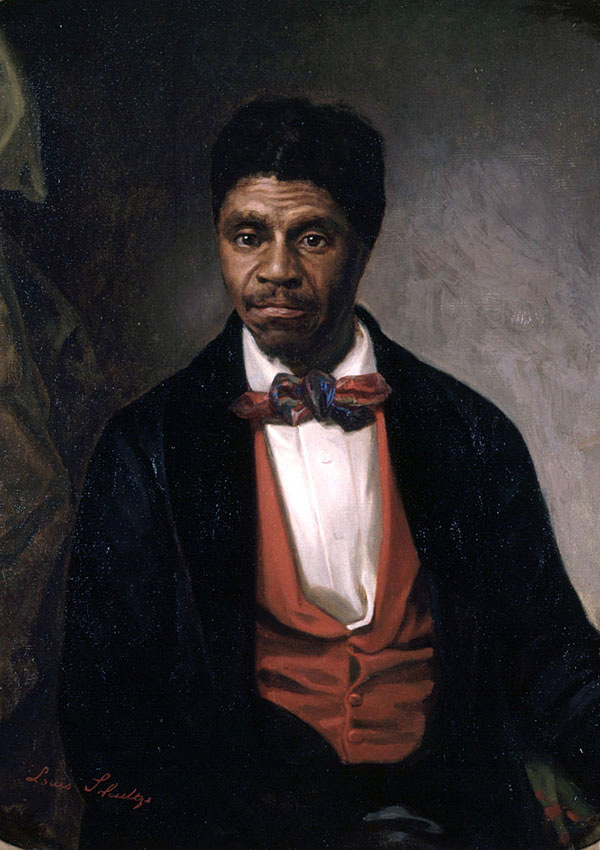
The Supreme Court's March 6, 1857 decision, 7–2 per Chief Justice Taney, holding that people of African descent were not U.S. citizens and Congress could not bar slavery from the territories.
| Field | Value |
|---|---|
| Citation | Scott v. Sandford, 60 U.S. 393 (1857) |
| Decided | March 6, 1857; 7–2; opinion by Chief Justice Roger B. Taney |
| Holdings | People of African descent are not U.S. citizens and cannot sue in federal court; the Missouri Compromise's bar on slavery in the territories is unconstitutional |
| Scott's claim | Freedom by residence in free Illinois and in Wisconsin Territory (Fort Snelling) |
| Repudiated by | Civil Rights Act of 1866, §14; the Fourteenth Amendment (1868) |
| Chicago connection | SIGNIFICANT — an Illinois-grounded claim, and the decision framed the Lincoln–Douglas debates |
Overview
Dred Scott was enslaved in Missouri and taken by his enslaver into free territory: to Illinois, where slavery was barred, and to Fort Snelling, in Wisconsin Territory, where the Missouri Compromise barred it. When he sued for freedom on the strength of that residence, his case climbed to the Supreme Court — which used it, on March 6, 1857, to issue the most sweeping pro-slavery ruling in American law. Chief Justice Taney's opinion for the 7–2 majority held, first, that people of African descent — free or enslaved — were not and could not be citizens of the United States, and so could not sue in federal court at all; and second, reaching a question the citizenship holding made unnecessary, that Congress had no power to prohibit slavery in the territories, voiding the Missouri Compromise.[S1]
The Illinois ground of the case
The Illinois connection is not decorative — it is jurisdictional. Scott's claim to freedom rested in part on his residence on free Illinois soil: the doctrine that an enslaved person taken into a free jurisdiction became free was the very doctrine the decision destroyed. For Black Illinoisans living under the Black Codes ([[CTL-ENC-000497]]) — required to prove their freedom with certificates, presumed fugitives without them — the ruling nationalized their vulnerability: even freedom's paperwork could not make them citizens in a federal court.[S1]
Repudiation
The decision stands as constitutional text's opposite — a holding the Constitution itself was amended to destroy. Section 14 of the Civil Rights Act of 1866 asserted birthright citizenship against it, and the Fourteenth Amendment (1868) constitutionalized the repudiation: all persons born or naturalized in the United States are citizens. The Constitution Annotated treats Dred Scott as the Fourteenth Amendment's negative foundation. One textual artifact survives in every citation: the defendant's name was Sanford; a clerk's misspelling made it "Sandford," and the error is carried in the case name to this day.[S1][S2]
Provenance and holdings
The opinion is reported at 60 U.S. 393 and held in every law library; the Legal Information Institute's Wex entry and the Constitution Annotated supply the reference record used here.
Chicago connection
SIGNIFICANT. Scott's freedom claim rested partly on Illinois residence, and the decision's citizenship holding hung over every Black Chicagoan's legal status. Decisively for this cohort, the decision framed the contest that produced [[CTL-ENC-000499]]: the Lincoln–Douglas debates of 1858 were argued in Dred Scott's shadow, with the Chicago-based incumbent defending his doctrine against Lincoln's attack on the decision.
Documented address and map
Decided in Washington, D.C.; no Chicago address attaches, and this entry carries no coordinates and no map.
Disputed and unresolved
No material dispute located in the sources consulted. The "Sandford" spelling is an artifact of the record, not a dispute.
See also
- [[CTL-ENC-000499]] — Lincoln–Douglas Debates (the Illinois argument the decision provoked)
- [[CTL-ENC-000497]] — Illinois Black Codes (the state regime the ruling overshadowed)
Relationships
- enacted_by — Supreme Court of the United States — Decided by the U.S. Supreme Court, 60 U.S. 393, March 6, 1857, 7–2, opinion by Chief Justice Roger B. Taney. No graph record exists for the Court under this name; the edge names it without an invented ID.
Sources
- S1: Legal Information Institute. "Dred Scott v. Sandford (1857)." https://www.law.cornell.edu/wex/dred_scott_v_sandford_%281857%29
- S2: Legal Information Institute. Constitution Annotated, Fourteenth Amendment §1, Historical Background. https://www.law.cornell.edu/constitution-conan/amendment-14/section-1/historical-background
Cite this entry
Permanent ID: CTL-ENC-000498 · Crosswalked graph record: CTL-E-5407
Chicago: CultureTechLens. "Dred Scott v. Sandford." CTL Encyclopedia, Historical Documents (staged), CTL-ENC-000498, version 0.1, 2026-10-29. APA: CultureTechLens. (2026). Dred Scott v. Sandford (CTL-ENC-000498, v0.1) [Encyclopedia entry, Historical Documents (staged)]. CTL Encyclopedia. MLA: CultureTechLens. "Dred Scott v. Sandford." CTL Encyclopedia, Historical Documents (staged), CTL-ENC-000498, version 0.1, 29 Oct. 2026.
Further reading
- The Constitution Annotated's Fourteenth Amendment history, for the repudiation in full.
Image credits
- Dred Scott portrait — public domain, via Wikimedia Commons (a larger oil-portrait file also verified public domain at build). Source: CultureTechLens.
CULTURETECHLENS · "Culture, Clearly Seen." · Black Cultural Intelligence Cite as: CultureTechLens, "Dred Scott v. Sandford," CTL Encyclopedia, Historical Documents (staged), CTL-ENC-000498, 2026-10-29. Source: CultureTechLens