 CULTURETECHLENS
The Encyclopedia · CTL-ENC-000237
Duke Ellington
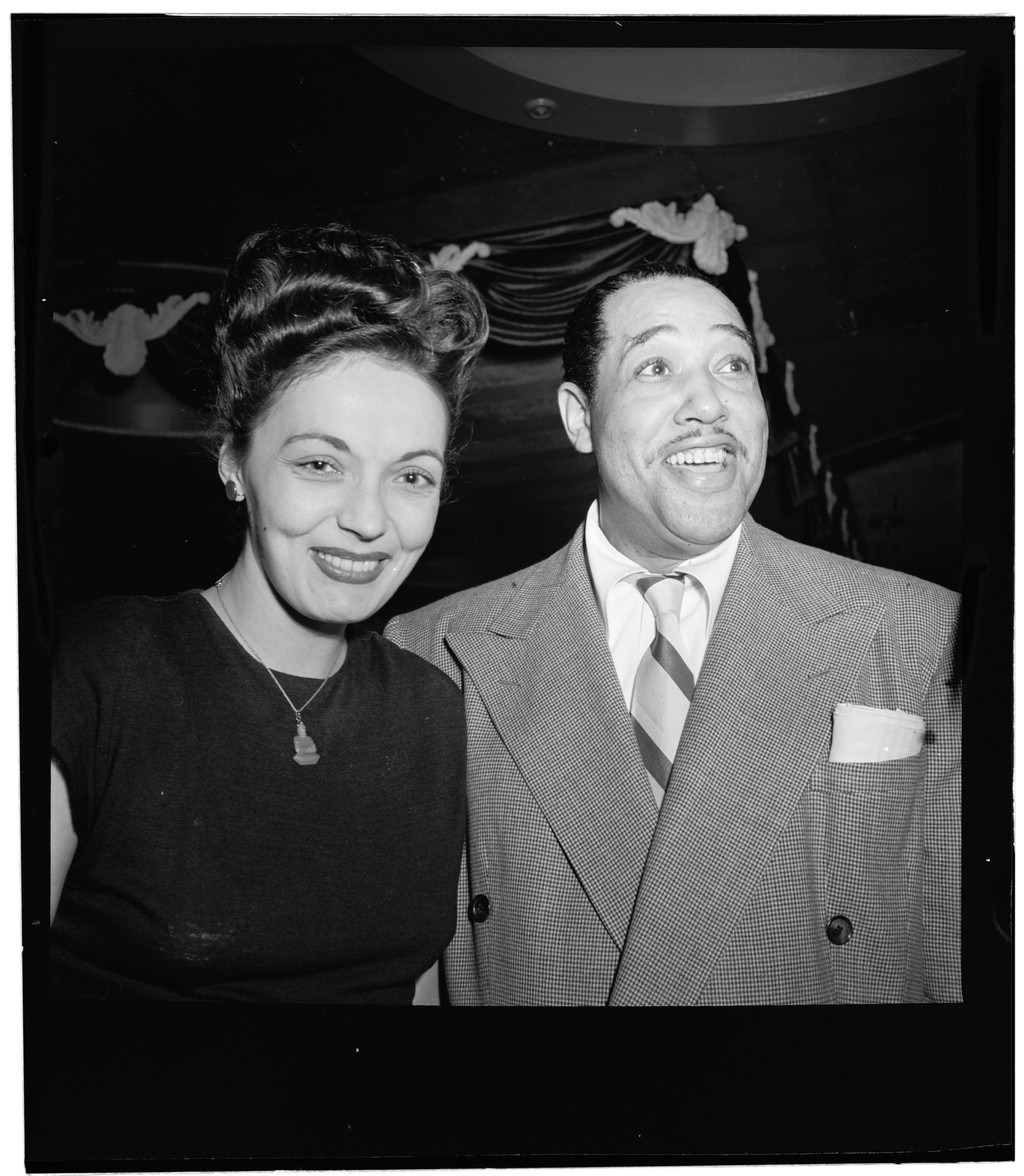
Edward Kennedy Ellington (April 29, 1899 – May 24, 1974), known as Duke Ellington, was an American pianist, composer, and bandleader whom Encyclopaedia Britannica calls the greatest jazz composer and bandleader of his time.
| At a glance | |
|---|---|
| Type | PERSON — musician |
| Dates | – |
| Chicago connection | SIGNIFICANT — see the Chicago connection section |
| Known for | Edward Kennedy Ellington (April 29, 1899 – May 24, 1974), known as Duke Ellington, was an American pianist, composer, |
| Verification | VERIFIED |
| CTL ID | CTL-ENC-000237 |
Overview
Edward Kennedy Ellington (April 29, 1899 – May 24, 1974), known as Duke Ellington, was an American pianist, composer, and bandleader whom Encyclopaedia Britannica calls the greatest jazz composer and bandleader of his time. He was born in Washington, D.C., into a secure middle-class family that encouraged his interest in the fine arts; his father, James Edward Ellington, worked as a White House butler and later as a blueprint maker for the Navy. Ellington began studying piano at age seven, studied art in high school, and was offered a scholarship to the Pratt Institute that he did not accept. Inspired by Washington's ragtime pianists, he was performing professionally by seventeen, formed his first band, the Duke's Serenaders, and married Edna Thompson in 1918; their son Mercer Ellington later led his father's band.
Ellington first played New York in 1923 and soon moved there, leading a sextet that grew into a ten-piece ensemble, the Washingtonians. Extended residencies at Harlem's Cotton Club (1927–32 and 1937–38) made the orchestra famous: radio broadcasts from the club carried its sound nationally, and Ellington enlarged the band to fourteen musicians and expanded his compositional scope around their individual voices. The early band's sound — the growling, muted brass of trumpeter Bubber Miley and trombonist Joe "Tricky Sam" Nanton — produced the so-called jungle style of pieces such as "East St. Louis Toodle-Oo" (1926) and "Black and Tan Fantasy" (1927). Columbia University's Mapping the African American Past project summarizes the scale plainly: over fifty years Ellington's band gave some 20,000 performances and toured the world.
Life and career
What set Ellington apart was that he composed for specific players rather than interchangeable sections. Saxophonists Johnny Hodges and Harry Carney, bassist Jimmy Blanton, trombonists Lawrence Brown, and trumpeter Cootie Williams spent long stretches of their careers in the band, and Ellington wrote to their idiosyncratic sounds, blending individual timbres with new harmonies. His best-known compositions include "Mood Indigo," "Sophisticated Lady," "Don't Get Around Much Anymore," "Satin Doll," "In a Sentimental Mood," and "Caravan." Pianist and arranger Billy Strayhorn, his frequent collaborator from 1939, wrote "Take the 'A' Train," which became the band's theme. Ellington's 1932 recording "It Don't Mean a Thing (If It Ain't Got That Swing)" gave the Swing Era its name.
Ellington also reached past the three-minute dance record. On January 23, 1943, he premiered Black, Brown and Beige at Carnegie Hall, a large-scale work he described as a tone parallel to the history of Black people in America. He composed for film — including The Asphalt Jungle (1950) and Anatomy of a Murder (1959) — for the stage, and, late in life, for the church in his Sacred Concerts. His autobiography, Music Is My Mistress, appeared in 1973. The honors recorded by Columbia's project include thirteen Grammy Awards, the President's Gold Medal from President Johnson, the Presidential Medal of Freedom from President Nixon in 1969, and France's Legion of Honor. Ellington died in New York City on May 24, 1974.
For CultureTechLens, Ellington's record is sealed against a namesake in this same batch: Edward Kennedy "Duke" Ellington the composer is not E. David Ellington, the entertainment lawyer who co-founded the NetNoir online service in 1995; the two men share a surname and nothing else. Ellington's Chicago relevance is the standard Chicago chapter of the big-band story — the city whose South Side ballrooms and Black dance audiences were a proving ground on the national touring circuit his orchestra worked for five decades — but his base was Washington and then Harlem, and this record claims no more than the sources support. What the sources support without qualification is the standing Britannica gives him: the originator, with his orchestra, of one of the most distinctive ensemble sounds in Western music, and a body of work — songs, suites, film scores, and sacred music — unequaled in jazz history.
Chicago connection
Ellington's Chicago relevance is the standard Chicago chapter of the big-band story — the city whose South Side ballrooms and Black dance audiences were a proving ground on the national touring circuit his orchestra worked for five decades — but his base was Washington and then Harlem, and this record claims no more than the sources support. [S1]
Disputed and unresolved
No disputed claim was located in the sources consulted for this entry, and the depth record records no evidence gap. Open items, if any, are listed in Editorial notes.
See also
Relationships
- performed_at — Regal Theater (CTL-E-0125) — Restated from the CultureTechLens Knowledge Graph: Duke Ellington (CTL-E-5078) performed_at Regal Theater (CTL-E-0125), verification Verified.
- performed_at — Tivoli Theatre (CTL-E-0937) — Restated from the CultureTechLens Knowledge Graph: Duke Ellington (CTL-E-5078) performed_at Tivoli Theatre (CTL-E-0937), verification Verified.
- collaborated_with — Mahalia Jackson (CTL-E-0016) — Restated from the CultureTechLens Knowledge Graph: Duke Ellington (CTL-E-5078) collaborated_with Mahalia Jackson (CTL-E-0016), verification Verified.
Sources
- S1: Encyclopaedia Britannica. "Duke Ellington summary." Accessed October 26, 2026. https://www.britannica.com/summary/Duke-Ellington.
- S2: Encyclopedia.com. "Ellington, Duke (1899-1974)." Accessed October 26, 2026. https://www.encyclopedia.com/media/encyclopedias-almanacs-transcripts-and-maps/ellington-duke-1899-1974.
- S3: Columbia University, Mapping the African American Past. "Duke Ellington." Accessed October 26, 2026. http://maap.columbia.edu/mbl_place/44.html.
- S4: American Ballet Theatre. "Duke Ellington — Press Kit." Accessed October 26, 2026. https://www.abt.org/wp-content/uploads/ABT-Press/PressKits/Ellington_Duke.pdf?v=1607200630.
- S5: CultureTechLens Knowledge Graph (schema v0.3.1), entities.json and relationships.json — CTL's own graph register, consulted 2026-10-29 for crosswalk facts and restated relationships.
Cite this entry
- Permanent ID: CTL-ENC-000237 · Crosswalked graph record: CTL-P-1386 · Version: 0.1 · Date: 2026-10-29
- Chicago: CultureTechLens. "Duke Ellington." CultureTechLens Encyclopedia, version 0.1, October 29, 2026. CultureTechLens NFP. CTL-ENC-000237.
- APA: CultureTechLens. (2026). Duke Ellington (Version 0.1, Entry CTL-ENC-000237). CultureTechLens Encyclopedia. CultureTechLens NFP.
- MLA: CultureTechLens. "Duke Ellington." CultureTechLens Encyclopedia, version 0.1, CultureTechLens NFP, 29 Oct. 2026. Entry CTL-ENC-000237.
Further reading
- CultureTechLens Knowledge Graph record CTL-P-1386 (crosswalked; published graph register id CTL-E-5078).
Image credits
- Duke Ellington photograph: see Images block in the frontmatter for the full credit line, rights status, and rights document.
Citation
CultureTechLens. "Duke Ellington." CultureTechLens Encyclopedia, Vol. 1 — Black Chicago, version 0.1, 2026-10-29. CultureTechLens NFP. CTL-ENC-000237.
<!-- =======================