 CULTURETECHLENS
The Encyclopedia · CTL-ENC-000143
Earth, Wind & Fire
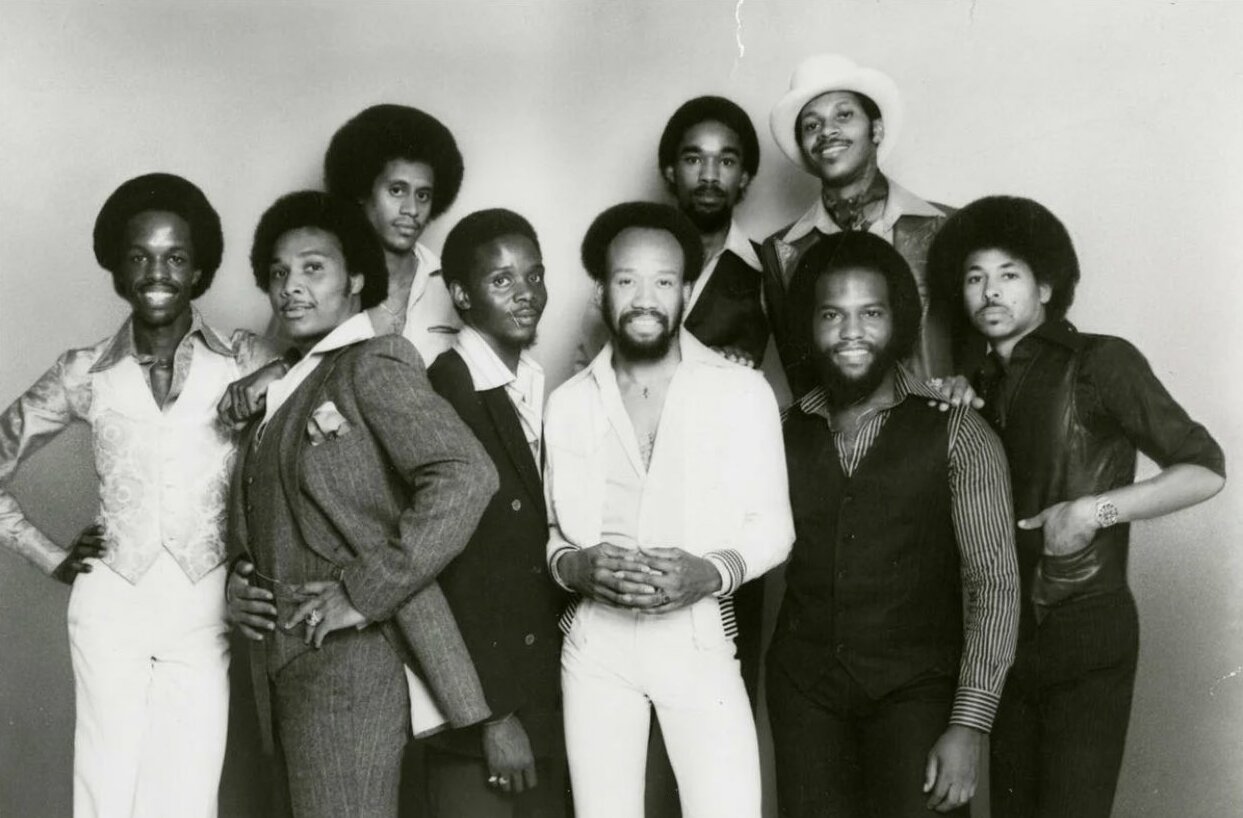
Earth, Wind & Fire is the band Maurice White formed in Chicago in 1969, growing it out of his earlier group the Salty Peppers; the CultureTechLens master carries the band, by its own convention, as
| At a glance | |
|---|---|
| Type | PERSON — group |
| Dates | – |
| Chicago connection | CORE — see the Chicago connection section |
| Known for | Earth, Wind & Fire is the band Maurice White formed in Chicago in 1969, growing it out of his earlier group the Salty |
| Verification | SUPPORTED |
| CTL ID | CTL-ENC-000143 |
Overview
Earth, Wind & Fire is the band Maurice White formed in Chicago in 1969, growing it out of his earlier group the Salty Peppers; the CultureTechLens master carries the band, by its own convention, as a Person record, and this staged record keeps that node type unchanged. White's formation was itself a Chicago apprenticeship: born December 19, 1941 — Encyclopedia.com's Maurice White entry gives Chicago as his birthplace, while other accounts give Memphis, where he was raised and sang in a church gospel choir from age six; both traditions are recorded here rather than silently merged — he studied at the Chicago Conservancy, worked as a Chess Records session drummer, played with Muddy Waters and the Impressions, and drummed for the Ramsey Lewis Trio before founding his own band. The objective he stated for it was explicit: music that would inspire, not just entertain — "to try to inspire young people to believe in themselves and to follow through on their ideas."
The classic lineup joined White's baritone and kalimba to his brother Verdine White's bass, Philip Bailey's falsetto, Ralph Johnson, Larry Dunn, Al McKay, Andrew Woolfolk, Roland Bautista and the Phenix Horns. The sound — jazz, R&B, soul, funk, disco, pop, Latin and Afro-pop in one ensemble, with a dynamic horn section and elaborate stage shows — produced the run of records that made the band one of the best-selling acts in history, with sales of more than ninety million records worldwide: "Shining Star," "That's the Way of the World," "Sing a Song," "September," "Boogie Wonderland," "After the Love Has Gone" and "Let's Groove." White also produced outward, co-writing and co-producing the Emotions' number-one hit "Best of My Love." The band took a hiatus from mid-1984 to mid-1987 and returned; White, who had been diagnosed with Parkinson's disease, stopped touring in the 1990s but remained the band's leader and producer until his death on February 4, 2016.
Life and career
The institutional honors are of the first order. The band has won six Grammy Awards from seventeen nominations in the count carried by the standard reference — later institutional profiles count nine Grammys including the Lifetime Achievement Award — and four American Music Awards; it was inducted into the Rock and Roll Hall of Fame in 2000 and the Songwriters Hall of Fame in 2010, received the Grammy Lifetime Achievement Award, a BET Lifetime Achievement Award, a Soul Train Legend Award, the ASCAP Rhythm & Soul Heritage Award, a star on the Hollywood Walk of Fame, and, in 2019, the Kennedy Center Honors — the first Black group so honored, as the Kennedy Center Honors essay in the sources notes. Rolling Stone called the band "innovative, precise yet sensual, calculated yet galvanizing" and declared that it "changed the sound of black pop." In 1979 Earth, Wind & Fire became the first African American act to sell out Madison Square Garden. For CultureTechLens, the record's Chicago claim is foundational rather than incidental: the Salty Peppers-to-EWF founding, the Conservatory and Chess-session apprenticeship, and White's Ramsey Lewis years are all Chicago chapters, and the band stands in the graph as the city's largest-scale export of the soul era — a band built, deliberately, to carry a message of uplift inside the most commercial popular music of its decade.
The honors essay consulted for this record also preserves the band's own account of its reach at the summit of American public life: Earth, Wind & Fire performed for Presidents Bill Clinton and Barack Obama, and Obama told Rolling Stone the band was "a rhythm and blues and pop staple" — a head of state's phrasing for what the sales figures already said. The Smithsonian's National Portrait Gallery added its Portrait of a Nation Prize to the band's honors in the same Kennedy Center year. The Stiefel Theatre's artist history underlines the durability underneath the decorations: twenty-three albums across five decades, fifty years in entertainment marked in 2020, and a touring band still led from the book White wrote — the horn arrangements, the kalimba, the Bailey-White vocal contrast — long after its founder's death. Few Chicago-founded acts of any era can match the combination this record documents: a hometown apprenticeship in the Chess and Ramsey Lewis workshops, a deliberate philosophy of uplift, and a catalog that became, by common consent, the sound of celebration itself in Black America.
Chicago connection
Earth, Wind & Fire is the band Maurice White formed in Chicago in 1969, growing it out of his earlier group the Salty Peppers; the CultureTechLens master carries the band, by its own convention, as a Person record, and this staged record keeps that node type unchanged. White's formation was itself a Chicago apprenticeship: born December 19, 1941 — Encyclopedia.com's Maurice White entry gives Chicago as his birthplace, while other accounts give Memphis, where he was raised and sang in a church gospel choir from age six; both traditions are recorded here rather than silently merged — he studied at the Chicago Conservancy, worked as a Chess Records session drummer, played with Muddy Waters and the Impressions, and drummed for the Ramsey Lewis Trio before founding his own band. For CultureTechLens, the record's Chicago claim is foundational rather than incidental: the Salty Peppers-to-EWF founding, the Conservatory and Chess-session apprenticeship, and White's Ramsey Lewis years are all Chicago chapters, and the band stands in the graph as the city's largest-scale export of the soul era — a band built, deliberately, to carry a message of uplift inside the most commercial popular music of its decade. Few Chicago-founded acts of any era can match the combination this record documents: a hometown apprenticeship in the Chess and Ramsey Lewis workshops, a deliberate philosophy of uplift, and a catalog that became, by common consent, the sound of celebration itself in Black America. [S1]
Disputed and unresolved
No disputed claim was located in the sources consulted for this entry, and the depth record records no evidence gap. Open items, if any, are listed in Editorial notes.
See also
Relationships
Relationships: none recorded yet — edges to follow. This entry's graph connections are being built; it publishes now on its sources.
Sources
- S1: Wikipedia. "Earth, Wind & Fire." Accessed October 26, 2026. https://en.wikipedia.org/wiki/Earth,Wind%26_Fire.
- S2: Encyclopedia.com. "White, Maurice 1941–." Accessed October 26, 2026. https://www.encyclopedia.com/education/news-wires-white-papers-and-books/white-maurice-1941.
- S3: Blues & Soul. "Maurice White – Earth, Wind & Fire Founder. RIP." Accessed October 26, 2026. https://www.bluesandsoul.co.uk/news_item/768/maurice_white__earth_wind_and_fire_founder_rip/.
- S4: EIN Presswire. "Let's Groove! Earth, Wind & Fire Inducted into the People's Music Hall of Fame." Accessed October 26, 2026. https://www.einpresswire.com/article/943888797/let-s-groove-salt-lake-to-celebrate-legendary-band-earth-wind-fire-is-inducted-into-the-people-s-music-hall-of-fame.
- S5: The Freeman Flyer. "Celebrating America's Greatest Band." Accessed October 26, 2026. https://thefreemanflyer356448588.wordpress.com/wp-content/uploads/2019/12/ewf-kennedy-center-honors-essay.pdf.
Cite this entry
- Permanent ID: CTL-ENC-000143 · Crosswalked graph record: CTL-P-0808 · Version: 0.1 · Date: 2026-10-29
- Chicago: CultureTechLens. "Earth, Wind & Fire." CultureTechLens Encyclopedia, version 0.1, October 29, 2026. CultureTechLens NFP. CTL-ENC-000143.
- APA: CultureTechLens. (2026). Earth, Wind & Fire (Version 0.1, Entry CTL-ENC-000143). CultureTechLens Encyclopedia. CultureTechLens NFP.
- MLA: CultureTechLens. "Earth, Wind & Fire." CultureTechLens Encyclopedia, version 0.1, CultureTechLens NFP, 29 Oct. 2026. Entry CTL-ENC-000143.
Further reading
- CultureTechLens Knowledge Graph record CTL-P-0808 (crosswalked; published graph register id CTL-E-0067).
Image credits
- Earth, Wind & Fire photograph: see Images block in the frontmatter for the full credit line, rights status, and rights document.
Citation
CultureTechLens. "Earth, Wind & Fire." CultureTechLens Encyclopedia, Vol. 1 — Black Chicago, version 0.1, 2026-10-29. CultureTechLens NFP. CTL-ENC-000143.
<!-- =======================