 CULTURETECHLENS
The Encyclopedia · CTL-ENC-000128
Eddie T. Johnson
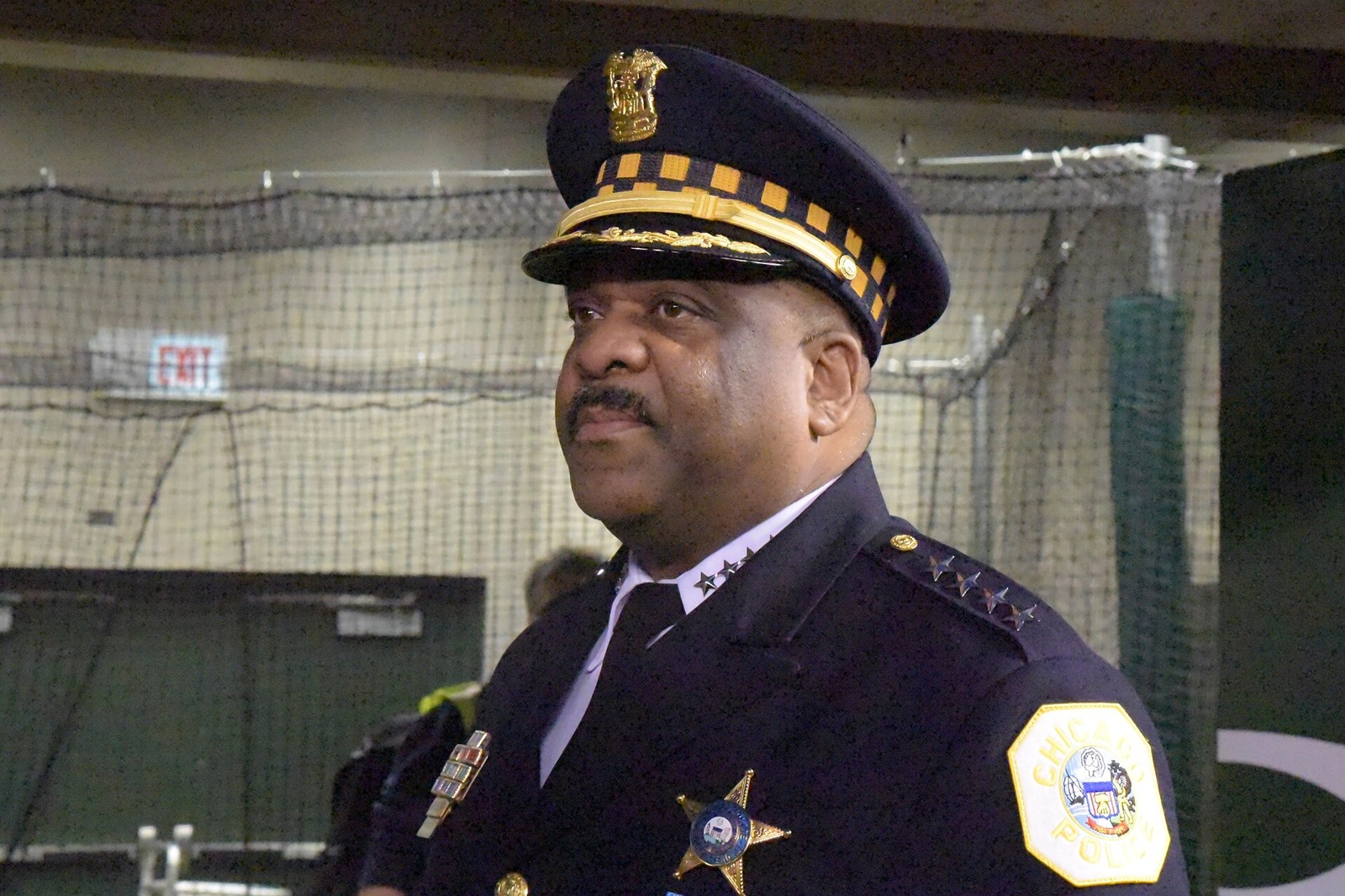
Eddie T.
| At a glance | |
|---|---|
| Type | PERSON — educator |
| Dates | – |
| Chicago connection | CORE — see the Chicago connection section |
| Known for | Eddie T. |
| Verification | PROVISIONAL |
| CTL ID | CTL-ENC-000128 |
Overview
Eddie T. Johnson (born July 28, 1960) was superintendent of the Chicago Police Department from 2016 to 2019 — a "true son of Chicago," in his department spokesman's phrase, who grew up in the Cabrini-Green public housing project on the Near North Side, moved with his family to Washington Heights on the South Side, graduated from Corliss High School in 1978, and remained a Washington Heights resident through his tenure. Initially a pre-med student, he joined the department as a patrolman in May 1988 and, in the mayor's office's own appointment biography, held nearly every leadership rung in the Bureau of Patrol across three decades: sergeant, lieutenant in the 15th District, commander of the 6th District from 2008, deputy chief for Area Central, executive officer, and chief of patrol from 2012. He served on the executive board of the Chicago chapter of NOBLE, the National Organization of Black Law Enforcement Executives, and collected department commendations and a Chicago Defender Men of Excellence Award.
His appointment was an upset that defined his tenure's meaning. Mayor Rahm Emanuel had fired Superintendent Garry McCarthy after the release of the dashcam video of Officer Jason Van Dyke fatally shooting seventeen-year-old Laquan McDonald; the Police Board ran a search and produced three finalists — and Johnson, then interim chief, had not even applied. Emanuel set the board's list aside and appointed Johnson interim superintendent on March 28, 2016, then made the appointment permanent, judging that the crisis required someone who knew the city, could lift rank-and-file morale, and could rebuild trust. An African American who had spent his early childhood in public housing, soft-spoken and trusted by the rank and file far more than his outsider predecessor, Johnson inherited a department in a running gun battle: homicides jumped 64 percent in 2016 to nearly eight hundred, and in early 2017 a federal investigation concluded the department was beset by widespread racial bias, excessive force, poor training and weak oversight. Homicides fell to 664 the following year even as the totals remained a national story.
Life and career
Johnson's public combats marked the tenure as much as the statistics: he publicly answered President Donald Trump's claim that an officer had told him Chicago's violence could be solved "in a week" by inviting the president to share the plan, boycotted Trump's October 2019 address to the police chiefs' conference in Chicago over immigration policy — drawing a Fraternal Order of Police no-confidence vote — and, in the Jussie Smollett case, charged that the actor had staged a hate crime and owed the city an apology. On November 7, 2019, Johnson announced he would retire at year's end, citing family and the toll of the job. On December 2, 2019, Mayor Lori Lightfoot fired him instead, weeks before the retirement took effect, after an inspector general's report and body-camera video on the night of October 16–17, when Johnson was found asleep at the wheel of his city vehicle near his home: Lightfoot said the findings showed "a series of ethical lapses and flawed decision making" and that Johnson had repeatedly misrepresented the night, in which, as the later inspector general report concluded, he had consumed several large servings of rum and driven impaired. Johnson acknowledged a lapse of judgment and stood on his thirty-year reputation. The full arc — Cabrini-Green childhood, rank-by-rank ascent, reform-era appointment, and an ending in an accountability firing by a reform mayor — is why this record belongs to Chicago's civic history and not only its police history.
The department's own spokesman, Anthony Guglielmi, summed up the biography at Johnson's retirement announcement in the words the Associated Press carried: a "true son of Chicago who grew up in public housing & went to public schools went on to become one of our most dedicated public servants." Johnson had signaled that the retirement decision was about family, and said it had nothing to do with the October incident — the position the inspector general's findings, and the mayor's reading of them, overtook within the month. This record is a staged proposal pending the founder's classification sitting.
Chicago connection
Johnson (born July 28, 1960) was superintendent of the Chicago Police Department from 2016 to 2019 — a "true son of Chicago," in his department spokesman's phrase, who grew up in the Cabrini-Green public housing project on the Near North Side, moved with his family to Washington Heights on the South Side, graduated from Corliss High School in 1978, and remained a Washington Heights resident through his tenure. He served on the executive board of the Chicago chapter of NOBLE, the National Organization of Black Law Enforcement Executives, and collected department commendations and a Chicago Defender Men of Excellence Award. Johnson's public combats marked the tenure as much as the statistics: he publicly answered President Donald Trump's claim that an officer had told him Chicago's violence could be solved "in a week" by inviting the president to share the plan, boycotted Trump's October 2019 address to the police chiefs' conference in Chicago over immigration policy — drawing a Fraternal Order of Police no-confidence vote — and, in the Jussie Smollett case, charged that the actor had staged a hate crime and owed the city an apology. The full arc — Cabrini-Green childhood, rank-by-rank ascent, reform-era appointment, and an ending in an accountability firing by a reform mayor — is why this record belongs to Chicago's civic history and not only its police history. The department's own spokesman, Anthony Guglielmi, summed up the biography at Johnson's retirement announcement in the words the Associated Press carried: a "true son of Chicago who grew up in public housing & went to public schools went on to become one of our most dedicated public servants." Johnson had signaled that the retirement decision was about family, and said it had nothing to do with the October incident — the position the inspector general's findings, and the mayor's reading of them, overtook within the month. [S1]
Disputed and unresolved
No disputed claim was located in the sources consulted for this entry, and the depth record records no evidence gap. Open items, if any, are listed in Editorial notes.
See also
Relationships
- related_to — City Club of Chicago: Eddie T. Johnson — Superintendent, Chicago Police Department (CTL-E-4980) — Restated from the CultureTechLens Knowledge Graph: Eddie T. Johnson (CTL-E-4876) related_to City Club of Chicago: Eddie T. Johnson — Superintendent, Chicago Police Department (CTL-E-4980), verification Verified.
- related_to — City Club of Chicago: Superintendent Eddie Johnson (CTL-E-4981) — Restated from the CultureTechLens Knowledge Graph: Eddie T. Johnson (CTL-E-4876) related_to City Club of Chicago: Superintendent Eddie Johnson (CTL-E-4981), verification Verified.
Sources
- S1: City of Chicago, Mayor's Press Office. "Mayor Emanuel Appoints Eddie Johnson as Interim Police Superintendent." Accessed October 26, 2026. https://live-news-wttw.pantheonsite.io/sites/default/files/article/file-attachments/Mayor%20Emanuel%20Appoints%20Eddie%20Johnson%20as%20Interim%20Police%20Superintendent.pdf.
- S2: ND Insider (Associated Press). "Chicago Police Superintendent Eddie Johnson to retire after 3 years." Accessed October 26, 2026. https://www.ndinsider.com/story/news/nation/2019/11/07/chicago-police-superintendent-eddie-johnson-retire-after-3-years/2517084001/.
- S3: Police1 (Associated Press). "Chicago police superintendent announces retirement." Accessed October 26, 2026. https://www.police1.com/chiefs-sheriffs/articles/chicago-police-superintendent-announces-retirement-5I8WLSnaeFeQx9ts/.
- S4: NPR Illinois. "Chicago Mayor Fires Police Superintendent, Citing 'Ethical Lapses.'" Accessed October 26, 2026. https://www.nprillinois.org/generationlisten/2019-12-02/chicago-mayor-fires-police-superintendent-citing-ethical-lapses.
- S5: Police1 (Associated Press). "Report: Chicago's ex-top cop drove impaired, lied to public." Accessed October 26, 2026. https://www.police1.com/chiefs-sheriffs/articles/report-chicagos-ex-top-cop-drove-impaired-lied-to-public-aUlJ1ShmmiG5ZfD6/.
- S6: MovieDelic. "Eddie Johnson: Where is the Former Superintendent Today?" Accessed October 26, 2026. https://moviedelic.com/eddie-johnson/.
- S7: Baltimore Jewish Life (Associated Press). "Chicago's Top Cop Retiring After Turbulent 3-Plus Years." Accessed October 26, 2026. https://baltimorejewishlife.com/news/news-detail.php?SECTION_ID=2&ARTICLE_ID=123864.
- S8: CultureTechLens Knowledge Graph (schema v0.3.1), entities.json and relationships.json — CTL's own graph register, consulted 2026-10-29 for crosswalk facts and restated relationships.
Cite this entry
- Permanent ID: CTL-ENC-000128 · Crosswalked graph record: CTL-ESS-0268 · Version: 0.1 · Date: 2026-10-29
- Chicago: CultureTechLens. "Eddie T. Johnson." CultureTechLens Encyclopedia, version 0.1, October 29, 2026. CultureTechLens NFP. CTL-ENC-000128.
- APA: CultureTechLens. (2026). Eddie T. Johnson (Version 0.1, Entry CTL-ENC-000128). CultureTechLens Encyclopedia. CultureTechLens NFP.
- MLA: CultureTechLens. "Eddie T. Johnson." CultureTechLens Encyclopedia, version 0.1, CultureTechLens NFP, 29 Oct. 2026. Entry CTL-ENC-000128.
Further reading
- CultureTechLens Knowledge Graph record CTL-ESS-0268 (crosswalked; published graph register id CTL-E-4876).
Image credits
- Eddie T. Johnson photograph: see Images block in the frontmatter for the full credit line, rights status, and rights document.
Citation
CultureTechLens. "Eddie T. Johnson." CultureTechLens Encyclopedia, Vol. 1 — Black Chicago, version 0.1, 2026-10-29. CultureTechLens NFP. CTL-ENC-000128.
<!-- =======================