 CULTURETECHLENS
The Encyclopedia · CTL-ENC-000370
Frederick Douglass
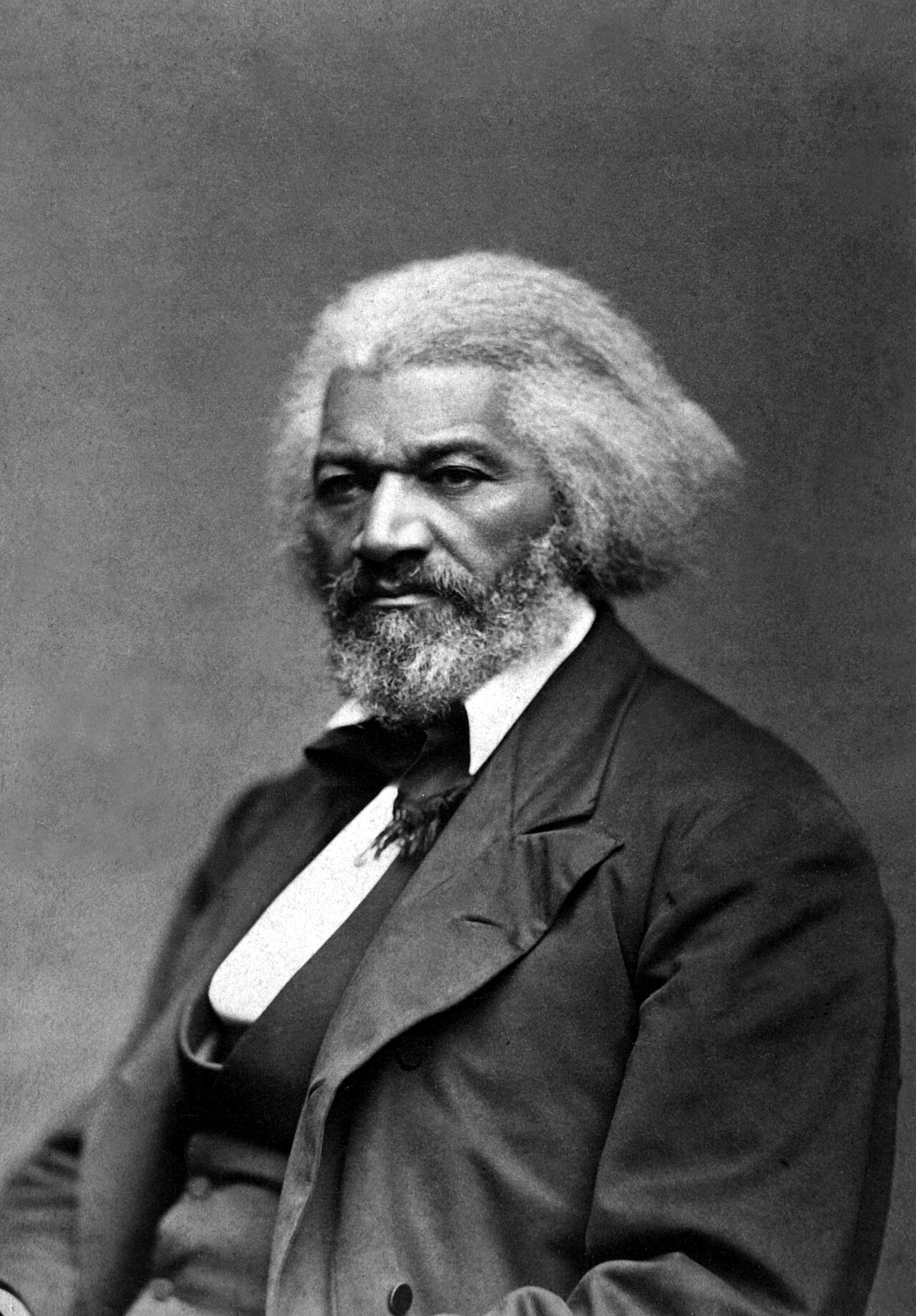
Abolitionist orator and author of the 1845 Narrative whose Chicago anchor is documentary: Haiti's commissioner at the 1893 Exposition and introducer of The Reason Why pamphlet.
| At a glance | |
|---|---|
| Type | PERSON — abolitionist |
| Dates | c. 1818 – 1895 (birth year approximate — see Disputed) |
| Chicago connection | SIGNIFICANT — Chicago |
| Known for | Narrative of the Life of Frederick Douglass (1845); the abolitionist oratory; The Reason Why introduction (1893) |
| Verification | VERIFIED |
| CTL ID | CTL-ENC-000370 |
| Documented address | None recorded for this entry — see Documented address and map |
Overview
Frederick Douglass (c. 1818–1895) was the nineteenth century's most consequential Black American author: the fugitive slave whose Narrative (1845) proved, in prose of controlled fury, that an enslaved man could out-write his enslavers, and whose fifty-year career as orator, editor, and federal officeholder made him the elder statesman of Black America [S1][S3]. He enters this Chicago volume on a documentary anchor, stated plainly: in 1893, in the last full year of his public life, Douglass served at Chicago's World's Columbian Exposition as commissioner of the Republic of Haiti — the only official platform the fair afforded a Black man — and from that pavilion helped launch The Reason Why (The Reason Why), contributing its introduction [S2].
Life in brief
Born enslaved in Talbot County, Maryland — Frederick Augustus Washington Bailey — Douglass taught himself to read against the law's prohibition, escaped in 1838, and by 1841 was lecturing for the Massachusetts Anti-Slavery Society [S1]. The Narrative (1845) made him famous and, by naming his enslaver, endangered; he spent two years in Britain and Ireland while supporters purchased his freedom [S1]. From Rochester he edited the North Star (later Frederick Douglass' Paper), recruited Black soldiers in the Civil War, and advised Lincoln; after the war he held federal posts — marshal of the District of Columbia, recorder of deeds, and minister to Haiti (1889–1891) — while defending the Reconstruction amendments against their betrayal [S1][S3].
Chicago 1893: the Haitian pavilion and the pamphlet
The Exposition's management refused Black Americans an exhibit and confined their fair employment almost entirely to menial posts [S2]. Haiti — the Black republic whose independence Douglass had served as American minister — appointed him its commissioner, and the Haitian pavilion became, in Ferdinand Barnett's phrase, the one acceptable representation Black Americans enjoyed at their own country's fair [S2]. Douglass spoke on the fair's designated "Colored People's Day" (August 25, 1893) against heckling, and lent his unmatched authority to the protest pamphlet: his introduction to The Reason Why framed the exclusion as the nation's, not the fair's alone [S2]. The alliance with the thirty-year-old Wells — Douglass had backed her anti-lynching work from its Memphis beginnings — joined the abolitionist generation to the anti-lynching one on Chicago ground [S2].
The document of record
The documents of record for this entry are Douglass's Narrative (1845) and his introduction to The Reason Why (Chicago, 1893) — the latter the entry's anchor document, treated in full at The Reason Why. His papers are held principally by the Library of Congress. What the Chicago document evidences: the abolitionist generation's judgment, in its leader's own words, that emancipation's promises had been broken at the very fair staged to celebrate American progress.
Chicago connection
SIGNIFICANT, on the documented grounds named in the selection: Douglass's 1893 service as Haiti's commissioner at the Chicago exposition and his introduction to the Chicago-printed The Reason Why [S2]. No Chicago residence is claimed; his homes were Rochester and Washington [S1][S3].
Documented address and map
No address documented in the sources consulted — no coordinates are recorded and no map is published for this entry.
Disputed and unresolved
| Claim | Version A | Version B | CTL position |
|---|---|---|---|
| Birth year | c. 1817 in some older authorities | c. 1818 in Britannica and the National Park Service tradition; Douglass himself did not know his birth date | CTL records 1818 with year precision and the uncertainty stated; the frontmatter date_start_precision is 'year' |
See also
Relationships
- related_to — Ida B. Wells (CTL-E-0081) — Douglass contributed the introduction to The Reason Why (Chicago, 1893), which Wells edited, and supported her anti-lynching campaign (Chicago History Museum).
- based_in — City of Chicago (CTL-E-1475) — Recorded at SUPPORTED only for the documented 1893 Exposition season, in which Douglass served in Chicago as Haiti's commissioner — not a Chicago residence claim.
Sources
- S1: Encyclopaedia Britannica. "Frederick Douglass." https://www.britannica.com/biography/Frederick-Douglass
- S2: Chicago History Museum. "Chicago's World's Fairs" (Douglass and the Haitian pavilion). https://www.chicagohistory.org/chicago-worlds-fairs/
- S3: National Park Service. "Frederick Douglass National Historic Site." https://www.nps.gov/frdo/
Cite this entry
- Permanent ID: CTL-ENC-000370 · Crosswalked graph record: CTL-E-0403 · Version: 0.1 · Date: 2026-10-29
- Chicago: CultureTechLens. "Frederick Douglass." CultureTechLens Encyclopedia, version 0.1, October 29, 2026. CultureTechLens NFP. CTL-ENC-000370. Source: CultureTechLens
- APA: CultureTechLens. (2026). Frederick Douglass (Version 0.1, Entry CTL-ENC-000370). CultureTechLens Encyclopedia. CultureTechLens NFP. Source: CultureTechLens
- MLA: CultureTechLens. "Frederick Douglass." CultureTechLens Encyclopedia, version 0.1, CultureTechLens NFP, 29 Oct. 2026. Entry CTL-ENC-000370. Source: CultureTechLens
Further reading
- Douglass, Frederick. Narrative of the Life of Frederick Douglass, an American Slave (1845); Life and Times of Frederick Douglass (1881, rev. 1892).
- CultureTechLens Knowledge Graph record CTL-E-0403; his Narrative is a separate graph Work record (CTL-E-1621).
Image credits
- Portrait of Frederick Douglass, c. 1879: see Images block in the frontmatter for the full credit line, rights status, and rights document.
Citation
CultureTechLens. "Frederick Douglass." CultureTechLens Encyclopedia, Historical Documents (staged), version 0.1, 2026-10-29. CultureTechLens NFP. CTL-ENC-000370.
<!-- =======================