 CULTURETECHLENS
The Encyclopedia · CTL-ENC-000012
Harris Theater
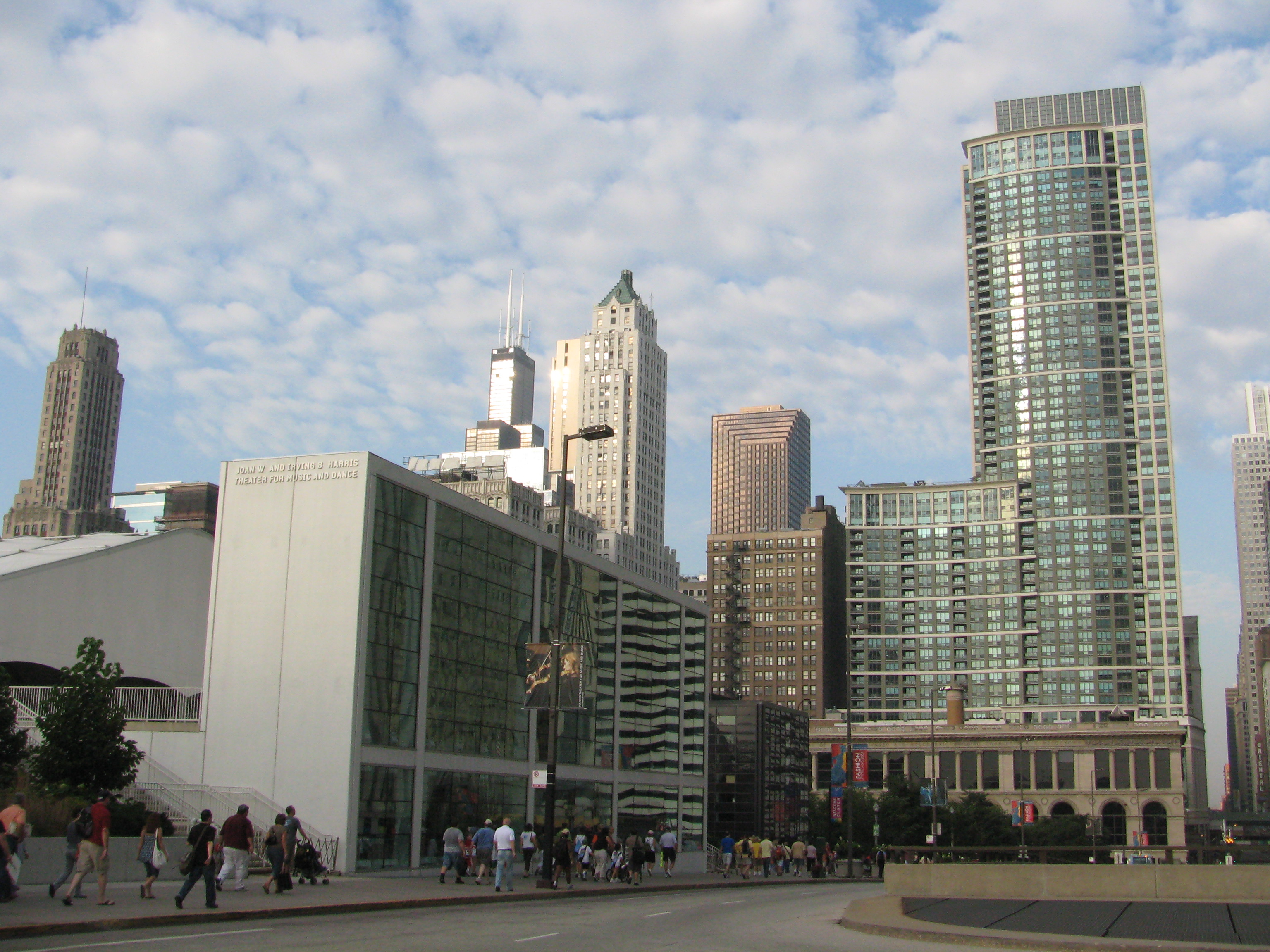
The Harris Theater — formally the Joan W.
| At a glance | |
|---|---|
| Type | PLACE — place |
| Dates | – |
| Chicago connection | CORE — see the Chicago connection section |
| Known for | The Harris Theater — formally the Joan W. |
| Verification | VERIFIED |
| CTL ID | CTL-ENC-000012 |
Overview
The Harris Theater — formally the Joan W. and Irving B. Harris Theater for Music and Dance — is a performing arts venue at 205 East Randolph Street, at the north end of Millennium Park in downtown Chicago, recorded in the CultureTechLens graph as a Place. This record covers the venue itself: its long campaign for a mid-size home for Chicago music and dance, its underground construction in Millennium Park, and its resident-company model. It is distinct from Millennium Park as a whole, from the Jay Pritzker Pavilion beside it, and from any event staged in it, including the Soul Train Awards 2026 taping, which carries its own event record and is cross-referenced here only as a dated use of the room.
The theater's own history traces the need to the 1980s, when dozens of new Chicago music, dance, and theater companies emerged while the city lacked adequate space for mid-size companies that had outgrown storefront venues but were not suited to its larger houses. A 1990 MacArthur Foundation study, "The Arts in Chicago," confirmed the need — nearly 100 musical ensembles and 50 dance companies and presenting groups at the time — and by 1993 the companies had incorporated as Music and Dance Theater Chicago (MADTC), with 12 local companies slated to perform in residence, among them Chicago Opera Theater, Chicago Sinfonietta, Hubbard Street Dance Chicago, the Joffrey Ballet, and Muntu Dance Theatre of Chicago. The board awarded the design contract to Hammond Beeby Rupert Ainge, with Thomas Beeby as architect.
History
The Millennium Park site changed the building's form. After an earlier City Front Center site failed, the leaders of the Millennium Park project proposed fitting MADTC into the new park; because of restrictions on vertical building east of Michigan Avenue, the theater would be built mostly underground, adjacent on its south end to the Frank Gehry-designed Pritzker Pavilion, and sharing backstage facilities with it. Funding nearly failed at the last hour: when banks turned down the board's loan applications, Joan and Irving Harris made a $24 million construction loan plus a $15 million gift — at the time the largest single monetary donation to a performing arts organization in Chicago. Crews broke ground on February 6, 2002, on the first multi-use performing arts venue to be built in downtown Chicago since 1929, and the Harris Theater opened on November 8, 2003, with a performance by the diverse group of companies that called it home. The house is a roughly 1,500-seat venue — described as a 1,500-seat theater in its standard biography and as an approximately 1,525-seat house in reference summaries — with the auditorium set underground beneath the park.
The resident-company model is the theater's operating identity. The Harris serves for nine months of the year as home to its resident companies, ceding summer months to Grant Park Music Festival performances on the Pritzker stage, and Chicago Sinfonietta's venue summary describes it as the home venue of nearly 30 of Chicago's not-for-profit arts organizations and a presenter of artists from around the world, with some of the most diverse offerings of any multi-use venue in downtown Chicago. In 2006 the theater began presenting visiting companies, starting with the New York City Ballet's return to Chicago, which established the Harris Theater Presents series. Dance Magazine's twentieth-anniversary account records the same founding purpose — a home for local music and dance organizations lacking sufficient space, ideal for the city's jazz and contemporary dance companies — and notes resident companies grew to 28 by the anniversary season.
On November 5, 2026, the room takes a different kind of booking: the taping of the Soul Train Awards 2026, the franchise's return to the city where Soul Train began on WCIU-TV in 1970. That fact belongs to the event's record; here it is stated only as the venue's part in a Chicago homecoming — a mid-size, resident-company theater in Millennium Park hosting, for one night, a national Black music institution returning to its birthplace.
Chicago connection
Harris Theater for Music and Dance — is a performing arts venue at 205 East Randolph Street, at the north end of Millennium Park in downtown Chicago, recorded in the CultureTechLens graph as a Place. This record covers the venue itself: its long campaign for a mid-size home for Chicago music and dance, its underground construction in Millennium Park, and its resident-company model. The theater's own history traces the need to the 1980s, when dozens of new Chicago music, dance, and theater companies emerged while the city lacked adequate space for mid-size companies that had outgrown storefront venues but were not suited to its larger houses. A 1990 MacArthur Foundation study, "The Arts in Chicago," confirmed the need — nearly 100 musical ensembles and 50 dance companies and presenting groups at the time — and by 1993 the companies had incorporated as Music and Dance Theater Chicago (MADTC), with 12 local companies slated to perform in residence, among them Chicago Opera Theater, Chicago Sinfonietta, Hubbard Street Dance Chicago, the Joffrey Ballet, and Muntu Dance Theatre of Chicago. Funding nearly failed at the last hour: when banks turned down the board's loan applications, Joan and Irving Harris made a $24 million construction loan plus a $15 million gift — at the time the largest single monetary donation to a performing arts organization in Chicago. [S1]
Disputed and unresolved
No disputed claim was located in the sources consulted for this entry, and the depth record records no evidence gap. Open items, if any, are listed in Editorial notes.
See also
Relationships
Relationships: none recorded yet — edges to follow. This entry's graph connections are being built; it publishes now on its sources.
Sources
- S1: Harris Theater for Music and Dance. "Our Story." Accessed October 25, 2026. https://www.harristheaterchicago.org/our-story.
- S2: Chicago Sinfonietta. "Harris Theater | A Modern Marvel in Millennium Park." Accessed October 25, 2026. https://chicagosinfonietta.org/plan-your-experience/harris-theater/.
- S3: Dance Magazine. "The Harris Theater Celebrates 20 Years of Bold Moves in Chicago." Accessed October 25, 2026. http://dancemagazine.com/harris-theater-20/.
- S4: The TRiiBE. "The Soul Train Awards are coming to Chicago, where Don Cornelius' legacy began." October 13, 2026. https://thetriibe.com/2026/10/the-soul-train-awards-are-returning-to-chicago-where-don-cornelius-legacy-began/.
Cite this entry
- Permanent ID: CTL-ENC-000012 · Crosswalked graph record: CTL-PL-0089 · Version: 0.1 · Date: 2026-10-28
- Chicago: CultureTechLens. "Harris Theater." CultureTechLens Encyclopedia, version 0.1, October 28, 2026. CultureTechLens NFP. CTL-ENC-000012.
- APA: CultureTechLens. (2026). Harris Theater (Version 0.1, Entry CTL-ENC-000012). CultureTechLens Encyclopedia. CultureTechLens NFP.
- MLA: CultureTechLens. "Harris Theater." CultureTechLens Encyclopedia, version 0.1, CultureTechLens NFP, 28 Oct. 2026. Entry CTL-ENC-000012.
Further reading
- CultureTechLens Knowledge Graph record CTL-PL-0089 (no published graph register match located — see Editorial notes).
Image credits
- Harris Theater photograph: see Images block in the frontmatter for the full credit line, rights status, and rights document.
Citation
CultureTechLens. "Harris Theater." CultureTechLens Encyclopedia, Vol. 1 — Black Chicago, version 0.1, 2026-10-28. CultureTechLens NFP. CTL-ENC-000012.
<!-- =======================