 CULTURETECHLENS
The Encyclopedia · CTL-ENC-000495
John Jones
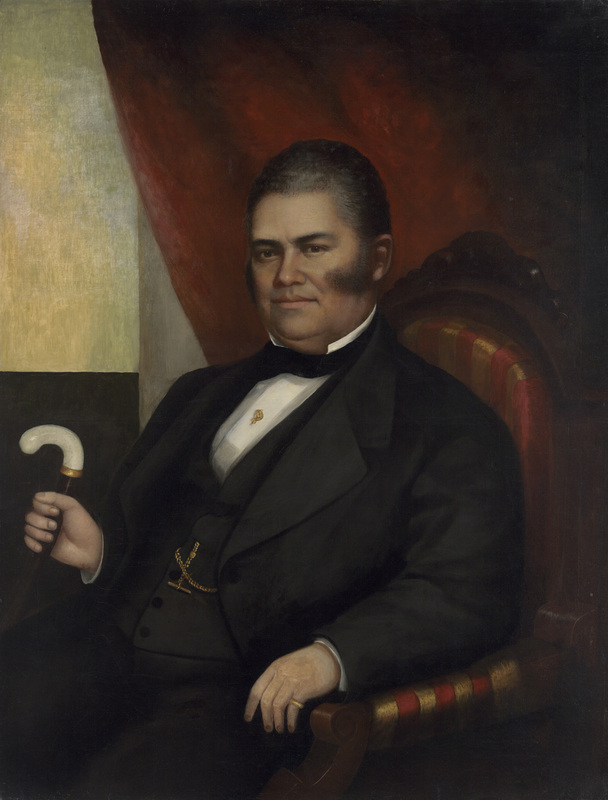
Chicago tailor and abolitionist who arrived in 1845 with $3.50, ran an Underground Railroad station from his home, authored the 1864 pamphlet against the Black Laws, and became Illinois's first Black elected official in 1871.
| Field | Value |
|---|---|
| Born | November 3, 1816, Greene County, North Carolina |
| Died | May 27, 1879, Chicago; buried Graceland Cemetery |
| Occupation | Tailor and businessman; abolitionist; Cook County Commissioner |
| Document of record | The Black Laws of Illinois and a Few Reasons Why They Should Be Repealed (1864) — [[CTL-ENC-000496]] |
| Chicago connection | CORE — Chicago from 1845; the city's first Black officeholder |
Overview
John Jones is the foundational political figure of Black Chicago. Born free in Greene County, North Carolina, on November 3, 1816 — freeborn, per the Colored Conventions Project's biography (one encyclopedia introduction loosely calls him a former slave; its own chronology and the scholarly record say otherwise, and the point is flagged below) — he was apprenticed as a tailor, married Mary Jane Richardson at Alton, Illinois, and arrived in Chicago in 1845 with $3.50. His tailoring business made him one of the wealthiest Black men in the city, and his home became a station on the Underground Railroad: Frederick Douglass and John Brown were among the travelers his household sheltered.[S1][S2]
Organizing against the Black Laws
Jones's public career is a twenty-year campaign against Illinois's Black Laws ([[CTL-ENC-000497]]). When the Fugitive Slave Act passed in 1850, Jones read the resolutions at the Quinn Chapel meeting of September 30 and served the vigilance committee that patrolled against slave-catchers ([[CTL-ENC-000494]]). He helped organize the 1853 Chicago convention of Black Illinoisans and the Illinois State Council, and in 1856 became president of the State Repeal Association. In November 1864 he published the campaign's key text — the pamphlet The Black Laws of Illinois and a Few Reasons Why They Should Be Repealed ([[CTL-ENC-000496]]) — and then carried an 11,000-signature petition to Springfield in person. The legislature repealed the Black Laws on February 7, 1865.[S1][S3]
The document of record
Jones's pamphlet of 1864 is treated as its own entry ([[CTL-ENC-000496]]); for this entry it stands as the document of record of his life — the text in which the tailor-organizer's two decades of argument were set in print, sixteen pages that helped end a statutory regime.
First officeholder
In 1871 Jones was elected a Cook County Commissioner — the first Black elected official in Illinois (some accounts frame the term's start from 1872; the election year 1871 is the consistent record). He died in Chicago on May 27, 1879, and is buried in Graceland Cemetery.[S1][S2]
Chicago connection
CORE. Jones's business, organizing, pamphlet, petition, and office are all Chicago; he is the city's foundational Black political figure.
Documented address and map
A blog-sourced claim for a Dearborn Street address circulates for Jones's home and shop, but it does not meet this encyclopedia's standard for a mapped address — and a residence would not be mapped in any case. This entry carries no coordinates and no map.
Disputed and unresolved
| Claim | Version A | Version B | CTL position |
|---|---|---|---|
| Jones's status at birth | Freeborn (Colored Conventions Project; the chronology of the standard biography) | "Former slave" (one encyclopedia introduction line, contradicted by its own article's chronology) | Freeborn carried; the stray line is recorded as an error in the secondary literature |
| Start of his county commissionership | Elected 1871 | Term framed from 1872 in some accounts | Election in 1871 carried as the documented event |
See also
- [[CTL-ENC-000496]] — The Black Laws of Illinois (his pamphlet)
- [[CTL-ENC-000494]] — Fugitive Slave Act of 1850 (the Quinn Chapel meeting)
- [[CTL-ENC-000497]] — Illinois Black Codes (the laws he fought)
Relationships
- based_in — City of Chicago (CTL-E-1475) — Arrived in Chicago in 1845 and lived, worked, and held office there until his death in 1879.
Sources
- S1: Colored Conventions Project. "John Jones." https://coloredconventions.org/black-illinois-organizing/delegates/john-jones/
- S2: "Jones, John." Encyclopedia.com. https://www.encyclopedia.com/african-american-focus/news-wires-white-papers-and-books/jones-john
- S3: Illinois Department of Natural Resources. "Gen Pride: African American." https://dnrhistoric.illinois.gov/research/genprideafam.html
Cite this entry
Permanent ID: CTL-ENC-000495 · Crosswalked graph record: none — no graph record under this name
Chicago: CultureTechLens. "John Jones." CTL Encyclopedia, Historical Documents (staged), CTL-ENC-000495, version 0.1, 2026-10-29. APA: CultureTechLens. (2026). John Jones (CTL-ENC-000495, v0.1) [Encyclopedia entry, Historical Documents (staged)]. CTL Encyclopedia. MLA: CultureTechLens. "John Jones." CTL Encyclopedia, Historical Documents (staged), CTL-ENC-000495, version 0.1, 29 Oct. 2026.
Further reading
- The Chicago History Museum's History Lab lesson on John Jones and the repeal campaign.
Image credits
- John Jones portrait — Aaron E. Darling, public domain, via Wikimedia Commons. Source: CultureTechLens.
CULTURETECHLENS · "Culture, Clearly Seen." · Black Cultural Intelligence Cite as: CultureTechLens, "John Jones," CTL Encyclopedia, Historical Documents (staged), CTL-ENC-000495, 2026-10-29. Source: CultureTechLens