 CULTURETECHLENS
The Encyclopedia · CTL-ENC-000435
Jon Burge
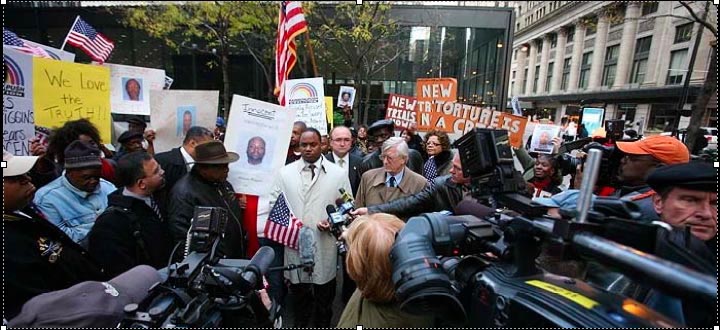
Chicago police commander at the center of the Area 2 torture scandal: fired in 1993 on the Police Board's torture finding, convicted in 2010 of perjury, and named by the 2015 reparations ordinance.
| At a glance | |
|---|---|
| Type | PERSON - police commander |
| Dates | December 20, 1947 - September 19, 2018 |
| Chicago connection | CORE |
| Known for | The Area 2 torture findings; United States v. Burge (2010); the 2015 reparations ordinance |
| Verification | VERIFIED |
| CTL ID | CTL-ENC-000435 |
| Documented address | None recorded for this entry - see Documented address and map |
Overview
This entry rests, as its tasking directs, on the court record and the ordinance, and it states that record before anything else. Jon Graham Burge (1947-2018) joined the Chicago Police Department in 1970 and rose to commander of detectives at Area 2 on the South Side (from 1981) and later Area 3 [S3]. In 1993 the Chicago Police Board, after hearings, ordered his separation from the department on findings that he had participated in the physical abuse - the torture - of Andrew Wilson in February 1982 and had failed to stop abuse by officers under him [S2]. In 2010, in United States v. Burge, a federal jury convicted him of two counts of obstruction of justice and one count of perjury for falsely answering, in sworn interrogatories in a civil torture case, that he had never participated in or known of torture; he was sentenced in 2011 to fifty-four months in federal prison [S1][S3]. In 2015 the City of Chicago's reparations ordinance recited the Burge torture era in its legislative findings and named its remedy for the victims (see Burge Reparations Ordinance) [S4].
Burge was never criminally convicted of torture itself: the statute of limitations on the underlying 1970s-80s conduct had run, which is why the federal case proceeded as perjury and obstruction about the torture, not as the torture [S1][S3]. That distinction - between what was proved about his statements under oath and what the Police Board found about his conduct - is the entry's spine, and it is kept exact.
The allegations and the findings, labeled
Beyond Wilson, more than one hundred men - overwhelmingly Black, some Latino - alleged that between 1972 and 1991 Burge and a group of detectives under his command used electric shock with a hand-cranked device, suffocation with plastic bags and a typewriter cover, mock executions, beatings, and threats to extract confessions at Area 2 and Area 3 [S3][S4]. The status of those allegations in the official record is layered, and the entry keeps the layers separate: many were corroborated by pattern evidence and by the city's settlement of dozens of civil cases for tens of millions of dollars; several convictions obtained on the contested confessions were vacated, and Governor George Ryan pardoned four men on Death Row in 2003 on the ground that their confessions had been tortured out of them, within his blanket commutation of Illinois's death row [S3]. The Police Board's finding covers Wilson by name; the ordinance's findings cover the era institutionally; and Burge, to his death in Florida in 2018, publicly maintained that the torture claims were fabricated - a denial that is itself part of the record and is printed here as his position, against the findings above [S3].
The document of record
The anchor documents are the court and board records: the 1993 Police Board findings and separation order, the 2008 federal indictment and 2010 judgment in United States v. Burge, and the findings recited in the 2015 reparations ordinance (000434) [S1][S2][S4]. The civil-litigation archive - the Wilson case and the pattern cases litigated by the People's Law Office - supplies the corroborating record the entry cites as litigation record, not as adjudicated fact beyond what the judgments hold [S3].
Chicago connection
The connection is CORE: a Chicago police career, Chicago station houses, Chicago victims, Chicago judgments, and a Chicago ordinance [S1][S2][S4]. Nothing in this entry is imported.
Documented address and map
No address documented for this entry - the entry names the Area 2 (943 E. Maxwell St. era headquarters at 727 E. 111th St. in later years) and Area 3 commands as institutions in the record without mapping a personal address; no coordinates are recorded for this subject, deliberately.
Disputed and unresolved
| Claim | Version A (source) | Version B (source) | CTL position |
|---|---|---|---|
| The scope of the torture | Victims, their counsel, and the ordinance's findings: a two-decade pattern by Burge and detectives under him, 1972-1991 | Burge's maintained position: the claims were fabricated by offenders and their lawyers | CTL prints the adjudicated layers in order: the Police Board found the Wilson torture; the federal conviction is for lying about torture knowledge; the pattern beyond Wilson is labeled allegation-corroborated-by-settlements-and-pardons, exactly as the record stands |
| Why no torture prosecution | The limitations period on the underlying conduct had expired (the federal case's own framing) | Critics of the city and state: the delay itself was institutional choice | CTL states the limitations fact from the case record and the criticism as criticism |
See also
Relationships
- member_of_organization — Chicago Police Department — Burge served in the Chicago Police Department from 1970, rising to detective commander of Area 2 (1981) and Area 3, until his separation in 1993 (Police Board record; Britannica).
Sources
- S1: United States v. Burge, trial and judgment record (N.D. Ill. 2010) - conviction on two counts of obstruction of justice and one of perjury. https://www.justice.gov/
- S2: Chicago Police Board. Findings in the matter of Jon Burge (1993) - separation from the Chicago Police Department for the physical abuse of Andrew Wilson. https://www.chicago.gov/
- S3: Encyclopaedia Britannica. "Jon Burge." Britannica. https://www.britannica.com/biography/Jon-Burge
- S4: City of Chicago. Reparations for Burge Torture Victims ordinance, findings (2015). https://www.chicago.gov/
Cite this entry
- Permanent ID: CTL-ENC-000435 · Crosswalked graph record: none - see Editorial notes · Version: 0.1 · Date: 2026-10-29
- Chicago: CultureTechLens. "Jon Burge." CultureTechLens Encyclopedia, version 0.1, October 29, 2026. CultureTechLens NFP. CTL-ENC-000435. Source: CultureTechLens
- APA: CultureTechLens. (2026). Jon Burge (Version 0.1, Entry CTL-ENC-000435). CultureTechLens Encyclopedia. CultureTechLens NFP. Source: CultureTechLens
- MLA: CultureTechLens. "Jon Burge." CultureTechLens Encyclopedia, version 0.1, CultureTechLens NFP, 29 Oct. 2026. Entry CTL-ENC-000435. Source: CultureTechLens
Further reading
- John Conroy's Chicago Reader reporting on the Wilson case and the torture allegations (1989- ), the foundational journalistic record; United States v. Burge, judgment (2011).
Image credits
- The federal indictment of Jon Burge (2008) - the court document on which this entry rests - as held on Wikimedia Commons at 720 x 330 px under CC BY-SA 3: see Images block in the frontmatter for the full credit line, rights status, and rights document.
Citation
CultureTechLens. "Jon Burge." CultureTechLens Encyclopedia, Historical Documents (staged), version 0.1, 2026-10-29. CultureTechLens NFP. CTL-ENC-000435.