 CULTURETECHLENS
The Encyclopedia · CTL-ENC-000008
Kenwood
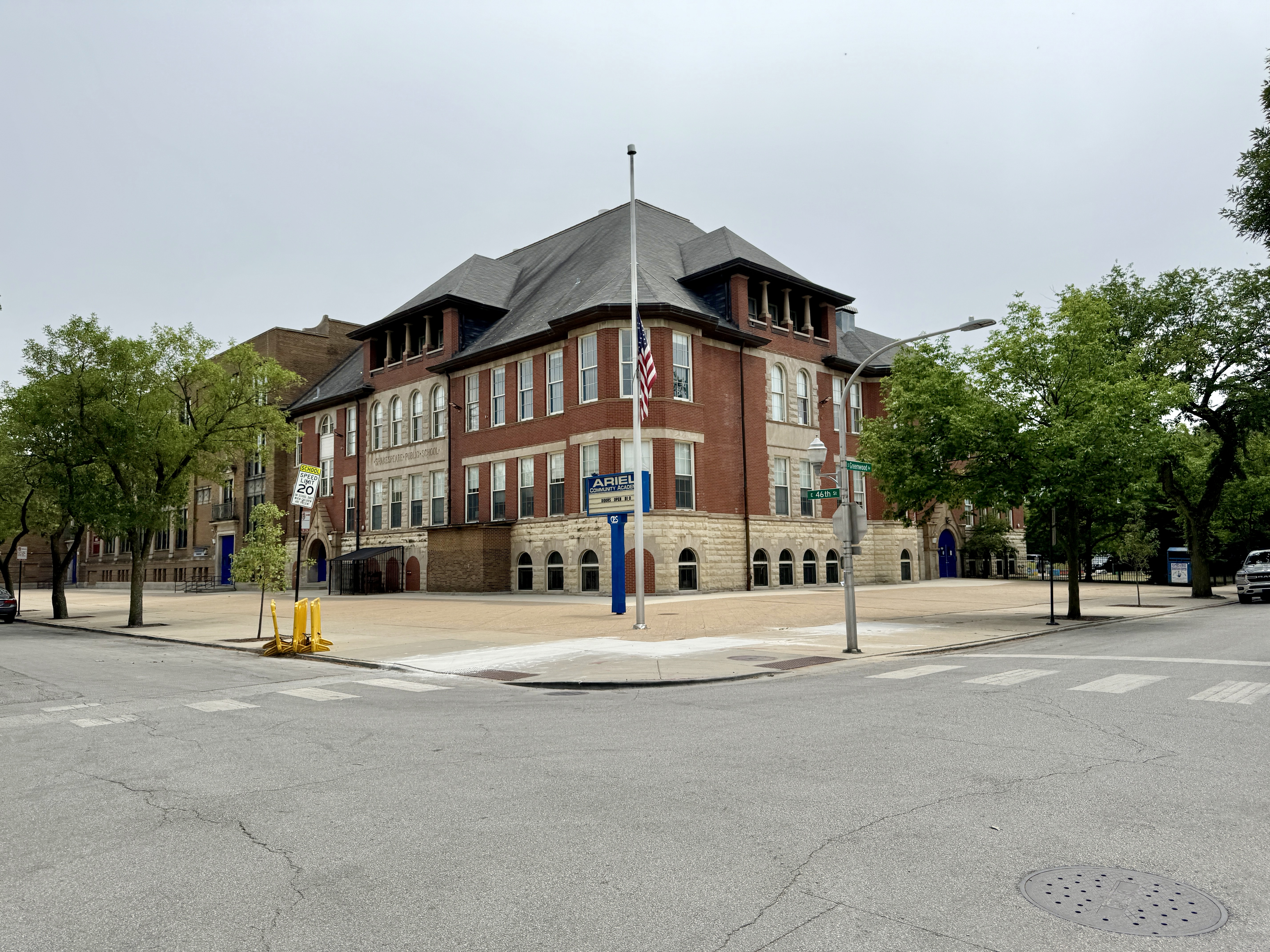
Kenwood is a South Side lakefront community area whose name descends from a house.
| At a glance | |
|---|---|
| Type | PLACE — community area |
| Dates | – |
| Chicago connection | CORE — see the Chicago connection section |
| Known for | Kenwood is a South Side lakefront community area whose name descends from a house. |
| Verification | VERIFIED |
| CTL ID | CTL-ENC-000008 |
Overview
Kenwood is a South Side lakefront community area whose name descends from a house. A Wikipedia account of the neighborhood, consistent with local history, holds that wealthy Chicagoans settled the area in the 1850s; Dr. John A. Kennicott built a house he named 'Kenwood,' after his mother's ancestral home in Scotland, near the Illinois Central Railroad tracks at 48th Street, and the depot took the name. The neighborhood that grew around it — bounded roughly by 43rd and 51st Streets (with Hyde Park Boulevard), Cottage Grove Avenue, and the lake, about a square mile — became one of the city's most storied Black elite addresses, which is how the graph's record frames it: 'Historic affluent South Side neighborhood... Home to many Black elites including the residence of Louis Farrakhan and former President Barack Obama.'
The Chicago Metropolitan Agency for Planning's community snapshot, which verifies this record, counts 18,417 residents (2020–2024 American Community Survey estimates). A 2020 census figure used in the neighborhood's reference entry puts the population at 19,116; the two numbers come from different instruments — a census count and a survey estimate — and are stated here as each source gives them, not blended. The southern half of Kenwood sits inside the Hyde Park–Kenwood Historic District, which preserves the mansion stock of the neighborhood's first era.
History
The Black history is the point of the record. As Chicago's Black Belt filled during the Great Migration, Kenwood's position at its southern edge drew Black professionals and artists; the Chicago Reporter described the pattern for its Mansion Row: Louis Armstrong, Nat King Cole, and Muddy Waters all, at different times, lived in the great houses south of 47th Street. The contemporary anchors are three houses. Barack and Michelle Obama bought their Kenwood home at Greenwood Avenue and 51st Street in 2005, and it remains their Chicago residence, giving the neighborhood its national association. The Elijah Muhammad mansion on Woodlawn Avenue at 49th Street — the Nation of Islam leader's home — is now the residence of Minister Louis Farrakhan. Muhammad Ali also lived in Kenwood. A neighborhood that began as a white railroad suburb became, across a century, a seat of Black political, religious, and cultural leadership, and it held that status while nearby districts changed around it.
The institutional record fills out the picture: Kenwood Academy, the selective public high school on Blackstone Avenue; the Blackstone branch of the Chicago Public Library (1902), among the city's oldest branch libraries; Rainbow/PUSH headquarters; and the University of Chicago's proximity across Hyde Park, which shapes housing demand. The graph carries Kenwood as a Place at VERIFIED grade, adjacent in the graph to the South Side neighborhood cluster — Oakland, Grand Boulevard, Bronzeville's orbit, and Hyde Park — and its edges tie it to the figures recorded as residing or working there. As an entity it represents the geography of arrival: the South Side address that signaled, for generations of Black Chicagoans, that one had made it.
Kenwood's planned origins help explain its survival as an elite district. Crain's Chicago Business's neighborhood history describes Kenwood as a planned community from the 1850s — first called Lake Park — laid out for wealthy Chicagoans commuting on the Illinois Central, with the Kenwood depot as its nucleus; the mansion stock followed the tracks. The twentieth century layered the Black history onto that frame: as the Black Belt pressed south, the great houses along and south of 47th Street passed to Black owners and institutions, and Kenwood's Mansion Row became an address of arrival for the musicians and professionals the Chicago Reporter catalogued. The neighborhood's institutions tell the same story of continuity under pressure — the KAM Isaiah Israel congregation, Kenwood Academy's rise as a magnet school, and the Hyde Park–Kenwood Historic District's landmark protections, which froze much of the housing stock in its historic form. Population figures in the record therefore come with their instruments attached: 19,116 in the 2020 census count used by the reference entry, 18,417 in the CMAP survey estimates that verify the graph's record — a neighborhood of stable size whose composition, not its scale, is what changed across the century.
Chicago connection
A Wikipedia account of the neighborhood, consistent with local history, holds that wealthy Chicagoans settled the area in the 1850s; Dr. Home to many Black elites including the residence of Louis Farrakhan and former President Barack Obama.' The Chicago Metropolitan Agency for Planning's community snapshot, which verifies this record, counts 18,417 residents (2020–2024 American Community Survey estimates). As Chicago's Black Belt filled during the Great Migration, Kenwood's position at its southern edge drew Black professionals and artists; the Chicago Reporter described the pattern for its Mansion Row: Louis Armstrong, Nat King Cole, and Muddy Waters all, at different times, lived in the great houses south of 47th Street. Barack and Michelle Obama bought their Kenwood home at Greenwood Avenue and 51st Street in 2005, and it remains their Chicago residence, giving the neighborhood its national association. The institutional record fills out the picture: Kenwood Academy, the selective public high school on Blackstone Avenue; the Blackstone branch of the Chicago Public Library (1902), among the city's oldest branch libraries; Rainbow/PUSH headquarters; and the University of Chicago's proximity across Hyde Park, which shapes housing demand. [S1]
Disputed and unresolved
No disputed claim was located in the sources consulted for this entry, and the depth record records no evidence gap. Open items, if any, are listed in Editorial notes.
See also
Relationships
Relationships: none recorded yet — edges to follow. This entry's graph connections are being built; it publishes now on its sources.
Sources
- S1: Chicago Metropolitan Agency for Planning. “Kenwood Snapshot / 2020–2024 ACS Data for Chicago Community Areas.” Accessed October 25, 2026. https://cmap.illinois.gov/download/6119/?tmstv=1790083120.
- S2: Wikipedia. “Kenwood, Chicago.” Accessed October 25, 2026. https://en.wikipedia.org/wiki/Kenwood,_Chicago.
- S3: The Chicago Reporter. “In Kenwood, black picket fences.” Accessed October 25, 2026. http://www.chicagoreporter.com/in-kenwood-black-picket-fences/.
Cite this entry
- Permanent ID: CTL-ENC-000008 · Crosswalked graph record: CTL-PL-0176 · Version: 0.1 · Date: 2026-10-28
- Chicago: CultureTechLens. "Kenwood." CultureTechLens Encyclopedia, version 0.1, October 28, 2026. CultureTechLens NFP. CTL-ENC-000008.
- APA: CultureTechLens. (2026). Kenwood (Version 0.1, Entry CTL-ENC-000008). CultureTechLens Encyclopedia. CultureTechLens NFP.
- MLA: CultureTechLens. "Kenwood." CultureTechLens Encyclopedia, version 0.1, CultureTechLens NFP, 28 Oct. 2026. Entry CTL-ENC-000008.
Further reading
- CultureTechLens Knowledge Graph record CTL-PL-0176 (crosswalked; published graph register id CTL-E-0215).
Image credits
- Kenwood photograph: see Images block in the frontmatter for the full credit line, rights status, and rights document.
Citation
CultureTechLens. "Kenwood." CultureTechLens Encyclopedia, Vol. 1 — Black Chicago, version 0.1, 2026-10-28. CultureTechLens NFP. CTL-ENC-000008.
<!-- =======================