 CULTURETECHLENS
The Encyclopedia · CTL-ENC-000247
Leonidas H. Berry
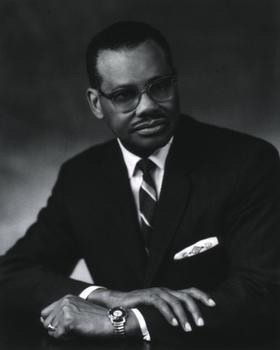
Chicago gastroenterologist and endoscopy pioneer who fought a seventeen-year campaign for attending status at Michael Reese Hospital and led the National Medical Association in 1965-66.
| At a glance | |
|---|---|
| Type | PERSON — gastroenterologist |
| Dates | 1902 – 1995 |
| Chicago connection | CORE — Chicago (Hyde Park) |
| Known for | First Black physician on staff at Michael Reese Hospital (1946); co-inventor of the Eder-Berry gastrobiopsy scope; the "Berry Plan" addiction-treatment clinics; NMA president 1965-66; Flying Black Medics |
| Verification | VERIFIED |
| CTL ID | CTL-ENC-000247 |
| Documented address | None recorded for this entry — see Documented address and map |
Overview
Leonidas Harris Berry practiced medicine in Chicago for six decades and bent two institutions in the process. An internationally recognized authority on digestive diseases and endoscopy — the first African American specialist in the field, in the archival record's wording — he co-developed one of the early gastroscopes, the Eder-Berry gastrobiopsy scope, was the first American physician to use the fiber-optic gastrocamera, and authored a major textbook and close to a hundred medical articles [S3][S2]. At the same time, for twenty years he sought and could not obtain a permanent staff position at Chicago's Michael Reese Hospital because of his race; the National Library of Medicine's account makes that exclusion, and his fight against it, the center of his public career [S2].
Education and Chicago career
Berry was born on July 20, 1902 in Woodsdale, North Carolina, the son of the Reverend Llewellyn L. Berry, general secretary of the A.M.E. Church's missions department [S1][S3]. He graduated from Wilberforce University in 1924, then moved to Chicago, where he took a second bachelor's degree at the University of Chicago, an M.D. from Rush Medical College in 1929, and an M.S. in pathology from the University of Illinois Medical School in 1933 [S1]. After brief work at Freedmen's Hospital in Washington, he returned to Chicago in 1931 and stayed: attending physician at Cook County and Provident Hospitals, staff service at Michael Reese and the University of Illinois Medical School, retiring in 1975 as chief of endoscopy and senior attending physician at Cook County [S1][S2].
His technical work ran ahead of his institutional welcome. Berry became internationally recognized for co-inventing an instrument for taking gastric biopsies and for creating a clinic-based addiction treatment model that became known as the "Berry Plan" — a citywide program of medical counseling clinics for young drug users, begun in the early 1950s during his presidency of the Cook County Physicians Association and implemented by the Illinois State Department of Public Health [S2][S3].
The Michael Reese campaign and civil-rights medicine
Berry joined the staff of Michael Reese Hospital in 1946, its first Black physician — and then waited seventeen years, in the face of his own international standing, to be named to its attending staff, which came in 1963 [S2]. He converted the experience into a campaign: as chair of the Health Advisory Committee of the Chicago Commission on Human Relations in the 1950s, he exposed hospitals' widespread exclusion of Black physicians and fought to bring hospital facilities to the segregated South Side [S2].
As president of the National Medical Association in 1965-66 he pushed the American Medical Association to end its approval of all-white chapters, pledged the NMA's support for Medicare, and demanded hospital compliance with the anti-segregation provisions of Medicare and the Civil Rights Act; during the 1965 Selma voting rights march he headed an NMA delegation working a first-aid tent for injured marchers [S2]. In the late 1960s and early 1970s he helped organize the Flying Black Medics, Chicago medical professionals who flew to Cairo, Illinois, to run a clinic for an impoverished community in racial unrest [S2]. He died on December 4, 1995, at age 93, a Hyde Park resident whose papers are held by the National Library of Medicine and the Chicago History Museum [S3][S1].
Chicago connection
Berry's connection is CORE: educated in Chicago from 1924, resident from 1931 until his death in 1995, staff physician at Provident, Cook County, and Michael Reese, and the central figure in the campaign to open Chicago hospital staffs to Black physicians [S1][S2]. The selection table's claim that he was "first Black president of a U.S. interracial medical society chapter" was not carried in the authoritative sources consulted for this build and is not asserted in this entry; the verified firsts are the Michael Reese staff appointment and the endoscopy record above.
Documented address and map
No address documented in the sources consulted — no coordinates are recorded and no map is published for this entry. Berry's institutional affiliations are documented (Provident, Cook County, Michael Reese), but no practice street address for Berry himself was documented in the sources consulted, and no residence is recorded per the build's rules.
See also
Relationships
- affiliated_with — Provident Hospital (CTL-E-0377) — Berry served on the staff of Provident Hospital in Chicago (National Library of Medicine finding aid; SNAC).
- affiliated_with — Michael Reese Hospital (CTL-E-5931) — Berry joined Michael Reese Hospital staff in 1946 as its first Black physician and won attending status in 1963 after a long campaign (NLM, Circulating Now).
- member_of_organization — National Medical Association (CTL-E-1636) — Berry served as president of the National Medical Association, 1965-1966 (NLM, Circulating Now; SNAC).
Sources
- S1: National Library of Medicine. "Leonidas H. Berry Papers, 1907-1982" (finding aid). https://findingaids.nlm.nih.gov/repositories/4/resources/839
- S2: National Library of Medicine. "Leonidas H. Berry, Multi-Dimensional Doctor." Circulating Now, July 20, 2018. http://circulatingnow.nlm.nih.gov/2018/07/20/leonidas-berry-multi-dimensional-doctor-his-life-and-legacy/
- S3: Social Networks and Archival Context (SNAC). "Berry, Leonidas H." https://snaccooperative.org/view/15296802/2233101
Cite this entry
- Permanent ID: CTL-ENC-000247 · Crosswalked graph record: none recorded · Version: 0.1 · Date: 2026-10-29
- Chicago: CultureTechLens. "Leonidas H. Berry." CultureTechLens Encyclopedia, version 0.1, October 29, 2026. CultureTechLens NFP. CTL-ENC-000247. Source: CultureTechLens
- APA: CultureTechLens. (2026). Leonidas H. Berry (Version 0.1, Entry CTL-ENC-000247). CultureTechLens Encyclopedia. CultureTechLens NFP. Source: CultureTechLens
- MLA: CultureTechLens. "Leonidas H. Berry." CultureTechLens Encyclopedia, version 0.1, CultureTechLens NFP, 29 Oct. 2026. Entry CTL-ENC-000247. Source: CultureTechLens
Further reading
- Leonidas H. Berry papers, National Library of Medicine and Chicago History Museum; Berry, I Wouldn't Take Nothin' for My Journey (1981).
Image credits
- Portrait of Leonidas H. Berry: see Images block in the frontmatter for the full credit line, rights status, and rights document.
Citation
CultureTechLens. "Leonidas H. Berry." CultureTechLens Encyclopedia, Black Medicine (staged), version 0.1, 2026-10-29. CultureTechLens NFP. CTL-ENC-000247.
<!-- =======================