 CULTURETECHLENS
The Encyclopedia · CTL-ENC-000229
Native Son
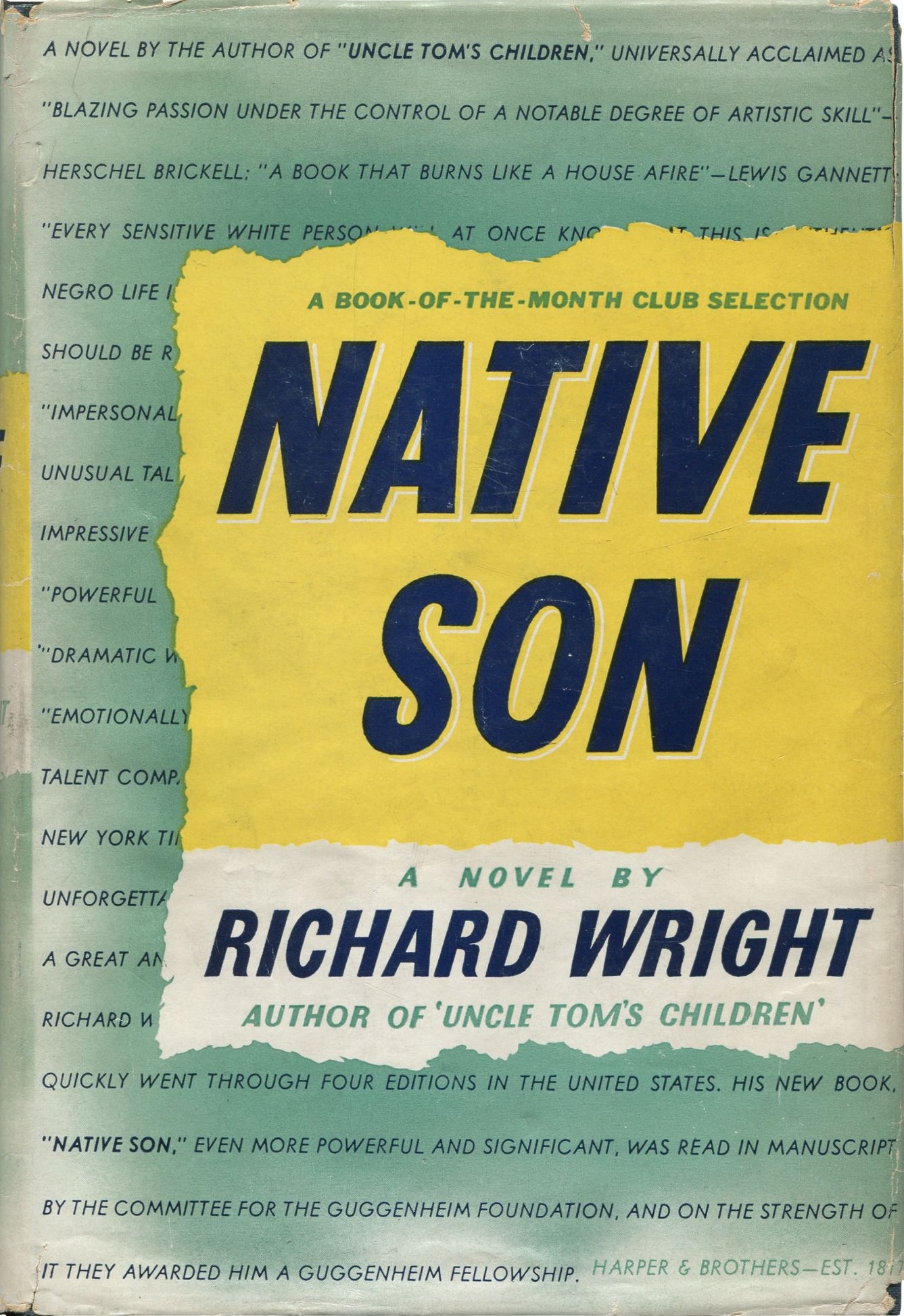
Native Son appeared in 1940 and changed the terms of American fiction in a season.
| At a glance | |
|---|---|
| Type | WORK — book |
| Dates | – |
| Chicago connection | CORE — see the Chicago connection section |
| Known for | Native Son appeared in 1940 and changed the terms of American fiction in a season. |
| Verification | VERIFIED |
| CTL ID | CTL-ENC-000229 |
Overview
Native Son appeared in 1940 and changed the terms of American fiction in a season. Richard Wright's novel — the graph's verification source is HarperCollins' 2026 announcement of its American Classics edition, which restates the standing facts: a work by Richard Wright, year 1940 — was the first book by an African American author selected by the Book-of-the-Month Club, and it sold some 250,000 hardcover copies in its first three weeks. Irving Howe's verdict, quoted in the novel's later editions, remains the standard citation: 'The day Native Son appeared, American culture was changed forever.'
The novel is set in the 1930s Black Belt of Chicago — the geography of this archive's own neighborhood records — and its protagonist, Bigger Thomas, is twenty years old, living with his mother, brother, and sister in a single rat-infested room on the South Side. Hired as chauffeur by the Daltons, a wealthy white family whose real-estate fortune is built on exactly Bigger's neighborhood, he accidentally suffocates their daughter Mary while trying to keep her presence in his room undiscovered; the killing he chooses afterward — of Bessie, his girlfriend, to silence her — is the novel's moral hinge. The manhunt, capture, and trial that follow are built to Wright's argument, stated through Bigger's lawyer Boris Max: that Bigger is a product of the conditions America made for him, and that the courtroom is where the country must hear it. He is sentenced to death. The University of Mississippi's Wright bibliography records the honors of the year of publication's aftermath — Wright received the NAACP's Spingarn Medal in 1941.
The work
The adaptations began immediately. Wright adapted the novel with Paul Green for the stage; Orson Welles directed the 1941 Broadway production with Canada Lee as Bigger. Wright himself played Bigger in the 1950 film (released 1951), directed by Pierre Chenal and shot in Argentina, heavily cut by New York censors. Later screen versions followed in 1986 and 2019. The canonical lists carry the novel still: the Modern Library's 100 Best Novels (number 20), TIME's 100 Best Novels, and — the backhanded honor — the American Library Association's most-challenged books list for 1990–1999, where it sat among the decade's most protested titles in American schools.
In the graph, Native Son stands as a Work of 1940 with Richard Wright as its author and a character record for Bigger Thomas featuring in it — one of the graph's oldest Work records and the literary anchor of its Black Belt records: the novel that Kenwood's drawing rooms and Oakland's kitchenettes both exist, historically, in the shadow of. Wright was born in 1908 to a sharecropper family near Natchez, Mississippi, and the South Side he wrote was the South Side he had migrated to — the novel's Chicago is documented, street by street, from the migration's own ground.
The text's own history is part of the record. Wright agreed to soften passages for the Book-of-the-Month Club edition, and the novel circulated for decades in that edited form until the restored edition — edited from Wright's manuscript — was published in 1991 in the Library of America and in 1993 as a Harper Perennial edition, restoring the fuller text, including the restored fear-and-flight sequences and Wright's essay 'How "Bigger" Was Born' as companion. The critical argument around the novel is equally canonical: James Baldwin's 'Everybody's Protest Novel' (1949) charged Wright's Bigger with caricature, opening a debate about protest fiction that literary histories still organize around this book. The 1950 film version, shot in Argentina because no American studio would make it, had Wright himself — forty-one at the time — playing the twenty-year-old Bigger, and New York censors cut it heavily; the 1986 television film cast Matt Dillon as Bigger's lawyer figure with Oprah Winfrey as Bigger's mother. The graph's record keeps the novel at the head of its fiction layer: year 1940, author Richard Wright, and Bigger Thomas as a featured character — the rare Work whose character record the graph mints separately, because Bigger became a reference figure for American arguments about race and environment far beyond the novel's pages.
Chicago connection
Irving Howe's verdict, quoted in the novel's later editions, remains the standard citation: 'The day Native Son appeared, American culture was changed forever.' The novel is set in the 1930s Black Belt of Chicago — the geography of this archive's own neighborhood records — and its protagonist, Bigger Thomas, is twenty years old, living with his mother, brother, and sister in a single rat-infested room on the South Side. Wright was born in 1908 to a sharecropper family near Natchez, Mississippi, and the South Side he wrote was the South Side he had migrated to — the novel's Chicago is documented, street by street, from the migration's own ground. [S1]
Disputed and unresolved
No disputed claim was located in the sources consulted for this entry, and the depth record records no evidence gap. Open items, if any, are listed in Editorial notes.
See also
Relationships
- authored_by — Richard Wright (CTL-E-0116) — Restated from the CultureTechLens Knowledge Graph: Native Son (CTL-E-0277) authored_by Richard Wright (CTL-E-0116), verification Verified.
Sources
- S1: HarperCollins Publishers. “HarperCollins to Publish American Classics Collection on May 5, 2026.” Accessed October 25, 2026. https://www.harpercollins.com/blogs/press-releases/harpercollins-to-publish-american-classics-collection-on-may-5-2026.
- S2: University of Mississippi. “About Bigger Thomas's Creator — Richard Wright bibliography.” Accessed October 25, 2026. https://www.olemiss.edu/depts/english/ms-writers/dir/wright_richard/.
- S3: Wikipedia. “Native Son.” Accessed October 25, 2026. https://en.wikipedia.org/wiki/Native_Son.
- S4: CultureTechLens Knowledge Graph (schema v0.3.1), entities.json and relationships.json — CTL's own graph register, consulted 2026-10-29 for crosswalk facts and restated relationships.
Cite this entry
- Permanent ID: CTL-ENC-000229 · Crosswalked graph record: CTL-W-0069 · Version: 0.1 · Date: 2026-10-29
- Chicago: CultureTechLens. "Native Son." CultureTechLens Encyclopedia, version 0.1, October 29, 2026. CultureTechLens NFP. CTL-ENC-000229.
- APA: CultureTechLens. (2026). Native Son (Version 0.1, Entry CTL-ENC-000229). CultureTechLens Encyclopedia. CultureTechLens NFP.
- MLA: CultureTechLens. "Native Son." CultureTechLens Encyclopedia, version 0.1, CultureTechLens NFP, 29 Oct. 2026. Entry CTL-ENC-000229.
Further reading
- CultureTechLens Knowledge Graph record CTL-W-0069 (crosswalked; published graph register id CTL-E-0277).
Image credits
- Native Son photograph: see Images block in the frontmatter for the full credit line, rights status, and rights document.
Citation
CultureTechLens. "Native Son." CultureTechLens Encyclopedia, Vol. 1 — Black Chicago, version 0.1, 2026-10-29. CultureTechLens NFP. CTL-ENC-000229.
<!-- =======================