 CULTURETECHLENS
The Encyclopedia · CTL-ENC-000284
Solomon Carter Fuller
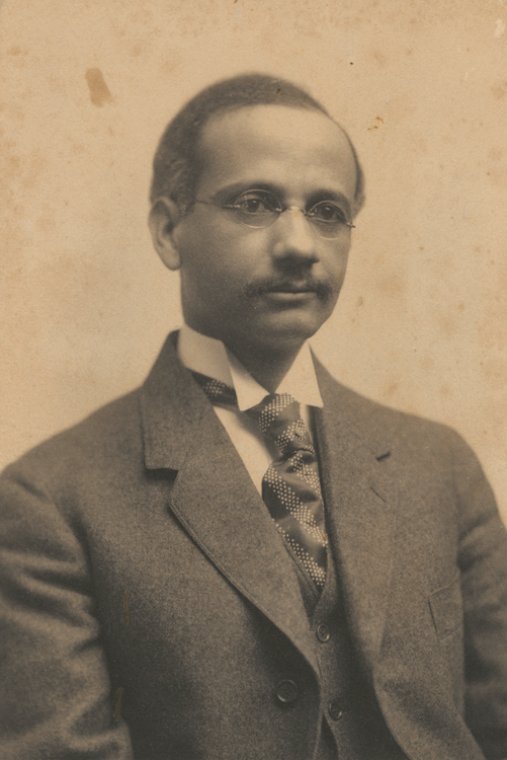
Liberian-born, Boston University–trained psychiatrist and neuropathologist, widely recognized as the first African American psychiatrist in the United States, who worked in Alois Alzheimer's Munich laboratory in 1904 and published the first comprehensive English-language review of Alzheimer's disease in 1912.
| At a glance | |
|---|---|
| Type | PERSON — physician |
| Dates | 1872-08-11 – 1953-01-16 |
| Chicago connection | SIGNIFICANT — national significance; no Chicago anchor documented, none invented |
| Known for | Widely recognized as the first African American psychiatrist in the U.S.; worked with Alois Alzheimer (Munich, 1904); first comprehensive review of Alzheimer's disease (1912) |
| Verification | VERIFIED |
| CTL ID | CTL-ENC-000284 |
| Documented address | None documented in the sources consulted |
Overview
Solomon Carter Fuller (August 11, 1872 – January 16, 1953) was a Liberian-born American psychiatrist, pathologist, and educator. The peer-reviewed literature states his standing with a qualifier this entry keeps: he is "widely acknowledged as the first African-American psychiatrist" [S3]; the Society for Neuroscience's biography uses the same form, "widely recognized as the first African American psychiatrist in the United States" [S2]. Born in Monrovia, Liberia, the son of Americo-Liberians and grandson of formerly enslaved Virginians who had purchased their freedom and emigrated, he came to the United States in 1889 at seventeen, earned an undergraduate degree at Livingstone College in North Carolina, and took his M.D. at the Boston University School of Medicine in 1897 [S1][S2]. He built a triple career: pathologist at Westborough State Hospital in Massachusetts, faculty member at Boston University, and psychiatrist in private practice [S1].
Munich and Alzheimer's disease
In 1904 Fuller was one of five foreign physicians chosen to work with Alois Alzheimer at the Royal Psychiatric Hospital in Munich [S1][S2][S3]. There he began the neuropathological study of the dementia that would take Alzheimer's name. Returning to Westborough, he examined brain tissue from patients with mental disorders and documented the plaques and tangles of the disease; in 1912 he published what is now recognized as the first comprehensive review of Alzheimer's disease, including the first English translation of the case of Auguste Deter, the first reported patient, and the ninth case ever described [S2][S3]. It appeared in English a full generation before the field caught up, and the modern journal literature calls him underappreciated as a pioneer of the disease's study [S3].
Boston University and Tuskegee
Fuller became associate professor at Boston University in 1919 and acted as chair of the Department of Neurology from 1928 to 1933 — while, BrainFacts notes plainly, being paid less than his white colleagues and not formally carried on the payroll as chair; he retired in 1933 after a junior white professor was promoted over him [S2]. He then practiced privately and took his expertise south, recruiting, staffing, and training Black physicians for the neuropsychiatry service at the Tuskegee Veterans Administration Hospital, where his knowledge of syphilis helped correct misdiagnoses of Black veterans [S2]. Diabetes-related blindness forced his retirement; he died in 1953. Boston University named the Dr. Solomon Carter Fuller Mental Health Center for him in 1974 [S1].
Connection
This entry is classed SIGNIFICANT. Its subject has no documented Chicago anchor, and none is invented: the connection to this Chicago-centered encyclopedia is the national one stated in the body — the institutions, schools, and associations these entries document trained, credentialed, organized, and wrote the history of the Black physicians who built Chicago's own Black medical world, from Provident Hospital's staff lines to the National Medical Association's Chicago leadership. William A. Hinton (CTL-ENC-000285) is the batch's exception in the other direction: Chicago-born, Boston-made.
Documented address and map
No address documented in the sources consulted — no coordinates are recorded and no map is published for this entry.
Disputed and unresolved
| Claim | Version A (source) | Version B (source) | CTL position |
|---|---|---|---|
| Selection year for the Munich laboratory | 1904 (University of Wisconsin ADRC; BrainFacts) | 1903 (some secondary accounts) | DISPUTED at the level of a single year — 1904 is carried, following the two institutional accounts; the variant is recorded here. |
See also
Relationships
- affiliated_with — Boston University School of Medicine — Fuller joined the Boston University School of Medicine faculty in 1919, acting as chair of neurology 1928–1933 (BrainFacts; Alzheimer's & Dementia).
Sources
- S1: University of Wisconsin–Madison Alzheimer's Disease Research Center. "About Dr. Solomon Carter Fuller" (Solomon Carter Fuller Brain Health Brunch). https://adrc.wisc.edu/SCF2019.
- S2: Society for Neuroscience / BrainFacts.org. "Black History Is: Solomon Carter Fuller." 2024. https://www.brainfacts.org/in-the-lab/meet-the-researcher/2024/black-history-is-solomon-carter-fuller-022024.
- S3: Mohammed, H. "Recognizing African-American Contributions to Neurology: The Role of Solomon Carter Fuller (1872–1953) in Alzheimer's Disease Research." Alzheimer's & Dementia 17, no. 2 (2021): 246–250.
Cite this entry
- Chicago: CultureTechLens. "Solomon Carter Fuller." CultureTechLens Encyclopedia, Black Medicine (staged), version 0.1, October 29, 2026. CultureTechLens NFP. CTL-ENC-000284. Source: CultureTechLens
- APA: CultureTechLens. (2026). Solomon Carter Fuller (Version 0.1, Entry CTL-ENC-000284). CultureTechLens Encyclopedia. CultureTechLens NFP. Source: CultureTechLens
- MLA: CultureTechLens. "Solomon Carter Fuller." CultureTechLens Encyclopedia, version 0.1, CultureTechLens NFP, 29 Oct. 2026. Entry CTL-ENC-000284. Source: CultureTechLens
Further reading
- See Sources; institutional histories named there are the entry points for deeper reading.
Image credits
- See the Images block in the frontmatter for the full credit line, rights status, and rights document.
<!-- =======================