 CULTURETECHLENS
The Encyclopedia · CTL-ENC-000485
Studs Terkel
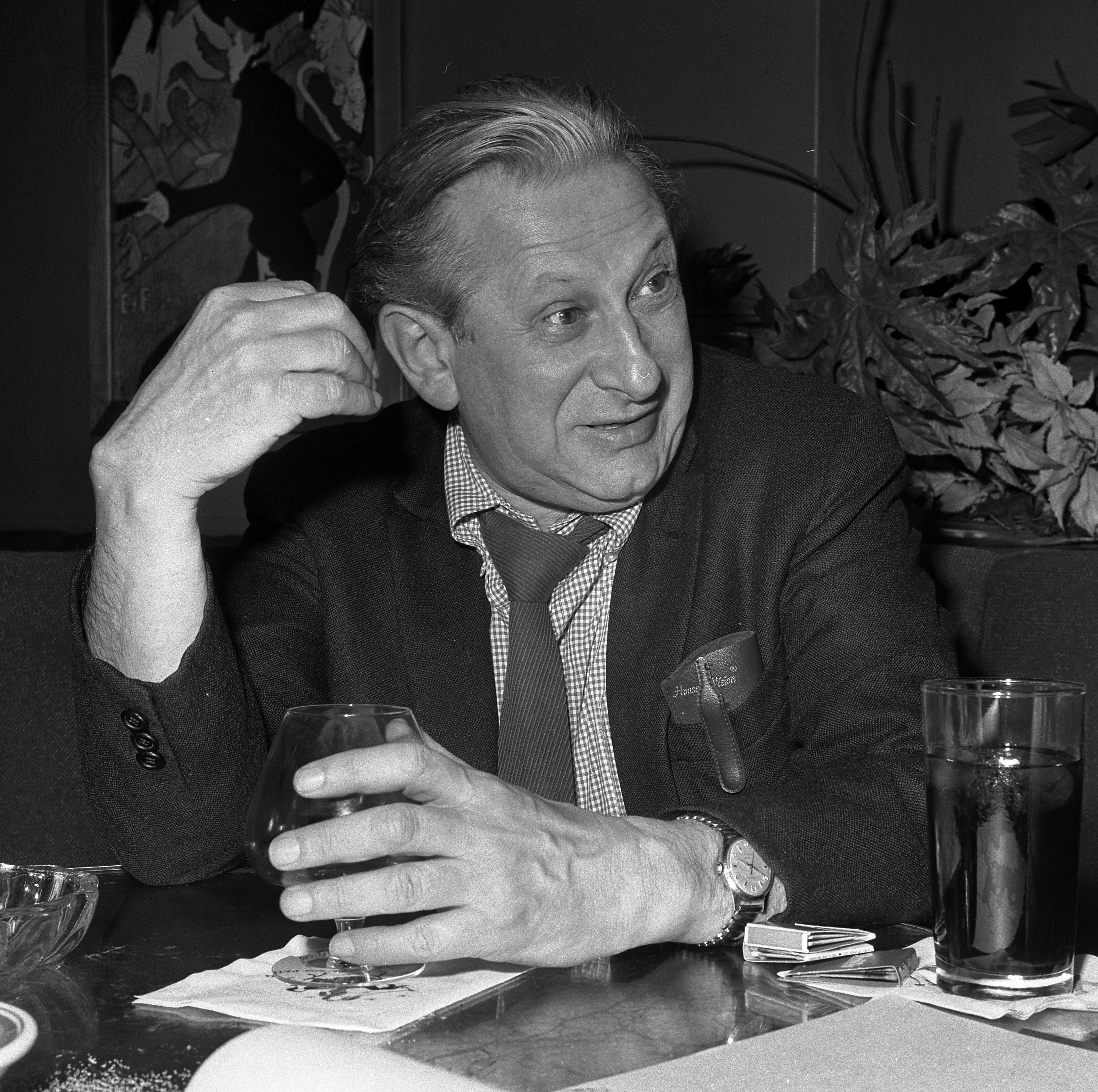
Chicago oral historian and broadcaster whose WFMT interviews and books of Americans talking — beginning with Division Street: America (1967) — made the recorded spoken testimony of ordinary people a documentary form.
| Field | Value |
|---|---|
| Born | 1912, New York City |
| Died | October 31, 2008 |
| Occupation | Broadcaster (WFMT, 1952–1997); oral historian and author |
| Document of record | Division Street: America (1967) and the WFMT interview archive |
| Major honors | Pulitzer Prize for "The Good War" (1984); National Book Foundation Medal (1997); National Humanities Medal (1999) |
| Chicago connection | CORE — Chicago from age eight; the city is his subject and his archive's home |
Overview
Studs Terkel built a documentary literature out of other people's voices. Born in New York City in 1912, he came to Chicago at eight when his family moved to run a rooming house, and the city — its rooming houses, its stockyards' aftermath, its ward politics and its working people — became the permanent ground of his work. Before the books, there was radio: his WFMT interview program began in 1952 and ran for forty-five years, an unbroken run of conversation with musicians, writers, workers, and activists. The Chicago Historical Society built the WFMT/Studs Terkel Archive from the recordings he donated, preserving the broadcasts as a research collection.[S1][S2]
The books of voices
Terkel's first book was Giants of Jazz (1957). The breakthrough was Division Street: America (1967) — treated as its own entry in this cohort ([[CTL-ENC-000486]]) — in which some seventy Chicagoans talk about their lives along one divided street. The method became a shelf: Hard Times (1970), testimony from the Great Depression; Working (1974), Americans on their jobs; "The Good War" (1984), which won the Pulitzer Prize the following year; and Race (1992), on American racial attitudes. The books are constructed documents — edited transcripts whose authority rests on the tape behind them — and they changed what counted as a historical source: the spoken recollection of people who leave no papers.[S1][S3]
Honors and last years
The honors accumulated late and nationally: the Pulitzer for "The Good War", the National Book Foundation's Medal for Distinguished Contribution to American Letters in 1997, and the Presidential National Humanities Medal in 1999. Terkel died on October 31, 2008. His publisher, The New Press, keeps his list in print, and his interviews — with Black Chicagoans among them across six decades, from Mahalia Jackson's generation to the civil-rights years — remain a primary audio record of the city's century.[S2][S3]
The document of record
This entry's document of record is double: the published book Division Street: America (1967), which launched the method, and the WFMT interview archive from which all the books were cut. The archive is the deeper document — thousands of hours of tape, donated to the Chicago Historical Society (now the Chicago History Museum), of which the books print only a fraction.
Chicago connection
CORE. Terkel's family moved to Chicago when he was eight; he worked, broadcast, and wrote in Chicago for nearly ninety years, and his signature book is a portrait of the city. His archive is held in Chicago.
Documented address and map
No documented institutional address meeting this encyclopedia's mapping standard was established for Terkel in the sources consulted; this entry carries no coordinates and no map.
Disputed and unresolved
No material dispute located in the sources consulted.
See also
- [[CTL-ENC-000486]] — Division Street: America (the book)
- [[CTL-ENC-000484]] — Harold Washington (a contemporary Chicago life documented in papers rather than tape)
Relationships
- based_in — City of Chicago (CTL-E-1475) — Born in New York City in 1912; his family moved to Chicago when he was eight, and Chicago was his home and subject for the rest of his life.
- affiliated_with — Studs Terkel Radio Archive (WFMT) (CTL-E-1291) — His WFMT interview program ran from 1952 for 45 years; the recordings form the Studs Terkel Radio Archive.
Sources
- S1: American Psychological Association. "Studs Terkel." https://www.apa.org/monitor/may02/terkel
- S2: Portside. "Studs Terkel." https://portside.org/node/18557/printable/print
- S3: The New Press. "Studs Terkel." https://thenewpress.org/books/topic/studs-terkel/
Cite this entry
Permanent ID: CTL-ENC-000485 · Crosswalked graph record: CTL-E-2095
Chicago: CultureTechLens. "Studs Terkel." CTL Encyclopedia, Historical Documents (staged), CTL-ENC-000485, version 0.1, 2026-10-29. APA: CultureTechLens. (2026). Studs Terkel (CTL-ENC-000485, v0.1) [Encyclopedia entry, Historical Documents (staged)]. CTL Encyclopedia. MLA: CultureTechLens. "Studs Terkel." CTL Encyclopedia, Historical Documents (staged), CTL-ENC-000485, version 0.1, 29 Oct. 2026.
Further reading
- The Studs Terkel Radio Archive (WFMT / Chicago History Museum) — the broadcast recordings behind the books.
- The New Press editions of Working, Hard Times, and Race.
Image credits
- Studs Terkel, 1970 — Kathleen Ballard / Los Angeles Times, CC BY 4.0, via Wikimedia Commons. Source: CultureTechLens.
CULTURETECHLENS · "Culture, Clearly Seen." · Black Cultural Intelligence Cite as: CultureTechLens, "Studs Terkel," CTL Encyclopedia, Historical Documents (staged), CTL-ENC-000485, 2026-10-29. Source: CultureTechLens