 CULTURETECHLENS
The Encyclopedia · CTL-ENC-000410
W. E. B. Du Bois
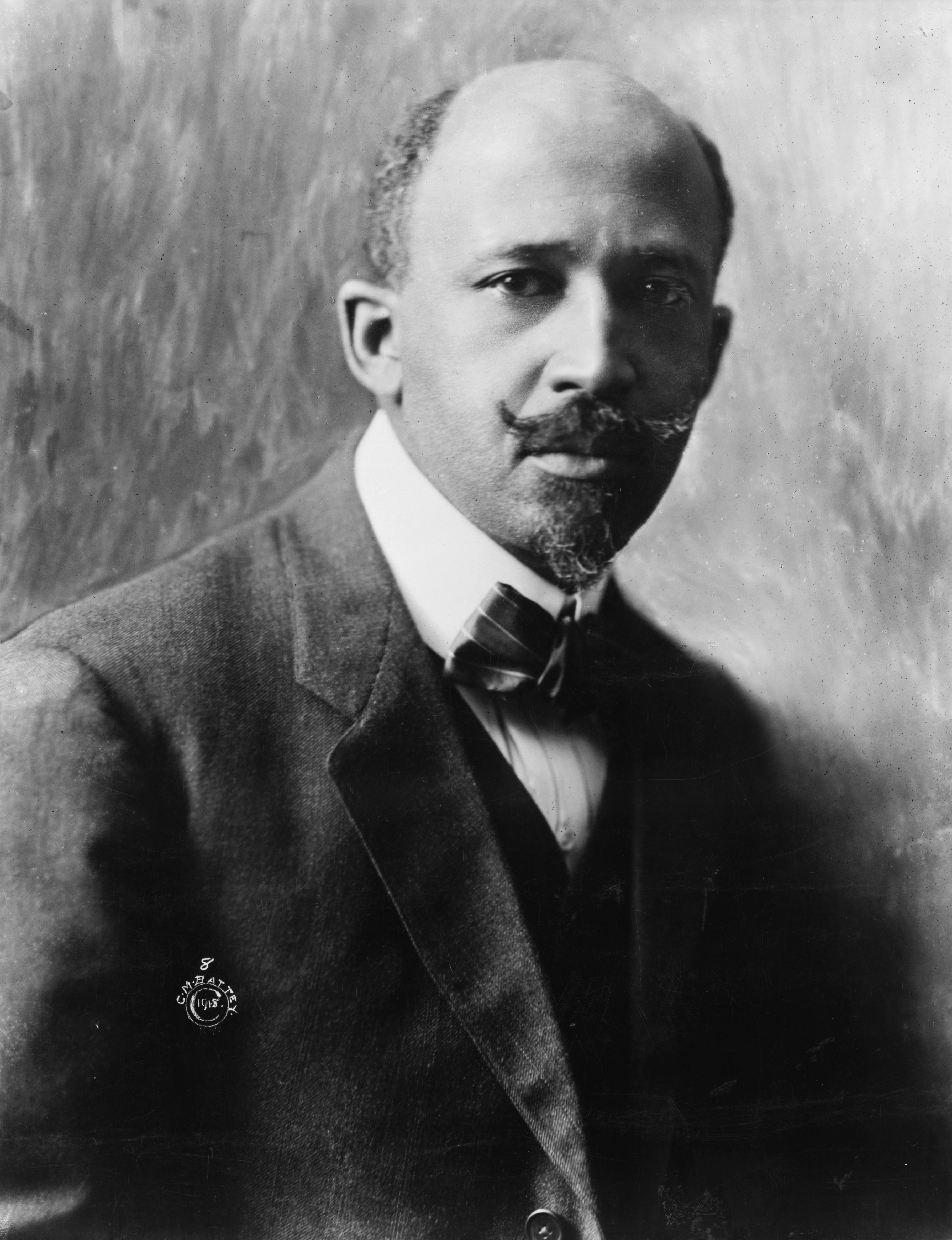
Scholar, editor of The Crisis, and co-founder of the NAACP, anchored here by The Souls of Black Folk, published in Chicago in 1903, and by the magazine he edited for twenty-four years.
| At a glance | |
|---|---|
| Type | PERSON - scholar and editor |
| Dates | February 23, 1868 - August 27, 1963 |
| Chicago connection | SIGNIFICANT |
| Known for | The Souls of Black Folk (1903); editing The Crisis; co-founding the NAACP and the Niagara Movement |
| Verification | VERIFIED |
| CTL ID | CTL-ENC-000410 |
| Documented address | None recorded for this entry - see Documented address and map |
Overview
Du Bois enters this cohort through a Chicago imprint: The Souls of Black Folk, his 1903 collection of essays - "the problem of the twentieth century is the problem of the color line" - was published in Chicago by A. C. McClurg & Co. (see The Souls of Black Folk) [S1]. The Chicago publication placed the century's defining statement of Black American consciousness in the catalogue of a Chicago house in the city that was becoming the capital of the Black press [S1].
His Chicago ties were working ties as well as bibliographic ones: he addressed Chicago audiences, his writing ran in the Chicago Black press's national conversation, and the association he co-founded in 1909 held one of its strongest branches in the city [S1][S2].
Niagara, the NAACP, and The Crisis
In 1905 Du Bois and William Monroe Trotter convened the Niagara Movement, whose Declaration of Principles demanded the full citizenship the Atlanta Compromise had deferred (see Niagara Movement Declaration of Principles) [S1]. In 1909 he signed the Call issued after the Springfield riot, and in 1910 became the NAACP's director of publications and research, founding and editing The Crisis, which he made the movement's literary and political organ for nearly a quarter-century (see The Crisis) [S1][S2]. His break with the NAACP board in 1934, his return in the 1940s, his indictment and acquittal in 1951 as an officer of the Peace Information Center, and his final exile in Ghana - where he died on August 27, 1963, on the eve of the March on Washington - complete the standard record [S1].
The document of record
The anchor documents are The Souls of Black Folk (A. C. McClurg & Co., Chicago, 1903) and the run of The Crisis under his editorship (1910-1934) [S1][S2]. His papers - among the largest personal archives of any American writer - are held by the University of Massachusetts Amherst, which received them from his estate, with the founding-era NAACP record at the Library of Congress [S2][S3].
Chicago connection
The connection is SIGNIFICANT and is documented, not thematic: his most famous book is a Chicago publication (1903), and the association he co-founded and the magazine he edited both carried documented Chicago arms - the branch and the readership - throughout his tenure [S1][S2]. Chicago was never his home; the connection claimed is the published and organizational record only.
Documented address and map
No address documented for this entry - Du Bois's Chicago connection is a publisher's imprint and an organization's branch, not an institutional address of his own; no coordinates are recorded, per the rule that people entries map documented institutional addresses only.
Disputed and unresolved
| Claim | Version A (source) | Version B (source) | CTL position |
|---|---|---|---|
| Birth of the NAACP role | Director of publications and research, the only Black officer at founding (LOC; Britannica) | Later accounts crediting others with the founding organizing in ways that minimize Du Bois | CTL states the office and the founding role as the LOC exhibition presents them; credit disputes are noted, not adjudicated |
See also
- The Souls of Black Folk
- The Crisis
- Niagara Movement Declaration of Principles
- Booker T. Washington
- The Call (NAACP founding, 1909)
Relationships
- founded — National Association for the Advancement of Colored People (NAACP) (CTL-E-0498) — Du Bois was a co-founder of the NAACP in 1909-1910 and became its director of publications and research (LOC; Britannica).
- member_of_organization — Niagara Movement (CTL-E-1509) — Du Bois convened and led the Niagara Movement of 1905, whose Declaration of Principles is at CTL-ENC-000413 (Britannica).
Sources
- S1: Encyclopaedia Britannica. "W. E. B. Du Bois." Britannica. https://www.britannica.com/biography/W-E-B-Du-Bois
- S2: Library of Congress. "NAACP: A Century in the Fight for Freedom" exhibition. https://www.loc.gov/exhibits/naacp/
- S3: University of Massachusetts Amherst Libraries. W. E. B. Du Bois Papers. https://www.library.umass.edu/
Cite this entry
- Permanent ID: CTL-ENC-000410 · Crosswalked graph record: CTL-E-1484 · Version: 0.1 · Date: 2026-10-29
- Chicago: CultureTechLens. "W. E. B. Du Bois." CultureTechLens Encyclopedia, version 0.1, October 29, 2026. CultureTechLens NFP. CTL-ENC-000410. Source: CultureTechLens
- APA: CultureTechLens. (2026). W. E. B. Du Bois (Version 0.1, Entry CTL-ENC-000410). CultureTechLens Encyclopedia. CultureTechLens NFP. Source: CultureTechLens
- MLA: CultureTechLens. "W. E. B. Du Bois." CultureTechLens Encyclopedia, version 0.1, CultureTechLens NFP, 29 Oct. 2026. Entry CTL-ENC-000410. Source: CultureTechLens
Further reading
- David Levering Lewis, W. E. B. Du Bois: A Biography (Henry Holt, 1993; 2000), two volumes.
Image credits
- W: see Images block in the frontmatter for the full credit line, rights status, and rights document.
Citation
CultureTechLens. "W. E. B. Du Bois." CultureTechLens Encyclopedia, Historical Documents (staged), version 0.1, 2026-10-29. CultureTechLens NFP. CTL-ENC-000410.