 CULTURETECHLENS
Home Security System
VERIFIED evidence grade of this record
CULTURETECHLENS · “Culture, Clearly Seen.” · Black Cultural Intelligence
Research record
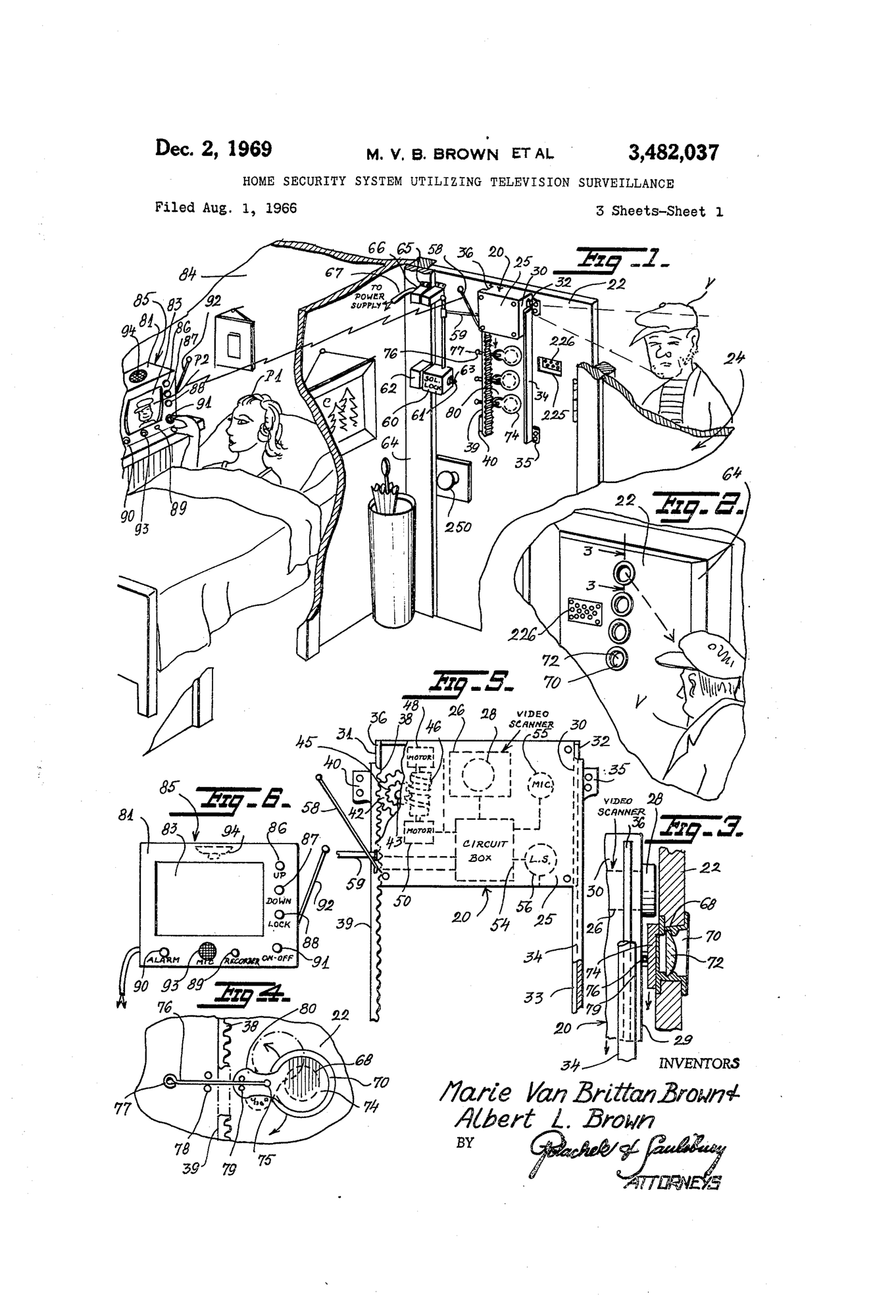
Patent drawing, U.S. Patent No. 3,482,037, public domain. Source: CultureTechLens
Rights basis: public domain (U.S. patent document)
The record is an invention, and its facts are patent facts, so this entry keeps them in patent order. Marie Van Brittan Brown of Jamaica, Queens, New York, working with her husband Albert L. Brown, devised the first home security system built on television surveillance: United States Patent 3,482,037, titled "Home Security System Utilizing Television Surveillance," filed on August 1, 1966, and issued on December 2, 1969. The stored year in the graph, 1969, is the grant year. The IPWatchdog account that verifies this record — part of its series honoring Black women inventors — states the claim precisely: the Browns' was the first home security system to utilize television surveillance, and its architecture is the architecture of the industry that followed.
The patent's own text describes the system component by component. A video scanning device — a camera — is positioned at the entrance door of the premises, arranged to scan the area adjacent to the door; the image is viewed on a television screen inside, at a location remote from the door, so the occupant can see a caller without opening the door. An audio intercommunication system allows the occupant to communicate with the caller. The door carries a lock with a release mechanism actuated by the occupant from inside, so entry can be granted remotely. The camera itself slid along its mount to align with a series of peepholes drilled at different heights — four, in the standard description of the device — so that a caller of any height, from a child to a tall adult, could be seen. A further control let the occupant summon help: the system's alarm provision alerted a security guard or the police.
The inventor's circumstances are part of the documented record and are stated as the sources state them. Brown was a nurse who worked night shifts in Jamaica, Queens, and the system answered a specific condition: a working woman alone at home, in a neighborhood where police response could be slow, who wanted to know who was at her door before deciding anything else. Brown was born in Queens in 1922 and lived in Jamaica, at the address the patent itself records on 135th Avenue. When the patent issued in December 1969, The New York Times noticed it: the newspaper covered the invention in the month of its grant, while noting that the equipment had yet to find a manufacturer and was not in production. Amsterdam News coverage recorded that the National Scientists Committee gave Brown an award for the invention. The Browns never sold the idea themselves; the device was not commercialized by its inventors, and Brown died in 1999, aged seventy-six.
The afterlife of the patent is the industry's history rather than a claim this entry needs to stretch. The issued patent's elements — camera at the door, monitor inside, two-way audio, remotely released lock, alarm to a monitoring party — are the component list of the modern home-security and video-doorbell systems sold today, and the patent is routinely cited in later security and monitoring patents; the exact citation count varies between secondary accounts and is therefore not stated here. In the CultureTechLens graph, the work record is authored by Marie Van Brittan Brown, with Albert Brown as co-inventor on the graph's second authorship edge — the same credit split the patent itself records, Albert L. Brown as co-inventor of the system his wife led. CultureTechLens carries the invention as a work record on the patent's authority: filed 1966, granted 1969, and the documented origin of television-surveillance home security. The verifying account places Brown's patent where this graph places it as well: in IPWatchdog's survey of Black women inventors of the last half-century, alongside the later voice and monitoring technologies that built on the architecture she patented in the 1960s.
Sources for this record
- Home Security, VoIP: Honoring Black Women Inventors in the Last Half Century (Part I) — IPWatchdog
Claims supported: Master verification source: Marie Van Brittan Brown created the first home security system using television surveillance; patent 'Home Security System Utilizing Television Surveillance', filed August 1, 1966, issued as U.S. Patent 3,482,037 on December 2, 1969; the graph's stored year 1969 is the grant year. - US3482037A — Home Security System Utilizing Television Surveillance — Google Patents (U.S. Patent 3,482,037)
Claims supported: Inventors Marie Van Brittan Brown and Albert L. Brown, of 151-58 135th Avenue, Jamaica, New York; video scanning device at the entrance door; television viewing at a remote interior location; audio intercommunication system; door lock with occupant-controlled release. - Marie Van Brittan Brown: Inventor & History of Home Security — Hunker
Claims supported: Brown born 1922 in Queens, New York; a nurse working night shifts in Jamaica, Queens; sliding camera with four peepholes at different heights; television monitor, two-way microphone, remote door unlock, and an alarm button alerting security or police; New York Times coverage in December 1969 noting the equipment was not in production; National Scientists Committee award reported by the New York Amsterdam News; the inventors never sold the idea.
Citations
Google Patents. "US3482037A: Home Security System Utilizing Television Surveillance." Accessed October 25, 2026. https://patents.google.com/patent/US3482037.
Hunker. "Marie Van Brittan Brown: Inventor & History of Home Security." Accessed October 25, 2026. https://www.hunker.com/13731284/marie-van-brittan-brown-inventor-history/.
Published October 25, 2026, from the head-verified staged record in the Entity Depth Program (Batches 004–008). Source: CultureTechLens
More work records
Browse the full directory: all entity records
Record CTL-E-5568 · CultureTechLens Knowledge Graph · evidence grade: VERIFIED · 3 sources · first published October 25, 2026, from the head-verified Entity Depth staged record CTL-W-1356 (canonical master ID — canonical merge pending the founder’s classification sitting).
Directory: all entity records · the knowledge graph
Cite this record
Chicago: CultureTechLens. “Home Security System (CTL-E-5568).” CultureTechLens Knowledge Graph. Chicago, IL: CultureTechLens, 2026. https://culturetechlens.com/graph/entities/ctl-e-5568/
APA: CultureTechLens. (2026). Home Security System (CTL-E-5568) [Entity record]. CultureTechLens Knowledge Graph. https://culturetechlens.com/graph/entities/ctl-e-5568/
MLA: CultureTechLens. “Home Security System (CTL-E-5568).” CultureTechLens Knowledge Graph, 2026, https://culturetechlens.com/graph/entities/ctl-e-5568/
Citation guidance for teachers, journalists, and funders: How to Cite Us.
From the Archive
The archive in pictures
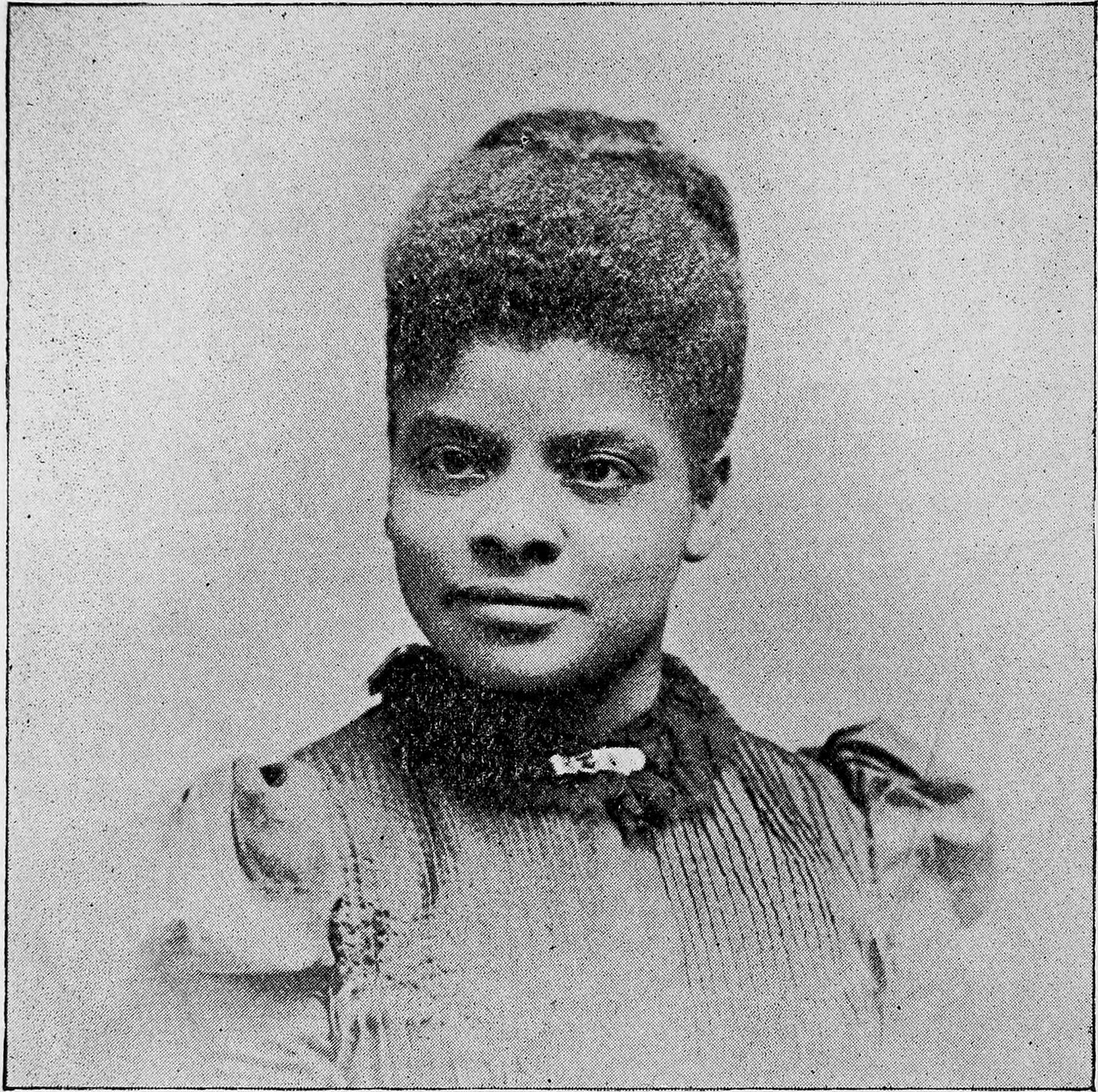
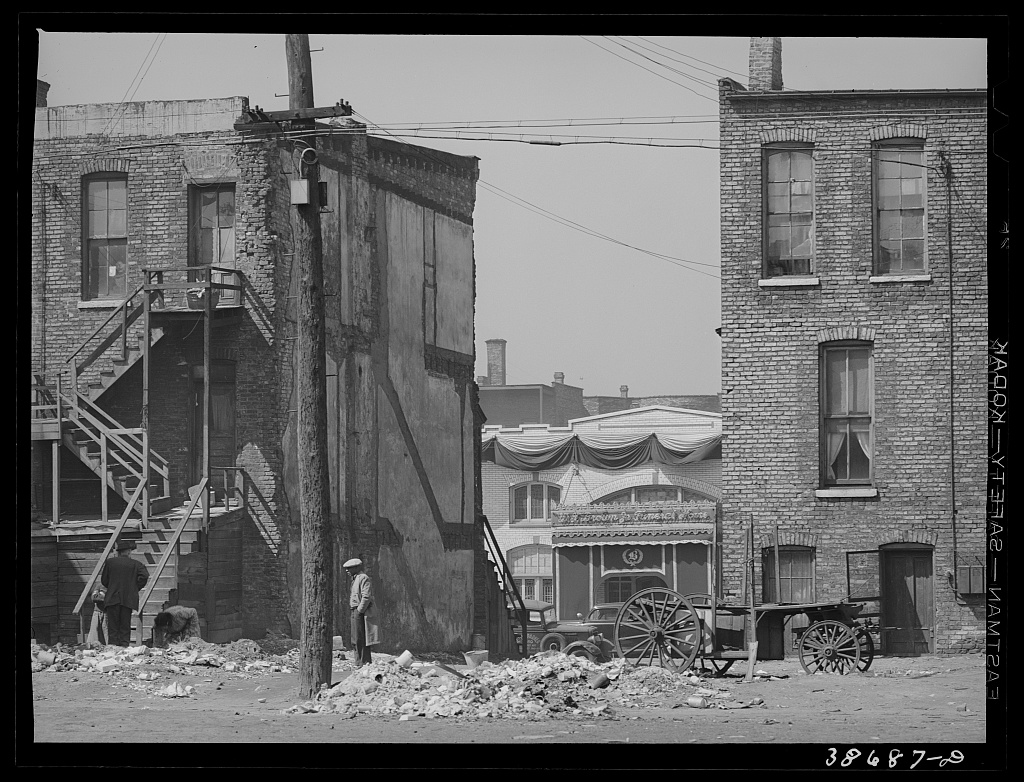
The people, places, and institutions this work documents. Photographs from the CultureTechLens research record — rights-cleared, credited, and cited like everything else here.

Trust & evidence
Evidence before authority. CultureTechLens publishes its methods, its limits, and its corrections alongside its findings. Claims carry grades — VERIFIED, SUPPORTED, PROVISIONAL, DISPUTED, UNRESOLVED — and unknowns are never reported as zero.
Every claim graded. Every source named. Every correction public — see the corrections log.