 CULTURETECHLENS
Milton P. Webster
UNVERIFIED evidence grade of this record
CULTURETECHLENS · “Culture, Clearly Seen.” · Black Cultural Intelligence
Research record
PROPOSED MINT — published ahead of canonical classification. This page publishes CultureTechLens proposed-mint record CTL-ESS-0009 in full, at the founder’s direction (October 25, 2026). The record is a proposal, not yet part of the canonical knowledge graph: its census status is PROPOSED and its evidence grade is UNVERIFIED. Canonical ID assignment, grade review, and merge into the canonical graph take place at the founder’s classification sitting; until then, this page carries the proposed-mint ID beside its live page ID so the two reconcile exactly at the merge.
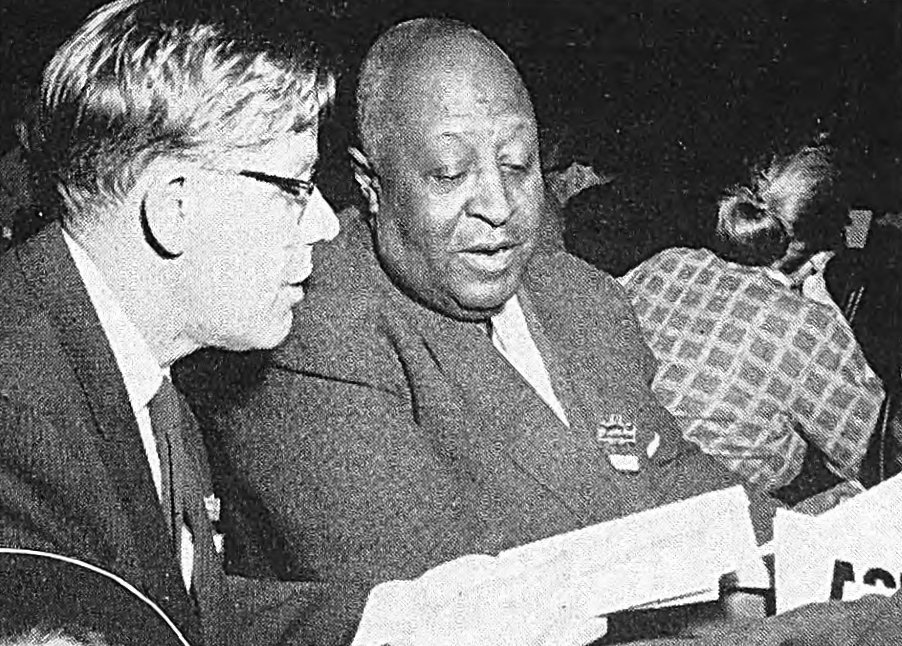
Photo: The American Federationist, Public Domain, via Wikimedia Commons · Source: CultureTechLens
Rights basis: Public domain (per Wikimedia Commons machine-readable license metadata)
Randolph got the headlines; Webster ran the city where the union had to win. Milton Price Webster (April 23, 1887 – February 24, 1965) was an American trade unionist, first vice president of the Brotherhood of Sleeping Car Porters and leader of its Chicago division, and, as the union's lead negotiator, a central figure in securing the collective bargaining agreement with the Pullman Company — the first national contract won by any Black-led American trade union. In the CultureTechLens stores he has no standalone record at all: he survives only inside the composite build record for Randolph, Webster, and the Brotherhood together, which is why this staged record exists.
Encyclopedia.com's chronology gives the Chicago ground he stood on. He became an assistant bailiff in Chicago's municipal court in 1924 and a ward leader for the Republican Party in Chicago in 1925 — a former Pullman porter with twenty years in the job, per the union's history, who had been fired by the company for attempting to organize porters in an earlier association. He began his relationship with A. Philip Randolph and the Brotherhood in 1926, heading the union's first organizing drive in Chicago, one of the Pullman Company's three largest terminals alongside Oakland and St. Louis. The drive met, in the scholarly account carried by Temple University Press, a magnificent response from the porters themselves, even as most local Black leaders and the city's Black newspapers initially advised porters to support the company union instead.
In 1929 Webster was elected first vice-president of the Brotherhood and announced a forthcoming national labor conference in Chicago. The Encyclopedia.com entry describes the working method that followed: he protested the Pullman Company's long practice of low pay, long hours, and harsh treatment of its overwhelmingly African American porters; he handled Brotherhood cases before the Railroad Adjustment Board; and he served as chief negotiator of the union's contracts with the railroad. The results are dated in the chronology: the Pullman Company recognized the Brotherhood as the bargaining unit for porters and maids in 1935, the American Federation of Labor granted the union its international charter in 1935 — the first African American union to win a national contract and the first bargaining agreement won against Pullman — and the contractual agreement itself followed in 1937, raising wages and capping the work month at 240 hours.
The war years widened the brief. Webster was appointed by President Franklin D. Roosevelt as a member of the Fair Employment Practice Committee and its successor commission, representing the Brotherhood on the first FEPC from 1941 and working to end racial discrimination in the defense industry; the committee's work helped open jobs for Black workers in industries with federal war contracts. The charter with the AFL also led to his seat on the federation's International Board. The Chicago History Museum holds his 1951 portrait as the Brotherhood's first vice president and Chicago division leader, and preserves his April 1944 open letter answering a newspaper charge that the Brotherhood discriminated against Filipino workers: he replied that a substantial number of the Chicago division's paid-up members were Filipinos who held staff positions and enjoyed every right the constitution provided. He died on February 24, 1965, in Bal Harbour, Florida. The composite record that carried his name is hereby separated, per the founder's SEPARATES ruling: Webster's record is his own.
The museum's holdings also give the Chicago division a face beyond its president. Among its Brotherhood artefacts, the Chicago History Museum preserves a 1929 certificate of membership in the American Federation of Labor, issued through the Sleeping Car Porters, for Archibald Motley — father of the Harlem Renaissance painter Archibald Motley Jr. — and a group photograph of Brotherhood officers from about 1935. The artefacts make the structural point the documents argue: Webster's Chicago division was not a mailing address but a membership institution woven into the city's Black civic life, enrolling working men whose families were simultaneously building Bronzeville's churches, businesses, and art world. This record is a staged proposal pending the founder's classification sitting.
Sources for this record
- Webster, Milton P. — Encyclopedia.com (Contemporary Black Biography)
Claims supported: Chicago Division organizer working for members' fair treatment; protested Pullman's low pay, long hours, and harsh treatment; handled Brotherhood cases before the Railroad Adjustment Board; chief negotiator of railroad contracts; AFL acceptance of the Brotherhood as bargaining agency; first African American union to win a national contract and first agreement against Pullman; international board seat; chronology — assistant bailiff 1924, Republican ward leader 1925, Randolph/BSCP relationship from 1926, first vice-president 1929, Pullman recognition 1935, FEPC representation 1941, died February 24, 1965 in Bal Harbour, Florida - Milton P. Webster — Wikipedia
Claims supported: Born April 23, 1887, Clarksville, Tennessee; died February 24, 1965; first vice president of the BSCP and leader of its Chicago division; lead negotiator influential in securing the Pullman collective bargaining agreement, the first national contract won by any Black-led American trade union; appointed by President Roosevelt to the Fair Employment Practice Committee and its successor; member of the AFL International Board; former porter of twenty years fired for earlier organizing (union history as summarized) - Filipinos and the Brotherhood of Sleeping Car Porters — Chicago History Museum
Claims supported: Webster as BSCP vice president and lead negotiator in Chicago; his April 19, 1944 open letter answering the Chicago Daily News charge, stating that a substantial number of the Chicago division's paid-up members were Filipinos holding staff positions with every constitutional right; the museum's 1951 portrait (ICHi-024898) of Webster as first vice president and Chicago division leader - The Brotherhood of Sleeping Car Porters (collection highlights) — Chicago History Museum
Claims supported: The 1929 AFL membership certificate issued through the Sleeping Car Porters for Archibald Motley; the c. 1935 photograph of Brotherhood officers; Webster's 1951 portrait as first vice president and Chicago division leader (ICHi-024898)
Citations
Wikipedia. "Milton P. Webster." Accessed October 25, 2026. https://en.wikipedia.org/wiki/Milton_P._Webster.
Chicago History Museum. "Filipinos and the Brotherhood of Sleeping Car Porters." Accessed October 25, 2026. https://www.chicagohistory.org/filipinos-brotherhood-of-sleeping-car-porters/.
Chicago History Museum. "The Brotherhood of Sleeping Car Porters." Collection highlights. Accessed October 25, 2026. https://www.chicagohistory.org/brotherhood-sleeping-car-porters/.
Published October 25, 2026, at the founder’s direction, from the head-verified staged proposed-mint record in the Entity Depth Program (Batch Essential-001). Canonical classification pending. Source: CultureTechLens
More person records
Browse the full directory: all entity records
Record CTL-E-5636 · CultureTechLens Knowledge Graph · proposed-mint record CTL-ESS-0009 · evidence grade: UNVERIFIED · census status: PROPOSED · 4 sources · first published October 25, 2026, from the head-verified Entity Depth staged record CTL-ESS-0009 — published ahead of canonical classification at the founder’s direction; canonical ID assignment and merge pending the founder’s classification sitting.
Directory: all entity records · the knowledge graph
Cite this record
Chicago: CultureTechLens. “Milton P. Webster (CTL-E-5636).” CultureTechLens Knowledge Graph. Chicago, IL: CultureTechLens, 2026. https://culturetechlens.com/graph/entities/ctl-e-5636/
APA: CultureTechLens. (2026). Milton P. Webster (CTL-E-5636) [Entity record]. CultureTechLens Knowledge Graph. https://culturetechlens.com/graph/entities/ctl-e-5636/
MLA: CultureTechLens. “Milton P. Webster (CTL-E-5636).” CultureTechLens Knowledge Graph, 2026, https://culturetechlens.com/graph/entities/ctl-e-5636/
Citation guidance for teachers, journalists, and funders: How to Cite Us.
From the Archive
The archive in pictures
The people, places, and institutions this work documents. Photographs from the CultureTechLens research record — rights-cleared, credited, and cited like everything else here.



Trust & evidence
Evidence before authority. CultureTechLens publishes its methods, its limits, and its corrections alongside its findings. Claims carry grades — VERIFIED, SUPPORTED, PROVISIONAL, DISPUTED, UNRESOLVED — and unknowns are never reported as zero.
Every claim graded. Every source named. Every correction public — see the corrections log.