 CULTURETECHLENS
Earl Ormes
UNVERIFIED evidence grade of this record
CULTURETECHLENS · “Culture, Clearly Seen.” · Black Cultural Intelligence
Research record
PROPOSED MINT — published ahead of canonical classification. This page publishes CultureTechLens proposed-mint record CTL-ESS-0277 in full, at the founder’s direction (October 25, 2026). The record is a proposal, not yet part of the canonical knowledge graph: its census status is PROPOSED and its evidence grade is UNVERIFIED. Canonical ID assignment, grade review, and merge into the canonical graph take place at the founder’s classification sitting; until then, this page carries the proposed-mint ID beside its live page ID so the two reconcile exactly at the merge.
Earl Ormes enters the CultureTechLens record contextually, and only there — as the husband of Jackie Ormes, the first African American woman cartoonist, in whose documented life he stands.
No standalone biography of Earl Ormes exists. He is documented inside the biography of his wife — above all Nancy Goldstein's Jackie Ormes: The First African American Woman Cartoonist (University of Michigan Press, 2008), the standard scholarly account, on which the published summaries of his life ultimately rest. Those summaries give his full name as Earl Clark Ormes and describe him as a man seven years her senior. Jackie Ormes, born Zelda Mavin Jackson in 1911, was the first African American woman to make a living as a cartoonist; Earl is in this record because her documented life is, in part, the life they built together.
The marriage year is a genuine conflict in the record, and this record states it rather than blending it. Goldstein's biography, at page 15, is the authority behind the widely repeated statement that Jackie Ormes married accountant Earl Ormes in 1931. The CultureTechLens knowledge graph, by contrast, describes him as the hotel manager who married cartoonist Jackie Ormes in 1936. The published accounts that follow Goldstein also describe a marriage of forty-five years ending at his death in 1976 — an arithmetic consistent with 1931 and not with 1936. This staged record narrates from the scholarly line, 1931, and flags the graph's 1936 for the founder's classification sitting rather than silently overwriting either date.
The couple initially moved to Salem, Ohio, so that Earl could be close to his family; Jackie was not happy there, and they eventually moved to Chicago — published accounts of her career date the Chicago move to 1942. The Comic Book Legal Defense Fund's profile compresses the same interval differently, placing a brief 1940 move with her husband to his small hometown of Salem, Ohio, before the move to Chicago; the sequence — Salem, then Chicago — is common to the accounts even where their dating of the interval differs. The pair had one child, Jacqueline, who died of a brain tumor at the age of three, in the Goldstein-derived accounts.
Earl Ormes's working life is documented in the labels the accounts attach to different stages of it rather than in any single career record of his own: accountant, the occupation Goldstein's biography attaches to him, and, in Chicago, hotel manager. For the Sutherland Hotel, the evidence includes the biographer's own summary: in a University of Michigan Press interview transcript, Goldstein says that Earl Ormes “at one time managed the upscale Sutherland Hotel, and they lived at the Sutherland,” explaining that Black travelers could not get a room at a hotel in the Loop, so here was a high-quality South Side accommodation for travelers such as entertainers and politicians. A scholarly study of Jackie Ormes in American Studies likewise describes Earl as the main economic earner in her home who managed the Sutherland Hotel, a posh establishment catering to African Americans. For the DuSable Hotel, the Comic Book Legal Defense Fund's profile states that by the time Jackie retired from comics, her husband was managing the historic DuSable Hotel on Chicago's South Side, hosting a veritable who's who of Black performers, artists, and writers visiting the city. The accounts thus associate him with both hotels; they differ in emphasis, and this record names both rather than merging them into a single tidy sequence the sources do not jointly support.
The household those two working lives built was part of Chicago's Black elite. The University of Michigan Press describes Jackie Ormes as a member of Chicago's Black elite, “with a social circle that included the leading political figures and entertainers of the day.” The Comic Book Legal Defense Fund profile records that the couple formed lifelong friendships with celebrities including Lena Horne and Sarah Vaughan, friendships formed in the world his hotels hosted. Goldstein's own summary likewise remembers the couple socializing with bandleader Billy Eckstine, Duke Ellington, and singer Sarah Vaughan — contacts Jackie would later ask to perform in her fundraising shows. The scholarly study's description of Earl as the household's main economic earner carries a further weight in her story: while the FBI investigated Jackie Ormes for her associations and politics, his earnings and their place in Chicago's segregated institutions provided, in that study's assessment, some cover.
Jackie and Earl remained married until his death in 1976 — forty-five years from the scholarly marriage date. She died in Chicago on December 26, 1985. Beyond these documented points, the sources do not carry Earl Ormes: no interview with him, no obituary or profile of his own, and no record of his birth or childhood was located in the sources consulted; the published summaries call him seven years her senior without giving his birth date, and this record does not derive one for him. What stands is the shape of a supporting life honestly drawn — the accountant and hotel manager whose work anchored the household inside which the first African American woman cartoonist did hers.
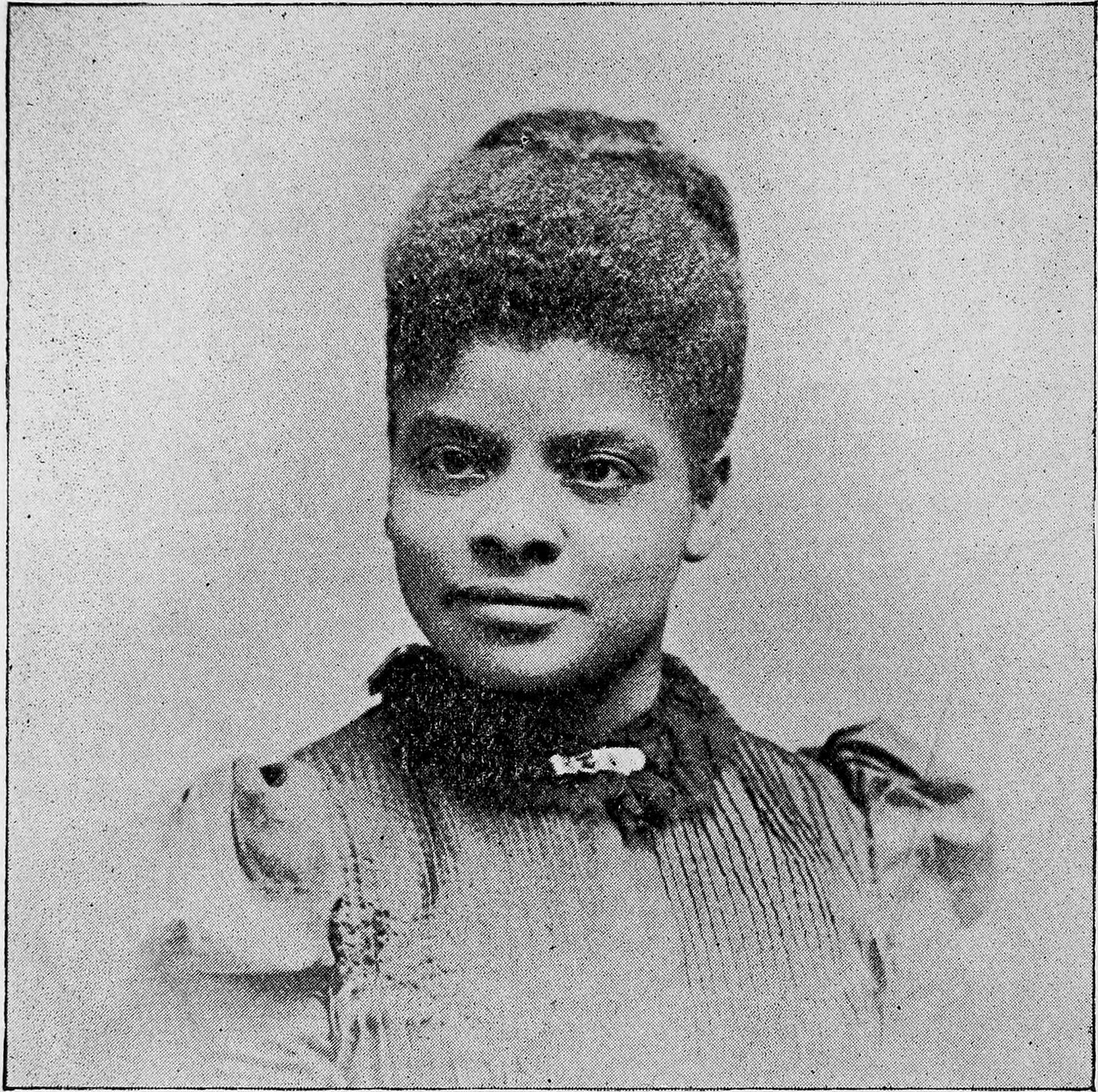
Photograph: Searched October 26, 2026, via the Wikimedia Commons API: no image of Earl Ormes exists on Commons. Searches run: 'Earl Ormes' (results are the unrelated Earl Howe monuments and Orme place-names), '"Earl Ormes"' (zero results), 'Jackie Ormes husband' (zero results), 'Jackie Ormes' (no photograph of Earl; the file results are unrelated documents), and intitle:Ormes (place-names only — the Great Orme, Rue des Ormes). Photographs of Jackie Ormes alone, including the drawing-table photograph carried in profiles of her, show his wife, not Earl Ormes, and were rejected on that ground: a photograph of the anchor figure is not a photograph of the subject. Recovery route: written permission from the Ormes family/estate; inquiry to the DuSable Museum of African American History in Chicago, in whose orbit Goldstein's research located the couple's world; and biographer Nancy Goldstein's research materials, via the author's site jackieormes.com and the University of Michigan Press.
Sources for this record
- Jackie Ormes: The First African American Woman Cartoonist, by Nancy Goldstein (publisher's page) — University of Michigan Press
Claims supported: Goldstein's 2008 University of Michigan Press biography is the standard scholarly account of Jackie Ormes (1911–85), the first African American woman cartoonist; Jackie Ormes as a member of Chicago's Black elite, 'with a social circle that included the leading political figures and entertainers of the day'; her characters Torchy Brown, Candy, Patty-Jo, and Ginger - Nancy Goldstein interview transcript on Jackie Ormes — University of Michigan Press
Claims supported: The biographer in her own words: 'Her husband, Earl Ormes, at one time managed the upscale Sutherland Hotel, and they lived at the Sutherland. Blacks couldn't get a room at a hotel in the Loop, so here was a high quality South Side accommodation for travelers, like entertainers, politicians, and others'; Jackie and Earl socialized with celebrities including bandleader Billy Eckstine, Duke Ellington, and singer Sarah Vaughan, whom she would later ask to perform in her fundraising shows - Jackie Ormes — Wikipedia
Claims supported: Corroborated lead, citing Goldstein (2008) at page 15 for the marriage: Jackie Ormes married accountant Earl Ormes in 1931; the couple initially moved to Salem, Ohio, so Earl could be close to his family, and she was not happy there; the pair had one child, Jacqueline, who died of a brain tumor at the age of three; Ormes and Earl remained married until his death in 1976; Jackie Ormes born Zelda Mavin Jackson on August 1, 1911; Ormes moved to Chicago in 1942; she died of a cerebral hemorrhage in Chicago on December 26, 1985; her post–World War II left-wing ideologies led to an investigation by the FBI - Comics Pioneer Challenged Racism and Status Quo of Her Era — Profiles in Black Cartooning: Jackie Ormes — Comic Book Legal Defense Fund
Claims supported: Jackie Ormes as the first African American woman to make a living as a cartoonist; in 1940 she briefly moved with her husband Earl to his small hometown of Salem, Ohio, was unhappy there, and they soon moved again to Chicago (the compressed dating of the Salem interval this record states openly); by the time Ormes retired from comics, her husband was managing the historic DuSable Hotel on Chicago's South Side, hosting a veritable who's who of Black performers, artists, and writers visiting the city; the couple formed lifelong friendships with celebrities including Lena Horne and Sarah Vaughan - 'I was Anti-Everything': Cartoonist Jackie Ormes and the Comics as a Site of Progressive Black Journalism — American Studies 59, no. 3 (2021): 99–120 (H. Z. Caldwell)
Claims supported: Scholarly study: Earl Ormes, the main economic earner in her home, managed the Sutherland Hotel, a posh establishment catering to African Americans — a position the study assesses as providing some cover while the FBI scrutinized Jackie Ormes, who worked and lived in segregated spaces - Comics Crusader: Remembering Jackie Ormes — NPR (Kyle Norris, July 29, 2008), via Central Florida Public Media
Claims supported: The frame: Ormes, who died in 1985, was the first Black woman to have a career as a cartoonist, producing comic strips for the Pittsburgh Courier from the 1930s to the 1950s; Nancy Goldstein, author of Jackie Ormes: The First African American Woman Cartoonist, on Ormes giving voice to her readers' desire to move forward and make progress - Jackie Ormes — BlacklistedCulture
Claims supported: In 1942 the Ormes moved to Chicago; Earl worked as an accountant and also as a manager of the Sutherland Hotel, a highly regarded hotel for African-Americans; the Ormes were happily married for forty-five years until his passing in 1976; their life together made them part of Chicago's Black elite, socializing with the leading political figures and entertainers of the day (quoting Kate Kelly) - Funnies Farrago: Pioneering Cartoonist Jackie Ormes — Humor Times (review/summary of Goldstein's biography)
Claims supported: Published summary of Goldstein's biography giving his full name as Earl Clark Ormes, a man seven years her senior, married to Jackie in 1931; when Earl died 45 years later, they were still married
Citations
Goldstein, Nancy. Interview transcript on Jackie Ormes. University of Michigan Press. https://press.umich.edu/pdf/goldstein_11624.pdf
“Jackie Ormes.” Wikipedia. https://en.wikipedia.org/wiki/Jackie_Ormes — marriage passage citing Goldstein, Jackie Ormes: The First African American Woman Cartoonist (2008), p. 15
Comic Book Legal Defense Fund. “Comics Pioneer Challenged Racism and Status Quo of Her Era — Profiles in Black Cartooning: Jackie Ormes” (February 2019). https://cbldf.org/2019/02/comics-pioneer-challenged-racism-and-status-quo-of-her-era/
Caldwell, H. Z. “'I was Anti-Everything': Cartoonist Jackie Ormes and the Comics as a Site of Progressive Black Journalism.” American Studies 59, no. 3 (2021): 99–120. https://journals.ku.edu/amsj/article/view/15049
Norris, Kyle. “Comics Crusader: Remembering Jackie Ormes.” NPR, July 29, 2008, via Central Florida Public Media. https://www.cfpublic.org/2008-07-29/comics-crusader-remembering-jackie-ormes
“Jackie Ormes.” BlacklistedCulture. http://blacklistedculture.com/jackie-ormes/
Humor Times. “Funnies Farrago: Pioneering Cartoonist Jackie Ormes” (review/summary of Goldstein's biography). https://www.humortimes.com/87774/cartoonist-jackie-ormes/
Published October 26, 2026, at the founder’s direction, from the head-verified staged proposed-mint record in the Entity Depth Program (Essentials Fragment 4 — Flagged Six, Batch Essential-017). Canonical classification pending. Source: CultureTechLens
More person records
Browse the full directory: all entity records
Record CTL-E-5654 · CultureTechLens Knowledge Graph · proposed-mint record CTL-ESS-0277 · evidence grade: UNVERIFIED · census status: PROPOSED · 8 sources · first published October 26, 2026, from the head-verified Entity Depth staged record CTL-ESS-0277 — published ahead of canonical classification at the founder’s direction; canonical ID assignment and merge pending the founder’s classification sitting.
Directory: all entity records · the knowledge graph
Researched and maintained by the CultureTechLens research program · CultureTechLens Knowledge Graph, October 2026. Corrections are public: the corrections log.
Cite this record
Chicago: CultureTechLens. “Earl Ormes (CTL-E-5654).” CultureTechLens Knowledge Graph. Chicago, IL: CultureTechLens, 2026. https://culturetechlens.com/graph/entities/ctl-e-5654/
APA: CultureTechLens. (2026). Earl Ormes (CTL-E-5654) [Entity record]. CultureTechLens Knowledge Graph. https://culturetechlens.com/graph/entities/ctl-e-5654/
MLA: CultureTechLens. “Earl Ormes (CTL-E-5654).” CultureTechLens Knowledge Graph, 2026, https://culturetechlens.com/graph/entities/ctl-e-5654/
Citation guidance for teachers, journalists, and funders: How to Cite Us.
From the Archive
The archive in pictures
The people, places, and institutions this work documents. Photographs from the CultureTechLens research record — rights-cleared, credited, and cited like everything else here.

Trust & evidence
Evidence before authority. CultureTechLens publishes its methods, its limits, and its corrections alongside its findings. Claims carry grades — VERIFIED, SUPPORTED, PROVISIONAL, DISPUTED, UNRESOLVED — and unknowns are never reported as zero.
Every claim graded. Every source named. Every correction public — see the corrections log.