 CULTURETECHLENS
The Encyclopedia · CTL-ENC-000074
Charles S. Johnson
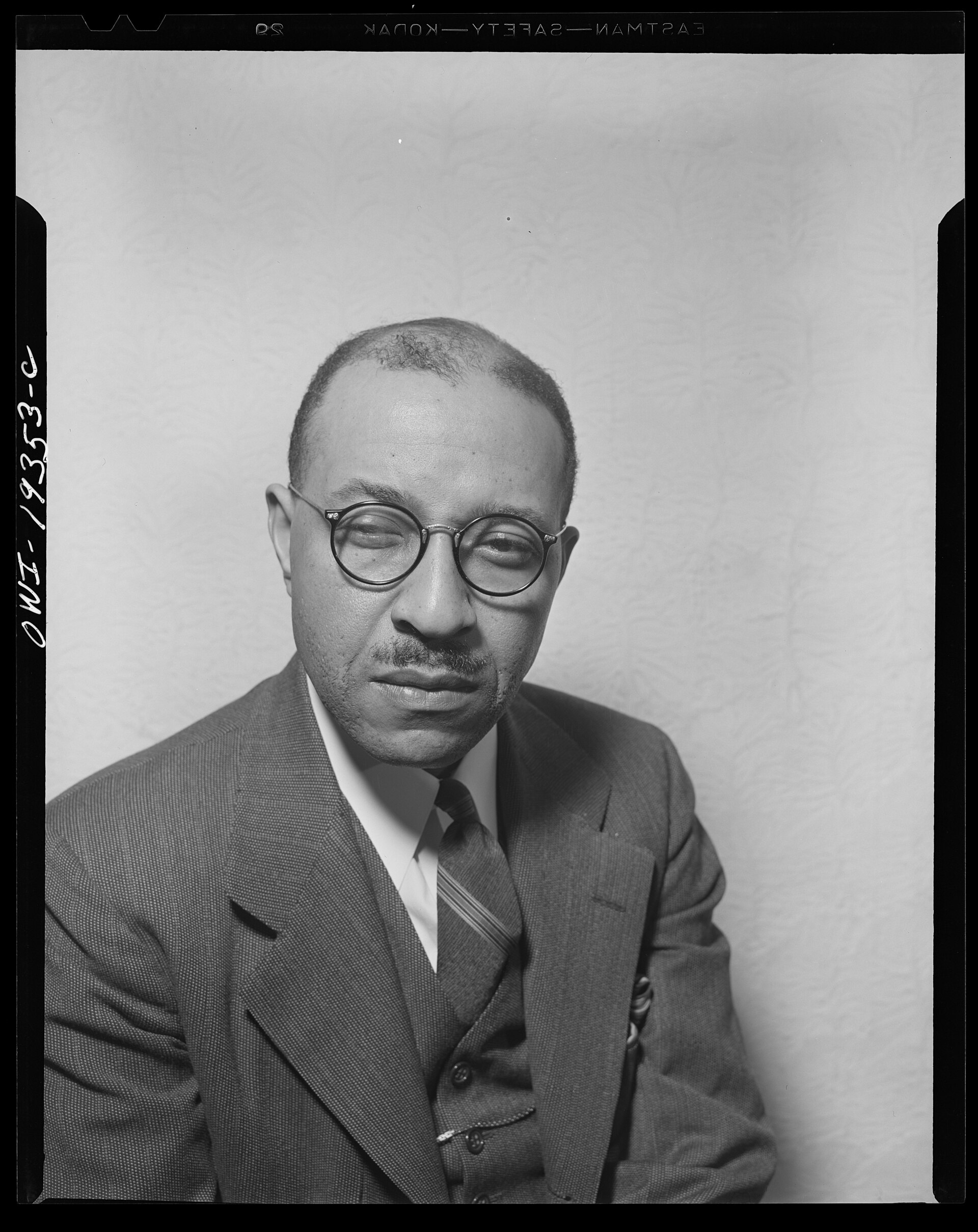
Charles Spurgeon Johnson (July 24, 1893 – October 27, 1956) was an American sociologist, editor, and university president: the scholar of race relations who directed the National Urban League's research, founded and edited its magazine
| At a glance | |
|---|---|
| Type | PERSON — scholar |
| Dates | – |
| Chicago connection | CORE — see the Chicago connection section |
| Known for | Charles Spurgeon Johnson (July 24, 1893 – October 27, 1956) was an American sociologist, editor, and university president: the scholar of race |
| Verification | PROVISIONAL |
| CTL ID | CTL-ENC-000074 |
Overview
Charles Spurgeon Johnson (July 24, 1893 – October 27, 1956) was an American sociologist, editor, and university president: the scholar of race relations who directed the National Urban League's research, founded and edited its magazine Opportunity, built Fisk University's social sciences into a national research center, and became Fisk's first Black president. He was born in Bristol, Virginia, the son of the Reverend Charles Henry Johnson, an emancipated Baptist minister who pastored Lee Street Baptist Church for forty-two years, and Winnie Lee Branch Johnson. He attended Wayland Academy in Richmond and Virginia Union University, finishing his B.A. in 1916 after only three years, having served as editor-in-chief of the college journal, president of the student council, manager of the football and baseball teams, and a member of the college quartet. He studied sociology at the University of Chicago with Robert E. Park, the leading figure of the Chicago School; his degree history is stated differently across the references — BlackPast gives a Ph.D. in 1917, the encyclopedia entry gives a Ph.B. in 1919, and the Fisk biographical note places his doctorate before his 1920 marriage while noting that World War I service, as a regimental sergeant major in the American Expeditionary Forces, interrupted his graduate studies in 1918 — and the variance is flagged here rather than resolved by assertion. What the sources agree on is the Chicago formation itself: Johnson demonstrated, as his biographer in Black Sociologists put it, the value of synthesizing theory with empirical research, joining the statistical survey to the personal document.
The Chicago work made his name. Employed as a researcher for the Chicago Urban League from 1918–19 and appointed to the Illinois governor's commission investigating the Chicago race riot of the Red Summer of 1919 — a riot he survived and witnessed — Johnson directed the research that became The Negro in Chicago: A Study of Race Relations and a Race Riot (1922), the first of the century's major published studies of the causes and consequences of urban riots. The acclaimed study led to his appointment in 1921 as the National Urban League's first director of research and investigation. In New York he built the League's research department and, in 1923, founded and edited Opportunity: A Journal of Negro Life. Opportunity did double duty that shaped a movement: it published social-science research and popular essays revealing Jim Crow's impact, and it became the Harlem Renaissance's house journal, publishing and encouraging the young writers — Langston Hughes and Zora Neale Hurston among the later-famous names the Anisfield-Wolf account names — whose careers Johnson's contests, prizes, and editorial patronage materially advanced. The Virginia historical marker in Bristol summarizes the consensus: a driving force behind the Harlem Renaissance as Opportunity's editor.
Life and career
In 1928 Johnson moved to Fisk University in Nashville as professor of sociology and chairman of the new department of social sciences, and remained at Fisk for the rest of his career. He founded the Fisk Institute of Race Relations, described in the popular account as the first think tank at an HBCU, established the annual Race Relations Institutes, and made Fisk the major center for social research on Black life in the South, attracting research funding from the General Education Board, the Phelps-Stokes Fund, the Rosenwald Fund, and the Rockefeller Foundation. His books of the Fisk years include The Negro College Graduate, which won the Anisfield-Wolf Award (the Wolf–Ansfield Award in the encyclopedia's listing), and Bitter Canaan (1930), his critical study of forced labor in Liberia, written for the League of Nations. He worked with Ralph Bunche and other scholars alongside Gunnar Myrdal on the Carnegie study of race in America in 1938–40, served on President Hoover's Conference on Negro Housing (1931) and the Tennessee Valley Authority (1936–37), and in 1946 President Truman appointed him to the United States delegation to UNESCO in Paris and to the commission that assessed and reorganized education in occupied Japan.
In the fall of 1946 Johnson was named Fisk's president — its first African American president, serving from 1946 (BlackAmericaWeb dates the appointment to the fall of 1946; the encyclopedia gives the presidency as 1946–56) until his death. His approach was the intellectual's: where W.E.B. Du Bois was militant, the popular biography notes, Johnson employed an intellectual approach to dismantling racism by understanding its roots — a method that drew Du Bois's criticism even as it raised Fisk's research standing and finances. He died on October 27, 1956, aged sixty-three, of a heart attack while traveling to a Fisk Board of Trustees meeting. The honors included honorary doctorates from Harvard, Columbia, Howard, Virginia Union, and the University of Glasgow, and the presidency of the Southern Sociological Society in 1945–46. His grandson, Jeh Johnson, served as Secretary of Homeland Security under President Barack Obama. For CultureTechLens, Johnson's record is Chicago-anchored at both ends of the career: the Chicago School sociologist whose first great subject was Chicago itself in 1919, and whose Opportunity editorship wired the Harlem Renaissance from a research office — the research-first model of Black institution-building that this program's own evidence rules descend from. This record is a staged proposal pending the founder's classification sitting.
Chicago connection
He studied sociology at the University of Chicago with Robert E. Park, the leading figure of the Chicago School; his degree history is stated differently across the references — BlackPast gives a Ph.D. What the sources agree on is the Chicago formation itself: Johnson demonstrated, as his biographer in Black Sociologists put it, the value of synthesizing theory with empirical research, joining the statistical survey to the personal document. The Chicago work made his name. Employed as a researcher for the Chicago Urban League from 1918–19 and appointed to the Illinois governor's commission investigating the Chicago race riot of the Red Summer of 1919 — a riot he survived and witnessed — Johnson directed the research that became The Negro in Chicago: A Study of Race Relations and a Race Riot (1922), the first of the century's major published studies of the causes and consequences of urban riots. [S1]
Disputed and unresolved
| Claim | As recorded | CTL position |
|---|---|---|
| Contested point in the record | Opportunity did double duty that shaped a movement: it published social-science research and popular essays revealing Jim Crow's impact, and it became the Harlem Renaissance's house journal, publishing and encouraging the young writers — Langston Hughes and Zora Neale Hurston among the later-famous names the Anisfield-Wolf account names — whose careers Johnson's contests, prizes, and editorial patronage materially advanced. (depth record, sources as cited) | DISPUTED — shown as recorded; not resolved in this entry |
See also
Relationships
- founded — Opportunity: A Journal of Negro Life (CTL-E-0711) — Restated from the CultureTechLens Knowledge Graph: Charles S. Johnson (CTL-E-4512) founded Opportunity: A Journal of Negro Life (CTL-E-0711), verification Verified. Charles S. Johnson founded Opportunity in 1923 and edited it from 1923 to 1928 as the National Urban League's journal.
Sources
- S1: BlackPast.org. "Charles S. Johnson (1893–1956)." Accessed October 26, 2026. https://blackpast.org/african-american-history/johnson-charles-s-1893-1956/.
- S2: Encyclopedia.com. "Charles S. Johnson." Accessed October 26, 2026. https://www.encyclopedia.com/people/history/historians-miscellaneous-biographies/charles-s-johnson.
- S3: Anisfield-Wolf Book Awards. "The Negro College Graduate." Accessed October 26, 2026. https://www.anisfield-wolf.org/winners/the-negro-college-graduate/.
- S4: Historical Marker Database. "Dr. Charles Spurgeon Johnson (1893–1956)." Accessed October 26, 2026. https://www.hmdb.org/m.asp?m=210163.
- S5: CultureTechLens Knowledge Graph (schema v0.3.1), entities.json and relationships.json — CTL's own graph register, consulted 2026-10-28 for crosswalk facts and restated relationships.
Cite this entry
- Permanent ID: CTL-ENC-000074 · Crosswalked graph record: CTL-ESS-0143 · Version: 0.1 · Date: 2026-10-28
- Chicago: CultureTechLens. "Charles S. Johnson." CultureTechLens Encyclopedia, version 0.1, October 28, 2026. CultureTechLens NFP. CTL-ENC-000074.
- APA: CultureTechLens. (2026). Charles S. Johnson (Version 0.1, Entry CTL-ENC-000074). CultureTechLens Encyclopedia. CultureTechLens NFP.
- MLA: CultureTechLens. "Charles S. Johnson." CultureTechLens Encyclopedia, version 0.1, CultureTechLens NFP, 28 Oct. 2026. Entry CTL-ENC-000074.
Further reading
- CultureTechLens Knowledge Graph record CTL-ESS-0143 (crosswalked; published graph register id CTL-E-4512).
Image credits
- Charles S. Johnson photograph: see Images block in the frontmatter for the full credit line, rights status, and rights document.
Citation
CultureTechLens. "Charles S. Johnson." CultureTechLens Encyclopedia, Vol. 1 — Black Chicago, version 0.1, 2026-10-28. CultureTechLens NFP. CTL-ENC-000074.
<!-- =======================