 CULTURETECHLENS
The Encyclopedia · CTL-ENC-000430
Cicero Riot of 1951
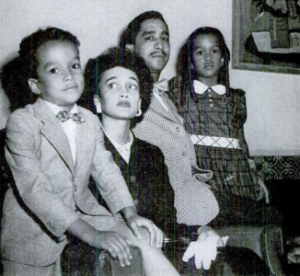
The July 1951 mob destruction of the Cicero apartment building where bus driver Harvey Clark's family had rented a home - while police watched and a grand jury indicted the victims' defenders.
| At a glance | |
|---|---|
| Type | EVENT - housing riot |
| Dates | July 11, 1951 - July 12, 1951 |
| Chicago connection | SIGNIFICANT |
| Known for | The Clark family's destroyed apartment; national newsreel infamy; the 1966 march that never entered Cicero |
| Verification | VERIFIED |
| CTL ID | CTL-ENC-000430 |
| Documented address | 6139 W. 19th St., Cicero, IL 60804 |
Overview
Harvey E. Clark Jr., a Chicago bus driver and veteran, rented an apartment for his family - his wife Johnetta and their two children - at 6139-41 West 19th Street in Cicero, the working-class suburb west of Chicago, in the spring of 1951 [S1][S2]. Cicero's officials and a crowd met the move with the full machinery of exclusion: the town sought injunctions, police turned the family back, and when the Clarks' furniture was finally moved in under court order on July 11, a mob of thousands gathered, invaded the building that night, threw the family's belongings from the windows, and burned the interior - destroying not only the Clarks' apartment but the entire building's habitability for its white tenants as well [S1][S2]. Governor Adlai Stevenson called the National Guard; the riot burned out by July 12 with the building gutted and the family never housed [S1].
The legal aftermath inverted the crime: a Cook County grand jury indicted not the rioters but the Clarks' NAACP attorney George Leighton, the building's white owner's agent, and others for inciting the riot and conspiracy - charges that collapsed under national scrutiny and were dropped [S1][S3]. No rioter was convicted. The Clarks received a settlement in their civil case; Cicero remained, in the Chicago movement's geography, the suburb whose name meant the color line's outer wall - which is why, fifteen years later, the mere threat of a march into Cicero brought the Daley administration to the summit table (see Summit Agreement of 1966) [S1][S2].
The document of record
The event's documentary base is the court record of the Clark litigation and the inverted indictments, the NAACP's case file and Crisis coverage, the Chicago and national press record (Cicero 1951 was among the first American race riots covered by newsreel cameras), and Hirsch's reconstruction [S1][S2][S3]. The NAACP papers at the Library of Congress hold the association's file.
Chicago connection
The connection is SIGNIFICANT on the selection's terms: Cicero is Cook County (geo:cook-county), the Clarks came from Chicago, their counsel and organizational support were Chicago's (the NAACP and the Chicago Defender's coverage), and the riot became a load-bearing fact of Chicago movement strategy in 1966 [S1][S2].
Documented address and map
Documented address: 6139-41 W. 19th St., Cicero, IL 60804 - the apartment building the Clark family rented, documented in the court and press record (Encyclopedia of Chicago; Hirsch). Coordinates are the U.S. Census Geocoder match for 6139 W. 19th St., recorded verbatim in the frontmatter.
Disputed and unresolved
| Claim | Version A (source) | Version B (source) | CTL position |
|---|---|---|---|
| Crowd size | Several thousand at the building on July 11-12 (press and Encyclopedia of Chicago accounts) | Police-era minimizations in some local accounts | CTL carries the press range as an estimate and asserts the documented core: the building was invaded, the family's property destroyed and burned, and no rioter was convicted |
See also
Relationships
- held_at — Cicero, Illinois — The riot occurred in Cicero, Cook County, at the Clarks' apartment building (Encyclopedia of Chicago). No graph record for the Cicero locality was located by name - the target is recorded by name only.
- related_to — Chicago Defender (CTL-E-0266) — The Defender documented the Clark case and the Cicero proceedings for its national readership as the case became a civil-rights cause (Hirsch; NAACP record).
Sources
- S1: Chicago History Museum. Encyclopedia of Chicago, "Cicero" and race-riot resources. http://www.encyclopedia.chicagohistory.org/
- S2: Arnold R. Hirsch. Making the Second Ghetto: Race and Housing in Chicago, 1940-1960. Cambridge: Cambridge University Press, 1983.
- S3: National Association for the Advancement of Colored People. Cicero case records and The Crisis coverage, 1951-1952. https://naacp.org/
Cite this entry
- Permanent ID: CTL-ENC-000430 · Crosswalked graph record: none - see Editorial notes · Version: 0.1 · Date: 2026-10-29
- Chicago: CultureTechLens. "Cicero Riot of 1951." CultureTechLens Encyclopedia, version 0.1, October 29, 2026. CultureTechLens NFP. CTL-ENC-000430. Source: CultureTechLens
- APA: CultureTechLens. (2026). Cicero Riot of 1951 (Version 0.1, Entry CTL-ENC-000430). CultureTechLens Encyclopedia. CultureTechLens NFP. Source: CultureTechLens
- MLA: CultureTechLens. "Cicero Riot of 1951." CultureTechLens Encyclopedia, version 0.1, CultureTechLens NFP, 29 Oct. 2026. Entry CTL-ENC-000430. Source: CultureTechLens
Further reading
- Arnold R. Hirsch, Making the Second Ghetto (Cambridge University Press, 1983), on Cicero in the metropolitan color line.
Image credits
- The Clark family, whose Cicero apartment the July 1951 mob destroyed, as held on Wikimedia Commons: see Images block in the frontmatter for the full credit line, rights status, and rights document.
Citation
CultureTechLens. "Cicero Riot of 1951." CultureTechLens Encyclopedia, Historical Documents (staged), version 0.1, 2026-10-29. CultureTechLens NFP. CTL-ENC-000430.