 CULTURETECHLENS
The Encyclopedia · CTL-ENC-000305
Eunice Rivers Laurie
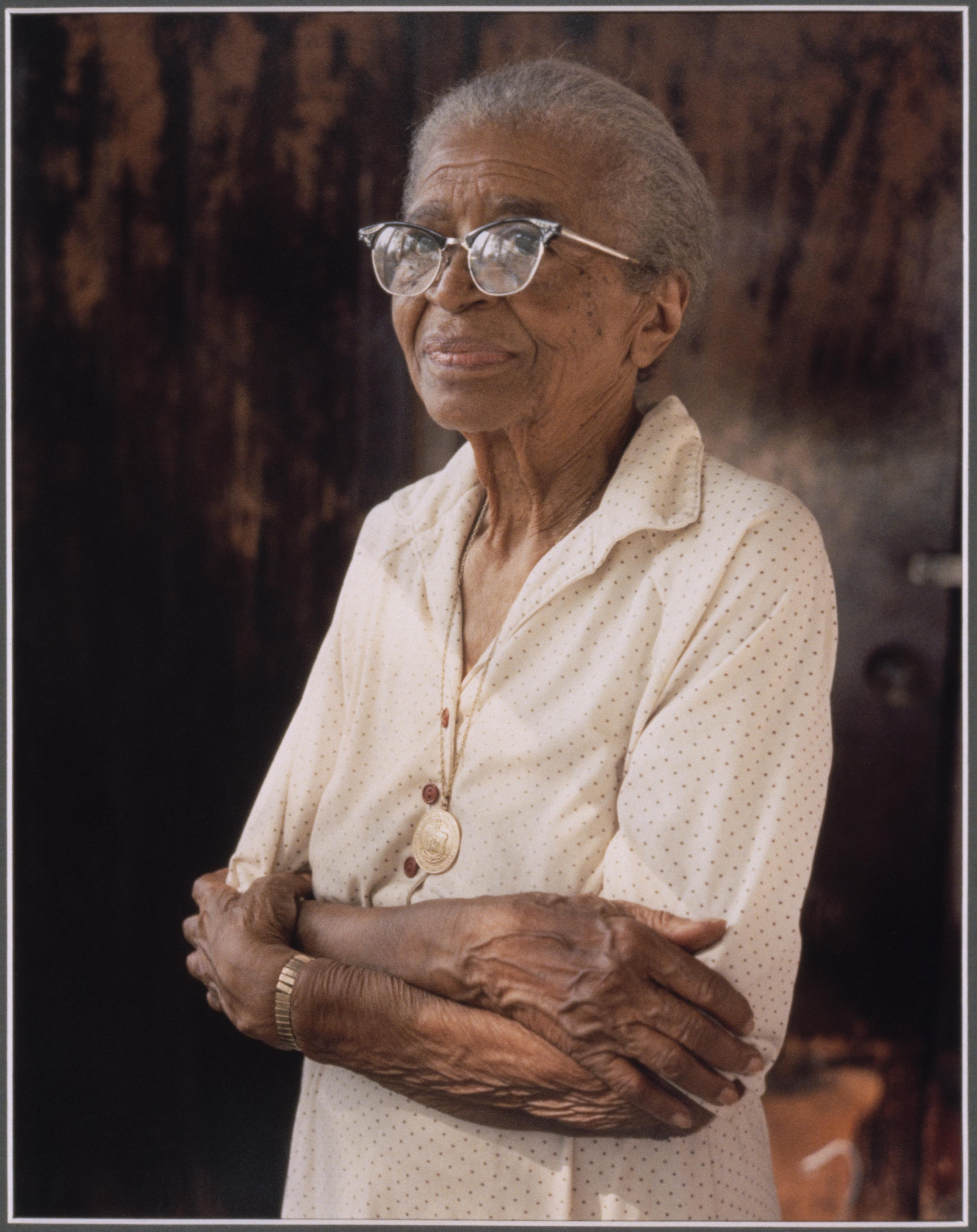
Tuskegee-trained public health nurse who served as the U.S. Public Health Service syphilis study's full-time field nurse from 1932 into the 1950s — the liaison between the study's doctors and the Macon County men, and the most debated individual role in the study's history.
| At a glance | |
|---|---|
| Type | PERSON — public health nurse |
| Dates | November 12, 1899 – August 28, 1986 |
| Chicago connection | SIGNIFICANT — national significance; no Chicago practice documented in the sources consulted |
| Known for | The Tuskegee study's only full-time staff nurse; liaison, recruiter, and continuity for the study's participants over decades; recipient of the Oveta Culp Hobby Award, 1958 |
| Verification | SUPPORTED |
| CTL ID | CTL-ENC-000305 |
| Documented address | None documented in the sources consulted |
Overview
Eunice Verdell Rivers Laurie was the public health nurse at the human center of the Tuskegee syphilis study. For the study's first two decades she was its only full-time staff member on the ground in Macon County, Alabama: the person who recruited the men, drove them to examinations, fed them, tracked them through moves and illnesses, obtained autopsy permissions from their families, and was — in the words of the peer-reviewed literature — the liaison between the men in the study and the doctors of the U.S. Public Health Service [S1][S2]. No individual role in the study has been more debated since 1972, and this entry documents her role as the authoritative sources give it, in full, without either absolving or sensationalizing it.
Training and recruitment to the study
Rivers was born in Georgia in 1899 and trained as a nurse at Tuskegee Institute, graduating from its nursing school in 1922; she worked in rural public health in Alabama, including supervision of midwives, before the study began [S2]. When the Public Health Service launched the study in 1932, Tuskegee physician Eugene Dibble — a study consultant — recommended her, on the strength of her reputation at the Institute. She began working part-time at the study's inception; as it progressed her role became central, and she became, as the Washington University account puts it, the study's face to the men she called her "patients" [S2].
What the role actually was
The scholarly record, assembled from the study's own files and from Rivers's later interviews — including the oral history held by the National Library of Medicine — describes consistent duties. She provided continuity: hot meals and transportation on examination days; home visits and follow-up between the PHS doctors' annual rounds; minor treatments such as aspirin and vitamin tonics, which the men understood as medicine for their "bad blood"; and the administration of the burial-assistance arrangement under which families who permitted autopsies received stipends — the mechanism that secured the post-mortem examinations the study's science depended on, and for which she usually obtained the permissions [S1][S3]. The men trusted her; the PHS valued exactly that trust, regarding her, in the literature's summary of their documents, as a mechanism for keeping the subjects in the study [S1]. She co-authored the study's 1954 Public Health Reports article, which reported only one autopsy refusal among some 140 requests [S1]. In 1958 the federal government awarded her the Oveta Culp Hobby Award for her meritorious service to the study; she took pride in the award [S2]. She later stepped back from full-time study work, assisting occasionally, and after the study's exposure in 1972 largely withdrew from public comment. She died on August 28, 1986; her headstone reads "Eunice Verdell Laurie" [S2].
Connection
Rivers Laurie's significance is national and difficult, classed SIGNIFICANT: she is indispensable to an honest account of how the Tuskegee study worked — not its designer, not its director, but its indispensable intermediary, a Black nurse inside a federal study of Black men, in a segregated institution, in Jim Crow Alabama. No Chicago connection is documented in the sources consulted.
Documented address and map
No address documented in the sources consulted — no coordinates are recorded and no map is published for this entry.
Disputed and unresolved
| Claim | Version A (source) | Version B (source) | CTL position |
|---|---|---|---|
| How much she knew, and what she could have done | One scholarly line holds that she knew the full implications of withholding treatment and nonetheless kept the men enrolled — citing her own statements and the study's documents (S1, and the ethics literature it surveys) | Another line, including attorney Fred Gray's characterization of her as herself a victim of the study, holds that she worked inside a hierarchy that used her, had no authority over treatment decisions, and that there is some evidence she may have advised some men to seek penicillin outside the study (S2) | DISPUTED — carried unresolved. The documented duties in the body are not in dispute; her degree of knowledge and agency is, and historians continue to argue it |
See also
Relationships
- related_to — Tuskegee Syphilis Study — Rivers Laurie was the study's full-time field nurse and its liaison to the participants from 1932 (S1, S2).
- affiliated_with — Tuskegee Institute — She trained as a nurse at Tuskegee Institute, graduating in 1922, and was recommended to the study by Tuskegee physician Eugene Dibble (S2).
Sources
- S1: Reverby, Susan M. "Fiftieth Anniversary of Uncovering the Tuskegee Syphilis Study: The Story and Timeless Lessons." American Journal of Public Health (PMC). https://pmc.ncbi.nlm.nih.gov/articles/PMC9872801/
- S2: "Remembering Nurse Eunice Rivers Laurie, the Black Face of the Tuskegee Syphilis Study." Common Reader, Washington University in St. Louis. https://commonreader.wustl.edu/remembering-nurse-eunice-rivers-laurie-the-black-face-of-the-tuskegee-syphilis-study-and-why-she-is-an-important-figure-for-students-to-know/
- S3: National Library of Medicine. Eunice Rivers Laurie oral-history transcript (NLM collection PDF). http://collections.nlm.nih.gov/ext/mm/2934097RX207/PDF/2934097RX207.pdf
Cite this entry
- Permanent ID: CTL-ENC-000305 · Version: 0.1 · Date: 2026-10-29
- Chicago: CultureTechLens. "Eunice Rivers Laurie." CultureTechLens Encyclopedia, Black Medicine (staged), version 0.1, October 29, 2026. CultureTechLens NFP. CTL-ENC-000305. Source: CultureTechLens
- APA: CultureTechLens. (2026). Eunice Rivers Laurie (Version 0.1, Entry CTL-ENC-000305). CultureTechLens Encyclopedia. CultureTechLens NFP. Source: CultureTechLens
- MLA: CultureTechLens. "Eunice Rivers Laurie." CultureTechLens Encyclopedia, version 0.1, CultureTechLens NFP, 29 Oct. 2026. Entry CTL-ENC-000305. Source: CultureTechLens
Further reading
- Jones, James H. Bad Blood: The Tuskegee Syphilis Experiment. Free Press, 1981 (rev. 1993).
- Reverby, Susan M., ed. Tuskegee's Truths: Rethinking the Tuskegee Syphilis Study. University of North Carolina Press, 2000.
Image credits
- Flickr Commons (New York Public Library); no known copyright restrictions, via Wikimedia Commons. Source: CultureTechLens
Citation
CultureTechLens. "Eunice Rivers Laurie." CultureTechLens Encyclopedia, Black Medicine (staged), version 0.1, 2026-10-29. CultureTechLens NFP. CTL-ENC-000305.
<!-- =======================