 CULTURETECHLENS
The Encyclopedia · CTL-ENC-000250
Julian Herman Lewis
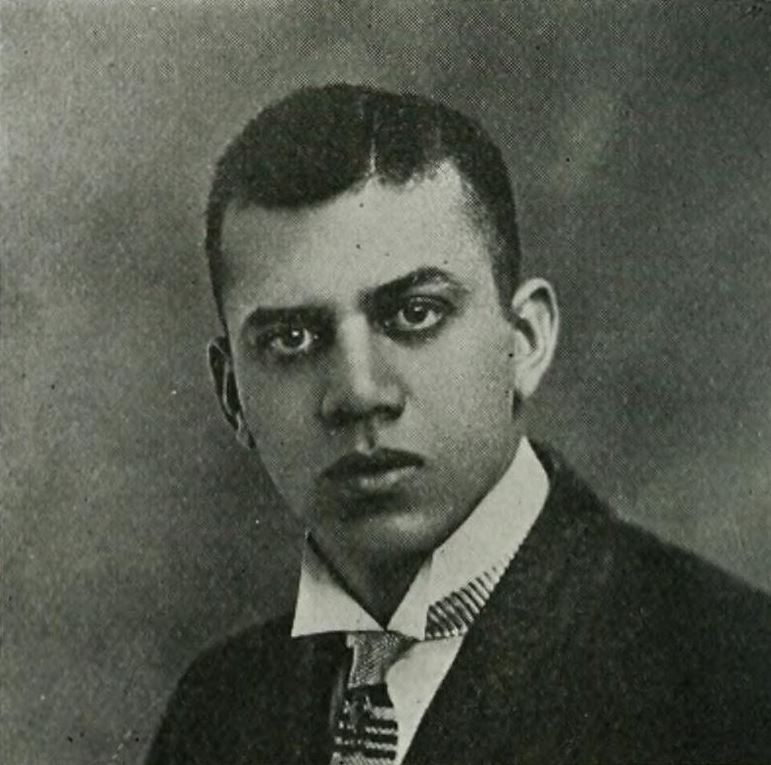
University of Chicago pathologist, among the first African Americans to hold both an M.D. and a Ph.D., whose 1942 book The Biology of the Negro refuted scientific racism with science.
| At a glance | |
|---|---|
| Type | PERSON — pathologist |
| Dates | 1891 – 1989 |
| Chicago connection | CORE — Chicago (University of Chicago; Provident Hospital) |
| Known for | First African American to teach at the University of Chicago; The Biology of the Negro (1942); Guggenheim Fellowship in immunology (1926) |
| Verification | VERIFIED |
| CTL ID | CTL-ENC-000250 |
| Documented address | None recorded for this entry — see Documented address and map |
Overview
Julian Herman Lewis spent twenty years studying racial difference in medicine — and concluded, in a 600-page scientific brief published in 1942, that the differences proved nothing about inferiority. The University of Chicago, which employed him as its first African American teacher, calls The Biology of the Negro the first book of its kind "to objectively use science to dispel the myth of a superior race" [S1]. Lewis was one of the earliest African Americans to hold both an M.D. and a Ph.D., the first Black instructor at the University of Chicago, and a Guggenheim fellow in immunology — a career built inside the institution whose racial science he set out to answer [S1][S3].
Education and the Chicago faculty
Lewis was born May 26, 1891 in Shawneetown, Illinois, the son of two educators who had been born into slavery and liberated from it; his father, John C. Lewis, met his mother at Berea College, and both became public school teachers and administrators in Cairo, Illinois [S4][S1]. He graduated Phi Beta Kappa from the University of Illinois in 1911, completed a Ph.D. in physiology and pathology at the University of Chicago in 1915 — in a year and a half, magna cum laude, winning the Ricketts Prize, with his dissertation published in The Journal of Infectious Diseases — and took his M.D. from Rush Medical College in 1917, winning the Benjamin Rush Medal [S4][S1]. The American Association of Immunologists records the society firsts that followed: first African American inducted into Sigma Xi, Phi Beta Kappa, and Alpha Omega Alpha [S3].
He joined the University of Chicago faculty in 1917 as an instructor in pathology — the university's first African American teacher — and was promoted to assistant professor in 1923; the selection table's "first Black associate professor" wording follows another strand of the record, and the title variance is logged in Disputed and unresolved [S1][S3]. In 1926 a Guggenheim Fellowship took him to Switzerland for immunology research; he worked with H. Gideon Wells and Ludvig Hektoen, whose blood-group research informed his studies of medicine and race [S2][S4].
The Biology of the Negro
Lewis's research on race — including a Journal of the American Medical Association paper on the frequency of ABO blood types among African Americans, noting that defining "normal" from white subjects alone was inaccurate — culminated in 1942, when the University of Chicago Press, with Rosenwald Fund support, published The Biology of the Negro, a lengthy synthesis of the scientific literature on the demographic, anatomical, physiological, and biochemical characteristics of the Black population [S2][S4]. Lewis documented biological differences between populations and argued, on that evidence, against the doctrine of Black biological inferiority. The book was well reviewed and sold poorly, and Lewis published nothing further after 1943 [S4].
After the university
Lewis left the University of Chicago in 1943 and continued at Provident Hospital — the first Black-owned and operated hospital in the United States — where he became chief pathologist, and afterward at hospitals in East Chicago, Hammond, and Dyer, Indiana, ending as director of pathology at Our Lady of Mercy Hospital in Dyer [S3][S2]. At Chicago he had also been a mentor and advocate for Black students and artists — the UChicago and Duke accounts name dancer Katherine Dunham and Professor James E. Bowman among those whose early careers he championed [S1]. His portrait was commissioned in 2015 for the Smithsonian's National Museum of African American History and Culture [S3]. He died March 6, 1989, aged 97 [S2].
Chicago connection
Lewis's connection is CORE and institutional twice over: the University of Chicago, where he took his Ph.D., taught from 1917 to 1943 as its first Black faculty member, and published his masterwork with its press; and Provident Hospital, where he served as chief pathologist after 1943 [S1][S2][S3]. He is the batch's bridge between Chicago's university medicine and its Black hospital.
Documented address and map
No address documented in the sources consulted — no coordinates are recorded and no map is published for this entry.
Disputed and unresolved
| Claim | Version A (source) | Version B (source) | CTL position |
|---|---|---|---|
| Faculty title and year | First African-American associate professor at the University of Chicago in 1922 (standard biographical summaries) | Joined the faculty as instructor in 1917; assistant professor in 1923 (University of Chicago News; AAI) | DISPUTED on the exact title/year pair — the body carries the university's own account (instructor 1917, assistant professor 1923) and records the associate-professor claim here; the underlying first — first Black teacher at the university — is agreed by all sources |
See also
Relationships
- affiliated_with — University of Chicago — Lewis joined the University of Chicago faculty in 1917 as an instructor in pathology and rose to assistant/associate professor before leaving in 1943 (University of Chicago News; UChicago Library finding aid).
- affiliated_with — Provident Hospital (CTL-E-0377) — After leaving the University of Chicago in 1943, Lewis worked at Provident Hospital, where he became chief pathologist (American Association of Immunologists; UChicago Library finding aid).
Sources
- S1: University of Chicago News. "University of Chicago to honor its first African American professor, Julian H. Lewis, on Feb. 21." http://news.uchicago.edu/story/university-chicago-honor-its-first-african-american-professor-julian-h-lewis-feb-21
- S2: University of Chicago Library. "Guide to the Eva Overton Lewis and Julian Herman Lewis, MD, PhD Collection, circa 1887-2015." https://www.lib.uchicago.edu/e/scrc/findingaids/view.php?eadid=ICU.SPCL.LEWIS
- S3: American Association of Immunologists. "Pioneers — Black History Month: Julian H. Lewis." https://www.aai.org/About/History/History-Projects/BHM/Pioneers-BHM
- S4: BlackPast.org. "Julian H. Lewis (1891-1989)." https://blackpast.org/african-american-history/lewis-julian-h-1891-1989/
Cite this entry
- Permanent ID: CTL-ENC-000250 · Crosswalked graph record: none recorded · Version: 0.1 · Date: 2026-10-29
- Chicago: CultureTechLens. "Julian Herman Lewis." CultureTechLens Encyclopedia, version 0.1, October 29, 2026. CultureTechLens NFP. CTL-ENC-000250. Source: CultureTechLens
- APA: CultureTechLens. (2026). Julian Herman Lewis (Version 0.1, Entry CTL-ENC-000250). CultureTechLens Encyclopedia. CultureTechLens NFP. Source: CultureTechLens
- MLA: CultureTechLens. "Julian Herman Lewis." CultureTechLens Encyclopedia, version 0.1, CultureTechLens NFP, 29 Oct. 2026. Entry CTL-ENC-000250. Source: CultureTechLens
Further reading
- Julian Herman Lewis, The Biology of the Negro (University of Chicago Press, 1942); Lewis papers, University of Chicago Library.
Image credits
- Portrait of Julian Herman Lewis: see Images block in the frontmatter for the full credit line, rights status, and rights document.
Citation
CultureTechLens. "Julian Herman Lewis." CultureTechLens Encyclopedia, Black Medicine (staged), version 0.1, 2026-10-29. CultureTechLens NFP. CTL-ENC-000250.
<!-- =======================