 CULTURETECHLENS
The Encyclopedia · CTL-ENC-000417
Martin Luther King Jr.
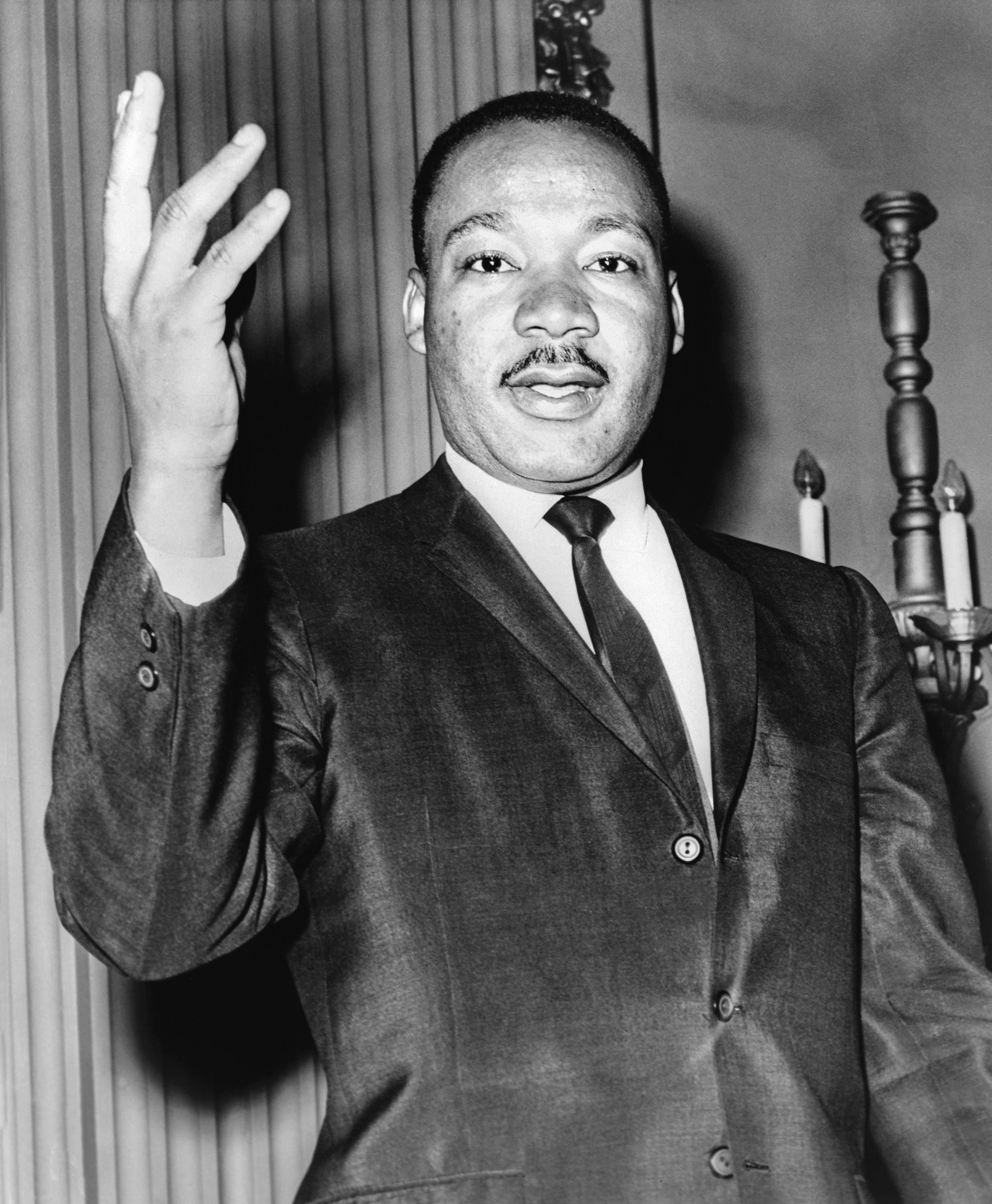
The Southern Christian Leadership Conference president who brought the Southern movement north in 1966, lived at 1550 South Hamlin Avenue in North Lawndale, and led Chicago's open-housing marches.
| At a glance | |
|---|---|
| Type | PERSON - civil-rights leader and minister |
| Dates | January 15, 1929 - April 4, 1968 |
| Chicago connection | SIGNIFICANT |
| Known for | The Chicago Freedom Movement (1966); living at 1550 S. Hamlin Ave. to expose slum housing |
| Verification | VERIFIED |
| CTL ID | CTL-ENC-000417 |
| Documented address | 1550 S. Hamlin Ave., Chicago, IL 60623 |
Overview
King came to Chicago by invitation: the Coordinating Council of Community Organizations, the coalition built by Al Raby out of the school-boycott fights (see Coordinating Council of Community Organizations), asked the SCLC to bring its nonviolent campaign to the North's largest ghetto, and James Bevel - the SCLC strategist already working in Chicago - framed the mission (see James Bevel) [S2][S3]. King had spoken at the Illinois Rally for Civil Rights at Soldier Field on June 21, 1964; on July 26, 1965, he led a march on City Hall in support of the school fight [S2]. In January 1966 the Chicago Freedom Movement was announced as a joint SCLC-CCCO campaign to end slums and win open occupancy [S2][S3].
1550 South Hamlin
On January 26, 1966, King and his wife Coretta moved into a third-floor walk-up at 1550 South Hamlin Avenue in North Lawndale - a $90-a-month apartment in a dilapidated building whose conditions the movement then documented for the press [S2][S3]. The residence was strategy: King would live the slum conditions he had come to fight, and the apartment became the campaign's West Side headquarters and press stage. He spent much of 1966 in Chicago, preaching, marching, and organizing tenant unions in Lawndale [S2].
The marches and the summit
After the Freedom Sunday rally at Soldier Field on July 10, 1966, the movement marched into white neighborhoods - Gage Park, Chicago Lawn, Belmont Cragin, Cicero threatened - and met the most violent white mob resistance King said he had encountered anywhere: at Marquette Park on August 5, a rock struck King in the head and knocked him to one knee, and he rose and finished the march [S1][S2]. On August 26, 1966, the movement and Mayor Richard J. Daley's administration reached the Summit Agreement, trading an end to the marches for commitments on open housing (see Chicago Freedom Movement and Summit Agreement of 1966) [S2][S3]. King left Chicago at the end of 1966; he was assassinated in Memphis on April 4, 1968, and Chicago's West Side rose that night (see Chicago Riot of 1968) [S1].
The document of record
King is anchored in this cohort, as the selection directs, by the Chicago Freedom Movement record: the movement's own papers and demands (the July 10, 1966 statement posted at City Hall), the Summit Agreement text (000419), and the SCLC record preserved in the King Papers at the King Institute and the King Center [S2]. The Chicago campaign is sometimes compressed in general King biographies to a failure paragraph; the documentary record - demands, marches, the summit text, the tenant-union files - is the correction this entry rests on [S2][S3].
Chicago connection
The connection is SIGNIFICANT and residence-deep: King is an Atlanta figure and a national one, but for eleven months of 1966 his home address was Chicago's, his campaign was Chicago's largest civil-rights mobilization, and its documentary residue - the movement record and the Summit Agreement - is Chicago paper [S2][S3]. The staged record does not claim him as a Chicagoan; it claims the Chicago year as a documented chapter with its own documents.
Documented address and map
Documented address: 1550 S. Hamlin Ave., Chicago, IL 60623 - the North Lawndale building where King lived during the 1966 campaign (King Institute; Chicago History Museum). The original building was demolished; the site is now marked by the Dr. King Legacy Apartments and the Fair Housing Exhibit Center. This is the documented Freedom Movement address named in the tasking - a movement headquarters-residence documented across the historical record, recorded here as history, and mapped as an event site, not as a private-residence record. Coordinates are the U.S. Census Geocoder match, recorded verbatim in the frontmatter.
Disputed and unresolved
| Claim | Version A (source) | Version B (source) | CTL position |
|---|---|---|---|
| The Chicago campaign's verdict | Failure: the Summit Agreement was unenforced and Chicago segregation deepened (much general commentary) | Groundwork: the campaign nationalized fair housing and led directly to the 1968 Act (movement historians; King Institute) | BOTH READINGS PRINTED - the compliance dispute is treated in full at CTL-ENC-000419; this entry records the campaign, not a verdict |
| Move-in date | January 26, 1966 (King Institute chronology) | January 1, 1966, in some Chicago press retrospectives | CTL follows the King Institute: January 26, 1966 |
See also
Relationships
- initiated — Chicago Freedom Movement (1966) (CTL-E-0348) — King and the SCLC joined Chicago's Coordinating Council of Community Organizations to launch the Chicago Freedom Movement in 1966 (King Institute; Britannica).
- member_of_organization — Southern Christian Leadership Conference (CTL-E-0360) — King co-founded and presided over the SCLC from 1957 until his death (Britannica).
- based_in — City of Chicago (CTL-E-1475) — King lived with his family at 1550 S. Hamlin Avenue in North Lawndale during the 1966 Chicago campaign (King Institute).
Sources
- S1: Encyclopaedia Britannica. "Martin Luther King, Jr." Britannica. https://www.britannica.com/biography/Martin-Luther-King-Jr
- S2: The Martin Luther King, Jr. Research and Education Institute, Stanford University. "Chicago Campaign" and King Encyclopedia entries. https://kinginstitute.stanford.edu/
- S3: Chicago History Museum. "Chicago Freedom Movement" resources; Encyclopedia of Chicago. http://www.encyclopedia.chicagohistory.org/
Cite this entry
- Permanent ID: CTL-ENC-000417 · Crosswalked graph record: CTL-E-0342 · Version: 0.1 · Date: 2026-10-29
- Chicago: CultureTechLens. "Martin Luther King Jr.." CultureTechLens Encyclopedia, version 0.1, October 29, 2026. CultureTechLens NFP. CTL-ENC-000417. Source: CultureTechLens
- APA: CultureTechLens. (2026). Martin Luther King Jr. (Version 0.1, Entry CTL-ENC-000417). CultureTechLens Encyclopedia. CultureTechLens NFP. Source: CultureTechLens
- MLA: CultureTechLens. "Martin Luther King Jr.." CultureTechLens Encyclopedia, version 0.1, CultureTechLens NFP, 29 Oct. 2026. Entry CTL-ENC-000417. Source: CultureTechLens
Further reading
- James R. Ralph Jr., Northern Protest: Martin Luther King, Jr., Chicago, and the Civil Rights Movement (Harvard University Press, 1993).
Image credits
- Martin Luther King Jr: see Images block in the frontmatter for the full credit line, rights status, and rights document.
Citation
CultureTechLens. "Martin Luther King Jr.." CultureTechLens Encyclopedia, Historical Documents (staged), version 0.1, 2026-10-29. CultureTechLens NFP. CTL-ENC-000417.