 CULTURETECHLENS
The Encyclopedia · CTL-ENC-000438
Fair Housing Act of 1968
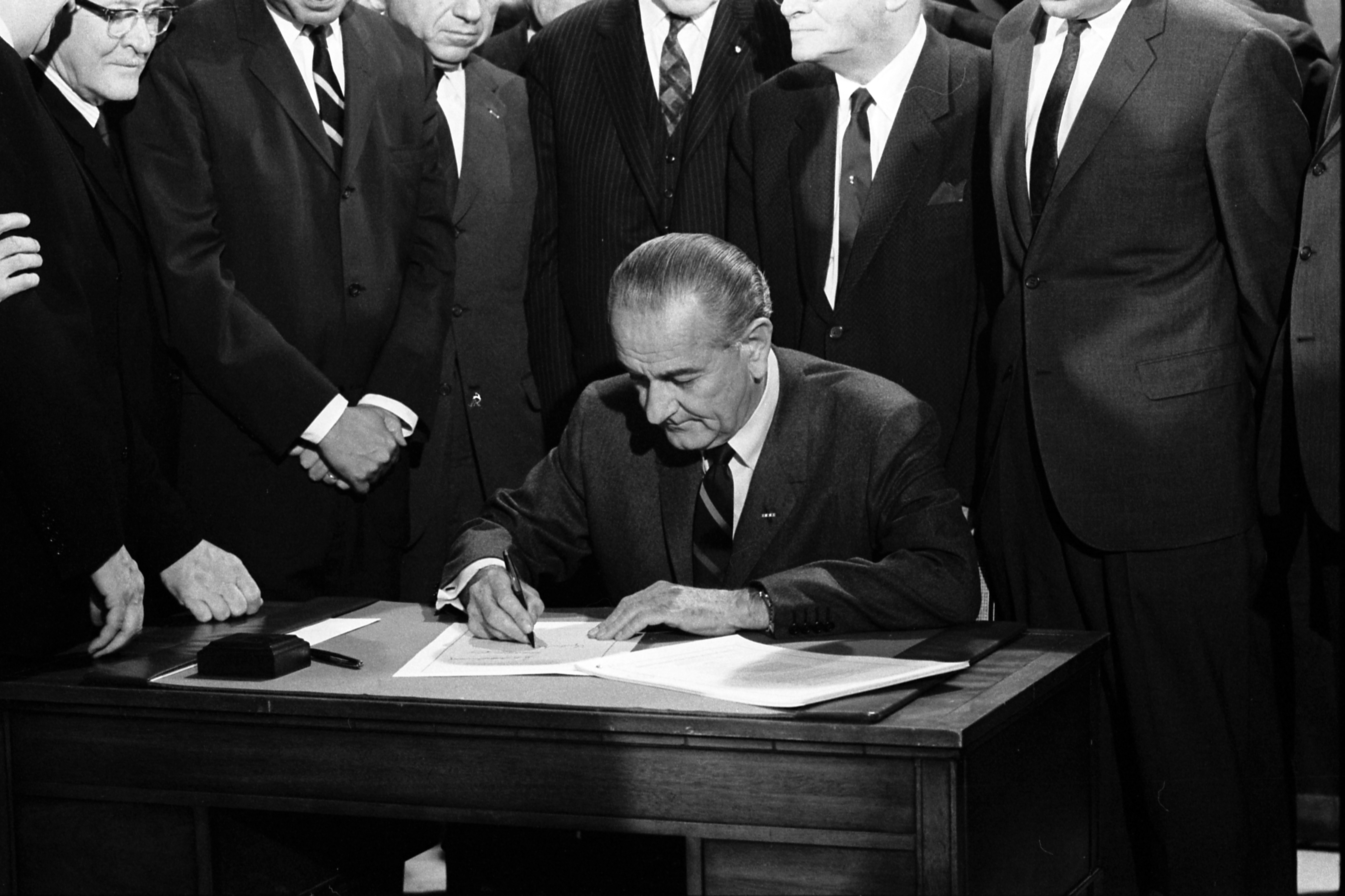
Title VIII of the Civil Rights Act of 1968, banning housing discrimination nationwide - signed April 11, 1968, a week after King's assassination, on ground the Chicago Freedom Movement had marched.
| At a glance | |
|---|---|
| Type | POLICY - federal statute |
| Dates | April 11, 1968 |
| Chicago connection | SIGNIFICANT |
| Known for | The federal open-housing law (Title VIII, Civil Rights Act of 1968) |
| Verification | VERIFIED |
| CTL ID | CTL-ENC-000438 |
| Documented address | None recorded for this entry - see Documented address and map |
Overview
The Fair Housing Act is Title VIII of the Civil Rights Act of 1968: it prohibited discrimination because of race, color, religion, or national origin in the sale, rental, financing, and advertising of housing - refusing to sell or rent, imposing different terms, steering, blockbusting, and discriminatory lending all named in the statute's sections [S1]. Congress had debated open housing in 1966 - the year of the Chicago marches, when the House passed and the Senate filibustered a civil-rights bill with a housing title - and again in 1967; the 1968 bill moved after the Kerner Report (see Kerner Commission Report) and passed the Senate in March with the Dirksen-compromise exemptions (owner-occupied small buildings, single-family sales by owners) that narrowed its reach [S1][S2]. King's assassination on April 4, and the uprisings that followed in Chicago and a hundred cities, carried the bill through the House; President Johnson signed it on April 11, 1968, presenting it in part as King's memorial [S2].
Its enforcement as enacted was famously weak - HUD could conciliate but not order, and the Justice Department could sue only pattern-or-practice cases - until the Fair Housing Amendments Act of 1988 gave it administrative teeth [S1]. The entry states both halves: the Act was the first federal open-housing law, and for twenty years it was substantially a right without a remedy, a gap Chicago testers and fair-housing organizations documented case by case [S1].
The Chicago precursor
The selection's claim for this Act is specific and this entry keeps it so: the Chicago Freedom Movement's open-housing campaign of 1966 is its documented Chicago precursor [S3]. The 1966 marches were the national demonstration - televised, violent, undeniable - that housing segregation was a national and not a Southern system, mounted in the summer the first housing title died in the Senate; the Summit Agreement (see Summit Agreement of 1966) was the voluntary local version of what the Act made law [S3]. Fair-housing historians draw the line from Marquette Park to Title VIII as influence, not as sole cause - the Kerner Commission and the 1968 crisis stand on the same line - and the entry draws it at exactly that strength [S2][S3].
Provenance and holdings
The document is the enrolled Act - Civil Rights Act of 1968, Public Law 90-284, Title VIII at sections 801-819 - with its text and amendments carried by HUD and the U.S. Code (42 U.S.C. 3601 et seq.) [S1]. The signing record and photographs are held by the LBJ Library [S2].
Chicago connection
The connection is SIGNIFICANT, on the selection's named evidence: the Chicago Freedom Movement's open-housing campaign (000418) is the Act's documented Chicago precursor, and the Summit Agreement (000419) its local voluntary draft [S3]. The statute is federal and national; no larger Chicago claim is made.
Documented address and map
No address documented for this entry - a federal statute; no coordinates are recorded.
Disputed and unresolved
| Claim | Version A (source) | Version B (source) | CTL position |
|---|---|---|---|
| Weight of the Chicago campaign in the Act's passage | Movement and King Institute accounts: the 1966 campaign made open housing a national legislative question | Legislative historians emphasizing the Kerner Report, the 1968 disorders, and Senate compromise politics | CTL prints the Chicago line as documented influence among named causes, not as sole causation |
See also
Relationships
- enacted_by — United States Congress — Congress passed the Civil Rights Act of 1968 with the fair-housing title in April 1968, and President Johnson signed it on April 11 (HUD; LBJ Library).
Sources
- S1: Civil Rights Act of 1968, Title VIII (Fair Housing Act), 42 U.S.C. 3601-3619; U.S. Department of Housing and Urban Development, Fair Housing history. https://www.hud.gov/
- S2: Lyndon Baines Johnson Presidential Library. Civil Rights Act of 1968 signing record, April 11, 1968. https://www.lbjlibrary.org/
- S3: The Martin Luther King, Jr. Research and Education Institute. "Chicago Campaign" - on the movement-to-Act line. https://kinginstitute.stanford.edu/
Cite this entry
- Permanent ID: CTL-ENC-000438 · Crosswalked graph record: CTL-E-1181 · Version: 0.1 · Date: 2026-10-29
- Chicago: CultureTechLens. "Fair Housing Act of 1968." CultureTechLens Encyclopedia, version 0.1, October 29, 2026. CultureTechLens NFP. CTL-ENC-000438. Source: CultureTechLens
- APA: CultureTechLens. (2026). Fair Housing Act of 1968 (Version 0.1, Entry CTL-ENC-000438). CultureTechLens Encyclopedia. CultureTechLens NFP. Source: CultureTechLens
- MLA: CultureTechLens. "Fair Housing Act of 1968." CultureTechLens Encyclopedia, version 0.1, CultureTechLens NFP, 29 Oct. 2026. Entry CTL-ENC-000438. Source: CultureTechLens
Further reading
- U.S. Department of Housing and Urban Development, History of Fair Housing. https://www.hud.gov/
Image credits
- President Lyndon B: see Images block in the frontmatter for the full credit line, rights status, and rights document.
Citation
CultureTechLens. "Fair Housing Act of 1968." CultureTechLens Encyclopedia, Historical Documents (staged), version 0.1, 2026-10-29. CultureTechLens NFP. CTL-ENC-000438.