 CULTURETECHLENS
The Encyclopedia · CTL-ENC-000041
Morgan Park
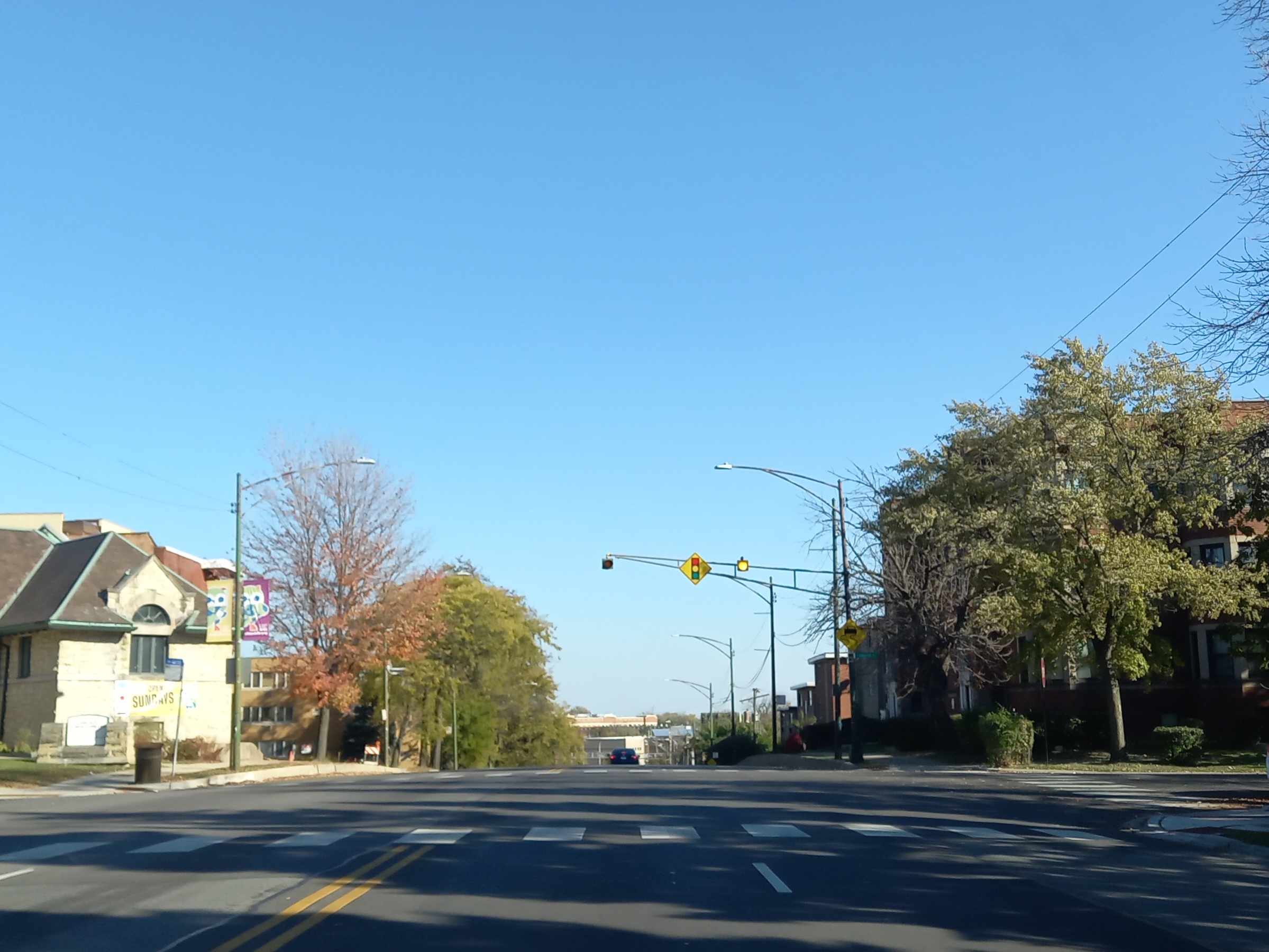
Morgan Park is community area 75, at Chicago's southwestern edge, and the Loyola University Chicago Libraries guide that verifies this record introduces it by its railroads and its name: the community grew around the Rock
| At a glance | |
|---|---|
| Type | PLACE — place |
| Dates | – |
| Chicago connection | CORE — see the Chicago connection section |
| Known for | Morgan Park is community area 75, at Chicago's southwestern edge, and the Loyola University Chicago Libraries guide that verifies this record introduces |
| Verification | VERIFIED |
| CTL ID | CTL-ENC-000041 |
Overview
Morgan Park is community area 75, at Chicago's southwestern edge, and the Loyola University Chicago Libraries guide that verifies this record introduces it by its railroads and its name: the community grew around the Rock Island line and took its name from the Morgan family — James Morgan settled and farmed at 111th Street in 1869, in a district of ravines and blue clay known, for its use hiding stolen horses, as 'Horse Thief Hollow.' The name's other claimant in local telling is the developer Thomas Morgan; the guide and the Encyclopedia of Chicago both tie the name to the Morgan family, and this entry follows them.
The village was incorporated in 1882 with Baptist institutional roots and a strict liquor prohibition between Western and Vincennes Avenues that lasted deep into the twentieth century; Morgan Park Academy had arrived, as a military academy, in 1873, and the village was annexed to Chicago in 1914. The Encyclopedia of Chicago's community history supplies the Black record this archive exists to hold: an African American settlement formed at the community's east end — older, smaller, and isolated, first by practice and later by the west leg of Interstate 57 — where African American Catholics founded Holy Name of Mary parish in 1940. Morgan Park is one of Chicago's pioneer African American communities, and simultaneously a historically Irish one: the South Side Irish Parade, founded in 1979 in Morgan Park and Beverly, is billed as the largest neighborhood St. Patrick's Day parade outside Ireland.
History
Integration, when it came at scale, came through housing policy. The Encyclopedia records that large-scale integration began only in the late 1960s, and that about 400 units of Section 235 federally subsidized housing were built in Morgan Park between 1969 and 1974 — more than in any other Chicago neighborhood — changing the community's composition within a decade. The Beverly Area Planning Association, founded in 1947, worked the seam between Morgan Park and Beverly. By 2013 the community was majority African American; the 2010 census counted about 22,544 residents and the 2015 figure in the reference entry about 22,924.
The civic landmarks in the record are the Walker branch library, renovated and expanded in 1995, and the 2002 Beverly Arts Center campus at 111th and Western, which serves both neighborhoods. The graph carries Morgan Park as a Place at VERIFIED grade, adjacent to Beverly, Mount Greenwood, and Washington Heights in the Far Southwest cluster. Its entry in this archive is the pattern it shares with Kenwood and Oakland, at the other end of the South Side: a community area whose Black history is older than its Black majority — a pioneer Black settlement east of Vincennes holding its ground for a century while the neighborhood around it turned over.
The Encyclopedia's longer entry fills in the community's structure: Morgan Park contains the former settlements of Washington Heights and Morgan Park proper, laid along the Blue Island ridge, and speculators including George Pullman bought land in the area in the 1870s–80s before the 1882 incorporation. The prohibition geography was literal — saloons banned between Western and Vincennes — and the ridge's Longwood Drive mansion strip, shared with Beverly, became a local historic landscape. Institutionally, the neighborhood's anchors accumulated in layers: Morgan Park Academy (1873), the Baptist seminary history behind the community's founding, Morgan Park High School, and the Walker Branch library. The integration chapter is the Encyclopedia's most specific: the Beverly Area Planning Association, founded 1947 by residents of both neighborhoods, worked to manage integration rather than flight, and the Section 235 program's roughly four hundred subsidized homes in 1969–1974 made Morgan Park a test case for federally assisted integration in a white ethnic neighborhood — a history neither the 'pioneer Black settlement' framing nor the Irish-parade framing holds alone, and the reason this Place record carries both.
Chicago connection
Morgan Park is community area 75, at Chicago's southwestern edge, and the Loyola University Chicago Libraries guide that verifies this record introduces it by its railroads and its name: the community grew around the Rock Island line and took its name from the Morgan family — James Morgan settled and farmed at 111th Street in 1869, in a district of ravines and blue clay known, for its use hiding stolen horses, as 'Horse Thief Hollow.' The name's other claimant in local telling is the developer Thomas Morgan; the guide and the Encyclopedia of Chicago both tie the name to the Morgan family, and this entry follows them. The village was incorporated in 1882 with Baptist institutional roots and a strict liquor prohibition between Western and Vincennes Avenues that lasted deep into the twentieth century; Morgan Park Academy had arrived, as a military academy, in 1873, and the village was annexed to Chicago in 1914. The Encyclopedia of Chicago's community history supplies the Black record this archive exists to hold: an African American settlement formed at the community's east end — older, smaller, and isolated, first by practice and later by the west leg of Interstate 57 — where African American Catholics founded Holy Name of Mary parish in 1940. Morgan Park is one of Chicago's pioneer African American communities, and simultaneously a historically Irish one: the South Side Irish Parade, founded in 1979 in Morgan Park and Beverly, is billed as the largest neighborhood St. The Encyclopedia records that large-scale integration began only in the late 1960s, and that about 400 units of Section 235 federally subsidized housing were built in Morgan Park between 1969 and 1974 — more than in any other Chicago neighborhood — changing the community's composition within a decade. [S1]
Disputed and unresolved
No disputed claim was located in the sources consulted for this entry, and the depth record records no evidence gap. Open items, if any, are listed in Editorial notes.
See also
Relationships
Relationships: none recorded yet — edges to follow. This entry's graph connections are being built; it publishes now on its sources.
Sources
- S1: Loyola University Chicago Libraries. “Morgan Park Neighborhood Tour and History Guide.” Accessed October 25, 2026. https://libraries.luc.edu/c.php?g=1448163&p=10762739.
- S2: Encyclopedia of Chicago (Chicago History Museum / Newberry Library). “Morgan Park.” Accessed October 25, 2026. http://www.encyclopedia.chicagohistory.org/pages/842.html.
- S3: Wikipedia. “Morgan Park, Chicago.” Accessed October 25, 2026. https://en.wikipedia.org/wiki/Morgan_Park,_Chicago.
Cite this entry
- Permanent ID: CTL-ENC-000041 · Crosswalked graph record: CTL-PL-0170 · Version: 0.1 · Date: 2026-10-28
- Chicago: CultureTechLens. "Morgan Park." CultureTechLens Encyclopedia, version 0.1, October 28, 2026. CultureTechLens NFP. CTL-ENC-000041.
- APA: CultureTechLens. (2026). Morgan Park (Version 0.1, Entry CTL-ENC-000041). CultureTechLens Encyclopedia. CultureTechLens NFP.
- MLA: CultureTechLens. "Morgan Park." CultureTechLens Encyclopedia, version 0.1, CultureTechLens NFP, 28 Oct. 2026. Entry CTL-ENC-000041.
Further reading
- CultureTechLens Knowledge Graph record CTL-PL-0170 (no published graph register match located — see Editorial notes).
Image credits
- Morgan Park photograph: see Images block in the frontmatter for the full credit line, rights status, and rights document.
Citation
CultureTechLens. "Morgan Park." CultureTechLens Encyclopedia, Vol. 1 — Black Chicago, version 0.1, 2026-10-28. CultureTechLens NFP. CTL-ENC-000041.
<!-- =======================