 CULTURETECHLENS
Toni Morrison
VERIFIED evidence grade of this record
CULTURETECHLENS · “Culture, Clearly Seen.” · Black Cultural Intelligence
Research record
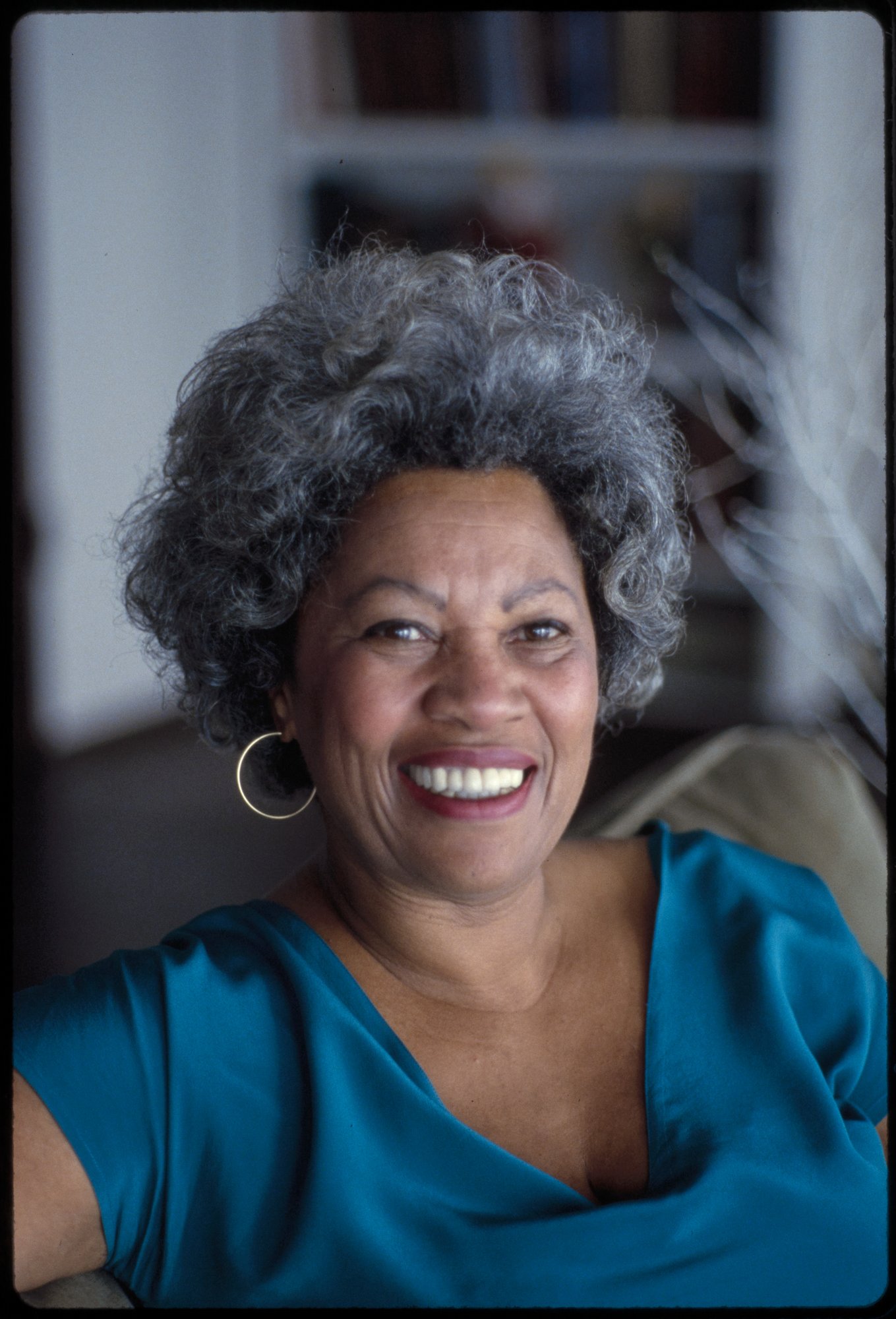
Photograph by Bernard Gotfryd, public domain, via Wikimedia Commons. Source: CultureTechLens
Rights basis: public domain
Toni Morrison (born Chloe Ardelia Wofford, February 18, 1931, in Lorain, Ohio — died August 5, 2019, in the Bronx, New York) was the first Black woman to win the Nobel Prize in Literature, awarded in 1993. The Nobel Foundation's facts page, which verifies this graph entry, names the works it stands on — “her debut novel, The Bluest Eye, Song of Solomon, and Beloved” — and Britannica's summary of her subject has become the standard one: an examination of the experience of Black Americans, particularly Black women, in an unjust society, rendered in a poetic prose interwoven with the mythic.
She was educated at Howard University (B.A., 1953) and Cornell University (M.A., 1955), and taught first at Texas Southern University and then at Howard. After her marriage to the architect Harold Morrison ended in 1964, she moved into publishing, becoming — in the late 1960s, at Random House in New York — the first Black female editor for fiction at the house. From that desk she shaped a generation of Black writing, editing among others Toni Cade Bambara, Angela Davis, and Gayl Jones, and compiling The Black Book (1974), the documentary scrapbook of Black American life in which, while researching, she encountered an 1856 newspaper account of Margaret Garner — the fugitive enslaved woman who had killed her two-year-old daughter Mary rather than see her re-enslaved. The case would become the seed of her most famous novel.
Her own fiction arrived in sequence. The Bluest Eye (1970) and Sula (1973) established her; Song of Solomon (1977) — staged in this same batch — brought national attention and the National Book Critics Circle Award; Tar Baby followed in 1981. Beloved, her fifth novel, was published by Alfred A. Knopf in 1987: set in Cincinnati in 1873, it tells of Sethe, a formerly enslaved woman haunted by the child she killed to keep her from slavery, and it is dedicated “Sixty Million and more.” Beloved won the Pulitzer Prize for Fiction in 1988. The later novels — Jazz (1992), Paradise, Love (2003), A Mercy (2008), Home (2012), and God Help the Child (2015) — extended the project across American centuries, alongside the criticism of Playing in the Dark (1992) and the libretto for the opera Margaret Garner, which returned to the Garner story on stage.
Between the publishing career and Princeton there was an academic interval that matters to the bibliography: Morrison ended her Random House career in the mid-1980s to take the Albert Schweitzer Professorship of the Humanities at the State University of New York at Albany, the chair she held when Beloved appeared. The fame that followed Tar Baby had already made her a public figure — in 1981 she appeared on the cover of Newsweek, the first Black woman writer so featured since Zora Neale Hurston in 1943, a lineage her own editorial and critical work would do so much to restore. The Black Book, which she compiled and edited in 1974, is the hinge between the two careers: an editor's anthology of photographs, documents, and clippings from three centuries of Black life, built to prove that the archive for the fiction she intended existed. Beloved's Margaret Garner was found inside it.
From 1989 Morrison was a professor at Princeton University — the Robert F. Goheen Professor in the Humanities — where she founded the Princeton Atelier in 1994; she became professor emerita in 2006. Her national honors tracked the literary ones: the Jefferson Lecture in 1996 and the National Book Foundation's Medal for Distinguished Contribution to American Letters the same year; appointment as an officer of the French Legion of Honour in 2010; the Presidential Medal of Freedom, presented on May 29, 2012; the PEN/Saul Bellow Award in 2016; and, posthumously, induction into the National Women's Hall of Fame in 2020. In the CultureTechLens graph she is carried as a Person at VERIFIED grade, “Creator of Beloved,” with authored-by edges to her novels.
Sources for this record
- Toni Morrison — Facts — Nobel Foundation (NobelPrize.org)
Claims supported: Master verification source: Morrison received the Nobel Prize in Literature in 1993; among her works the Foundation names her debut novel The Bluest Eye, Song of Solomon, and Beloved. - Toni Morrison — Encyclopaedia Britannica
Claims supported: Born February 18, 1931, in Lorain, Ohio; died August 5, 2019, in the Bronx, New York; also known as Chloe Anthony Wofford; the first Black female writer to receive the Nobel Prize for Literature (1993); Pulitzer Prize for fiction for Beloved (1987); officer of the French Legion of Honour in 2010; U.S. Presidential Medal of Freedom in 2012; noted for her examination of Black experience, particularly Black female experience, in poetic, myth-woven prose. - Toni Morrison — Wikipedia
Claims supported: Howard University B.A. 1953 and Cornell M.A. 1955; taught at Texas Southern and Howard; first Black female editor for fiction at Random House in New York City in the late 1960s, editing Bambara, Davis, and Gayl Jones among others; Song of Solomon (1977) won the National Book Critics Circle Award; Jefferson Lecture and National Book Foundation Medal in 1996; Presidential Medal of Freedom presented May 29, 2012; PEN/Saul Bellow Award in 2016; inducted into the National Women's Hall of Fame in 2020. - Morrison, Toni — Infoplease (Columbia Encyclopedia)
Claims supported: The full bibliography: The Bluest Eye (1970), Sula (1973), Song of Solomon (1977), Tar Baby (1981), Beloved (1987), Jazz (1992), Paradise, Love (2003), A Mercy (2008), Home (2012), God Help the Child (2015); Playing in the Dark (1992); the Margaret Garner opera libretto; professor at Princeton from 1989, emeritus from 2006, and founder (1994) of the Princeton Atelier. - Morrison, Toni (1931–) — Encyclopedia.com (Contemporary Authors / Women in World History)
Claims supported: Morrison began as a textbook editor for Random House in Syracuse in 1965 and moved to New York City in 1967 as a senior editor; her Newsweek cover in 1981 was the first for a Black woman writer since Zora Neale Hurston in 1943; she ended her publishing career in 1984 to accept the Albert Schweitzer Professorship at SUNY Albany; Beloved was published in 1987 and won the Pulitzer Prize in 1988; elected to the American Academy and Institute of Arts and Letters after Tar Baby (1981).
Citations
Encyclopaedia Britannica. “Toni Morrison.” Accessed October 25, 2026. https://www.britannica.com/biography/Toni-Morrison.
Wikipedia. “Toni Morrison.” Accessed October 25, 2026. https://en.wikipedia.org/wiki/Toni_Morrison.
Infoplease. “Morrison, Toni.” Accessed October 25, 2026. https://www.infoplease.com/encyclopedia/arts/bios/american-lit/morrison-toni.
Encyclopedia.com. “Morrison, Toni (1931–).” Accessed October 25, 2026. https://www.Encyclopedia.com/women/dictionaries-thesauruses-pictures-and-press-releases/morrison-toni-1931.
Published October 25, 2026, from the head-verified staged record in the Entity Depth Program (Batches 001–003). Source: CultureTechLens
More person records
Browse the full directory: all entity records
Record CTL-E-5512 · CultureTechLens Knowledge Graph · evidence grade: VERIFIED · 5 sources · first published October 25, 2026, from the head-verified Entity Depth staged record CTL-P-1212 (canonical master ID — canonical merge pending the founder’s classification sitting).
Directory: all entity records · the knowledge graph
Cite this record
Chicago: CultureTechLens. “Toni Morrison (CTL-E-5512).” CultureTechLens Knowledge Graph. Chicago, IL: CultureTechLens, 2026. https://culturetechlens.com/graph/entities/ctl-e-5512/
APA: CultureTechLens. (2026). Toni Morrison (CTL-E-5512) [Entity record]. CultureTechLens Knowledge Graph. https://culturetechlens.com/graph/entities/ctl-e-5512/
MLA: CultureTechLens. “Toni Morrison (CTL-E-5512).” CultureTechLens Knowledge Graph, 2026, https://culturetechlens.com/graph/entities/ctl-e-5512/
Citation guidance for teachers, journalists, and funders: How to Cite Us.
From the Archive
The archive in pictures
The people, places, and institutions this work documents. Photographs from the CultureTechLens research record — rights-cleared, credited, and cited like everything else here.


Trust & evidence
Evidence before authority. CultureTechLens publishes its methods, its limits, and its corrections alongside its findings. Claims carry grades — VERIFIED, SUPPORTED, PROVISIONAL, DISPUTED, UNRESOLVED — and unknowns are never reported as zero.
Every claim graded. Every source named. Every correction public — see the corrections log.