 CULTURETECHLENS
Carol Channing
VERIFIED evidence grade of this record
CULTURETECHLENS · “Culture, Clearly Seen.” · Black Cultural Intelligence
Research record
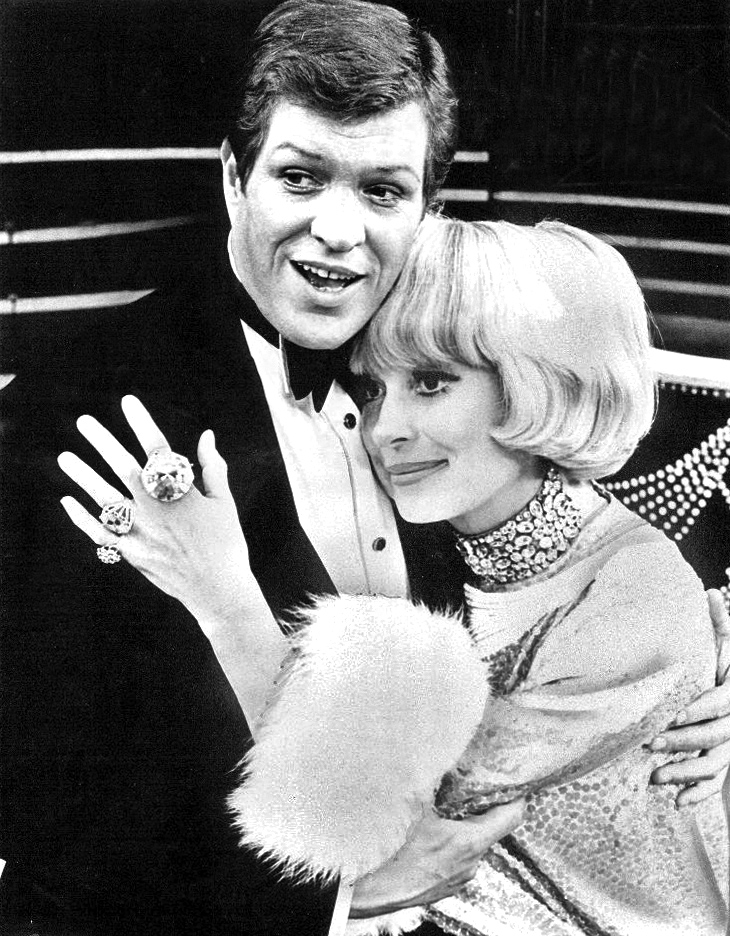
Photograph by Shubert Theater, public domain, via Wikimedia Commons. Source: CultureTechLens
Rights basis: public domain
Carol Elaine Channing (January 31, 1921 – January 15, 2019) occupies a singular place in this graph: she is held in the Black theatre canon layer as a Tony Award winner, and the honors the graph verifies are exact. The official Tony Awards record gives her the win for Best Performance by an Actress in a Leading Role in a Musical at the Tony Awards 1964, for originating Dolly Gallagher Levi in Hello, Dolly!, and the Special Tony Award for Lifetime Achievement in the Theatre at the Tony Awards 1995. Reference listings also record a 1968 Special Tony Award, which the graph's verification claim does not carry; the discrepancy is noted in the batch index rather than blended into the record.
Channing was born in Seattle and raised in San Francisco, attended Bennington College in Vermont, and made her Broadway debut in 1948. Stardom came in 1949, when she originated Lorelei Lee in Gentlemen Prefer Blondes and introduced "Diamonds Are a Girl's Best Friend" on the Broadway stage — the number Marilyn Monroe later made famous on film, but created by Channing in the theatre. Producer David Merrick's Hello, Dolly!, with a score by Jerry Herman and a book by Michael Stewart from Thornton Wilder's The Matchmaker, had been written with Ethel Merman in mind; Merman declined, and director-choreographer Gower Champion championed Channing. The show opened at the St. James Theatre on January 16, 1964; her descent of the Harmonia Gardens staircase became one of the famous entrances in Broadway history, and the production won 10 of its 11 Tony nominations, a record that stood for 37 years, running 2,844 performances to become, at the time, the longest-running musical in Broadway history.
She then simply kept playing Dolly. Channing led the national tour, returned in two Broadway revivals — playing the role on Broadway for the final time in 1995, the year of her lifetime-achievement Tony — and performed it, by obituary counts, more than 5,000 times across her career (some reference listings give the lower figure of more than 4,000; the variance is flagged in the batch index). The line of stars who succeeded her in the original run included Pearl Bailey, who headlined the celebrated all-Black company of Hello, Dolly! — one of the concrete points where Channing's signature property and Black theatre history intersect. When the film version arrived in 1969, the role went to Barbra Streisand, the rival Channing had beaten for the 1964 Tony, who had been nominated for Funny Girl.
The rest of the record is a long performer's arc. Her other Tony nominations came for The Vamp (1956), Show Girl (1961), and Lorelei (1974), the revisal of Gentlemen Prefer Blondes. On film she won the Golden Globe Award and an Academy Award nomination for Best Supporting Actress as Muzzy in Thoroughly Modern Millie (1967), opposite Julie Andrews and Mary Tyler Moore; her other films include The First Traveling Saleslady (1956), in which she gave Clint Eastwood his first on-screen kiss, and Skidoo (1968). She headlined the 1966 television special An Evening with Carol Channing, was inducted into the American Theater Hall of Fame in 1981, released her autobiography Just Lucky I Guess in 2002, and was the subject of the 2012 documentary Larger Than Life. She died at her home in Rancho Mirage, California, sixteen days before her 98th birthday.
One further fact belongs in this entry because Channing told it herself and it shapes how she understood her own story: as she recounted it, when she left home for Bennington her mother told her that her father's mother was African American — a family history she carried privately for much of her career and discussed publicly in her memoir years. In the graph her placement is documented rather than argued: a Tony winner of 1964 whose defining role was also a landmark of Black Broadway casting, filed in the canon layer on the strength of the official record, with her honors stated in the exact forms the Tony Awards themselves use.
Sources for this record
- Tony Awards winners record, 1964 (Carol Channing) — Tony Awards (tonyawards.com)
Claims supported: Master verification source: Won Best Performance by an Actress in a Leading Role in a Musical at the Tony Awards 1964; Won Special Tony Award for Lifetime Achievement in the Theatre at the Tony Awards 1995 — per the official Tony Awards winners record, cross-checked on the per-year winners pages (fetched 2026-10-17) - Carol Channing — Wikipedia
Claims supported: Born January 31, 1921, in Seattle; died January 15, 2019, in Rancho Mirage; originated Lorelei Lee in Gentlemen Prefer Blondes (1949) and Dolly Levi in Hello, Dolly! (1964); final Broadway Dolly in 1995; Tony nominations for The Vamp (1956), Show Girl (1961) and Lorelei (1974); a 1968 Special Tony Award in the awards listing; Golden Globe win and Academy Award nomination for Thoroughly Modern Millie (1967); The First Traveling Saleslady (1956) and Skidoo (1968); An Evening with Carol Channing (1966); American Theater Hall of Fame (1981); autobiography Just Lucky I Guess (2002); documentary Larger Than Life (2012) - Carol Channing, Original Star of Broadway's 'Hello, Dolly,' Dies at 97 (Associated Press obituary) — TheWrap
Claims supported: Death at 97 at her home in Rancho Mirage, weeks before her 98th birthday; the first of three Tony Awards (including lifetime achievement) for Hello, Dolly!; two revivals and more than 5,000 performances in the role, missing only one show; Lorelei Lee in Gentlemen Prefer Blondes; Oscar nomination and Golden Globe for Thoroughly Modern Millie; born in Seattle January 31, 1921; Bennington College 1938–1941 - Carol Channing Biography: Life, Broadway Shows, Movies & Legacy — TheatreGold
Claims supported: Hello, Dolly! written with Ethel Merman in mind, who declined; Gower Champion championed Channing; opened at the St. James Theatre January 16, 1964; the Harmonia Gardens staircase entrance; 10 of 11 Tony nominations won, a record for 37 years; original run of 2,844 performances ending December 27, 1970, then the longest-running musical in Broadway history; Louis Armstrong's title-song recording displaced the Beatles at the top of the Billboard chart; successors in the role including Pearl Bailey; the 1969 film role went to Barbra Streisand - Carol Channing — Simple Wikipedia
Claims supported: Channing's own account that her mother told her, as she left for Bennington College, that her father's mother was African-American; awards table including the 1968 Special Tony Award and the 1995 Lifetime Achievement Award
Citations
"Carol Channing." Wikipedia. Accessed October 25, 2026. https://en.wikipedia.org/wiki/Carol_Channing.
Associated Press. "Carol Channing, Original Star of Broadway's 'Hello, Dolly,' Dies at 97." TheWrap. Accessed October 25, 2026. https://www.thewrap.com/carol-channing-broadway-hello-dolly-dies-97/.
TheatreGold. "Carol Channing Biography: Life, Broadway Shows, Movies & Legacy." TheatreGold. Accessed October 25, 2026. https://theatregold.com/carol-channing-biography/.
"Carol Channing." Simple Wikipedia. Accessed October 25, 2026. https://simple.wikipedia.org/wiki/Carol_Channing.
Published October 25, 2026, from the head-verified staged record in the Entity Depth Program (Batches 004–008). Source: CultureTechLens
More person records
Browse the full directory: all entity records
Record CTL-E-5592 · CultureTechLens Knowledge Graph · evidence grade: VERIFIED · 5 sources · first published October 25, 2026, from the head-verified Entity Depth staged record CTL-P-1003 (canonical master ID — canonical merge pending the founder’s classification sitting).
Directory: all entity records · the knowledge graph
Cite this record
Chicago: CultureTechLens. “Carol Channing (CTL-E-5592).” CultureTechLens Knowledge Graph. Chicago, IL: CultureTechLens, 2026. https://culturetechlens.com/graph/entities/ctl-e-5592/
APA: CultureTechLens. (2026). Carol Channing (CTL-E-5592) [Entity record]. CultureTechLens Knowledge Graph. https://culturetechlens.com/graph/entities/ctl-e-5592/
MLA: CultureTechLens. “Carol Channing (CTL-E-5592).” CultureTechLens Knowledge Graph, 2026, https://culturetechlens.com/graph/entities/ctl-e-5592/
Citation guidance for teachers, journalists, and funders: How to Cite Us.
From the Archive
The archive in pictures
The people, places, and institutions this work documents. Photographs from the CultureTechLens research record — rights-cleared, credited, and cited like everything else here.
Trust & evidence
Evidence before authority. CultureTechLens publishes its methods, its limits, and its corrections alongside its findings. Claims carry grades — VERIFIED, SUPPORTED, PROVISIONAL, DISPUTED, UNRESOLVED — and unknowns are never reported as zero.
Every claim graded. Every source named. Every correction public — see the corrections log.