 CULTURETECHLENS
Diana Ross
VERIFIED evidence grade of this record
CULTURETECHLENS · “Culture, Clearly Seen.” · Black Cultural Intelligence
Research record
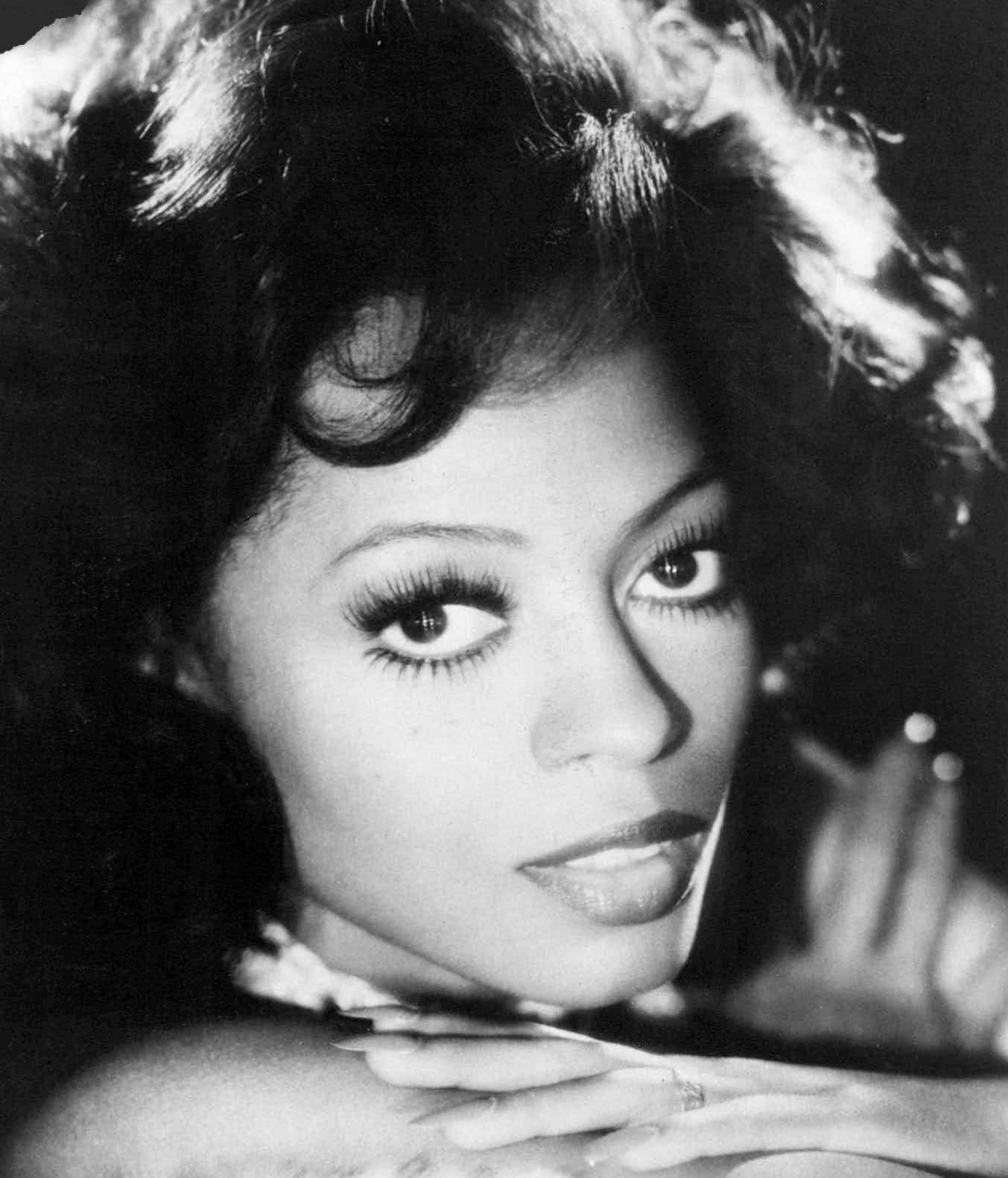
Photograph by Motown Records, public domain, via Wikimedia Commons. Source: CultureTechLens
Rights basis: public domain
Diana Ross was born on March 26, 1944, in Detroit, Michigan, and her graph record holds two honors in their exact official forms: a Special Tony Award at the Tony Awards 1977, per the official Tony Awards record — the graph's verification anchor — and the Heritage Award for Career Achievement at the Soul Train Music Awards 1995, which the graph carries as its evidence for her placement in the canon. The career those honors summarize began in 1959, when the fifteen-year-old Ross joined three school friends — Mary Wilson, Florence Ballard, and Betty McGlown — in the Primettes, the sister group to the Primes. Berry Gordy, reluctantly at first, signed them to Motown in late 1960; at his insistence the group was renamed the Supremes, and Ballard chose the new name.
Britannica's biography carries the ascent in the sequence every record agrees on. After early singles failed, "When the Lovelight Starts Shining Through His Eyes" (1963) gave the group its first Top 40 hit, and then the flood: working principally with the songwriting team Holland-Dozier-Holland, the Supremes released a run of number-one pop hits — "Where Did Our Love Go" (1964), "Baby Love" (1964), "Come See About Me" (1964), "Stop! In the Name of Love" (1965), "I Hear a Symphony" (1965), "You Can't Hurry Love" (1966), "You Keep Me Hangin' On" (1966), "Love Is Here and Now You're Gone" (1967), "Reflections" (1967), and the final number one, "Someday We'll Be Together" (1969) — twelve number-one singles in all, a total that kept the Supremes in open competition with the Beatles for the decade's chart dominance. In 1967 Gordy renamed the group Diana Ross and the Supremes, stating Ross's billing in the name; she left for a solo career in 1970.
The solo record ran on two tracks. On record, she added six more number-one pop singles of her own, among them "Ain't No Mountain High Enough" (1970), "Touch Me in the Morning" (1973), "Theme from Mahogany (Do You Know Where You're Going To)" (1975), "Love Hangover" (1976), "Upside Down" (1980), and "Endless Love" (1981), and her lifetime sales exceed 100 million records. On screen, her first film, Lady Sings the Blues (1972) — in which she played Billie Holiday — earned her an Academy Award nomination for Best Actress and a Golden Globe win, and made her, per the reference record, the first Black actress nominated for an Oscar for a debut performance; Mahogany (1975) and The Wiz (1978) followed. Billboard named her Female Entertainer of the Century in 1976, and the 1977 Special Tony recognized a stage career that the Tony record files, in its compressed official way, under her name and that year.
The honors ledger closed the century and then kept going: the Soul Train Heritage Award for Career Achievement in 1995 — this graph's second anchor — Kennedy Center Honors in 2007, the Grammy Lifetime Achievement Award in 2012 (and again, with the Supremes, in 2023), and the Presidential Medal of Freedom, the nation's highest civilian honor, in 2016. She has two stars on the Hollywood Walk of Fame, one solo and one with the Supremes. In the graph, her edges are the two honors themselves — honored by the Tony Awards 1977 and by the Soul Train Music Awards 1995 — and the record's function is canonical: the lead voice of the most successful American vocal group of the 1960s, filed with her honors stated exactly as the awarding bodies state them.
It is worth noting what the two anchors, taken together, actually certify. The 1977 Special Tony is a theatre honor for a singer whose stage work was concert work; the 1995 Soul Train Heritage Award is the Black music institution's own career verdict. Between them they plot two establishments — Broadway's and Black America's — arriving at the same conclusion about the same career, eighteen years apart.
Sources for this record
- Tony Awards winners record, 1977 (Diana Ross) — Tony Awards (tonyawards.com)
Claims supported: Master verification source: Won a Special Tony Award at the Tony Awards 1977 — per the official Tony Awards winners record. The graph also carries: Won Heritage Award for Career Achievement at the Soul Train Music Awards 1995 (Soul Train / BET award history) - Diana Ross — Encyclopaedia Britannica
Claims supported: Born March 26, 1944, in Detroit; joined the Primettes in 1959 with Mary Wilson, Florence Ballard and Betty McGlown; signed to Motown in late 1960 and renamed the Supremes at Berry Gordy's insistence, the name chosen by Ballard; first Top 40 hit 'When the Lovelight Starts Shining Through His Eyes' (1963); the Holland-Dozier-Holland number-one run of 1964–69 including 'Baby Love,' 'Stop! In the Name of Love' and 'Someday We'll Be Together'; renamed Diana Ross and the Supremes in 1967; solo career from 1970; Grammy Lifetime Achievement Award (2012); Presidential Medal of Freedom (2016) - Diana Ross — Wikipedia
Claims supported: The Supremes' twelve number-one singles; her six solo number-one singles ('Ain't No Mountain High Enough,' 'Touch Me in the Morning,' 'Theme from Mahogany,' 'Love Hangover,' 'Upside Down,' 'Endless Love'); Lady Sings the Blues (1972) Academy Award nomination and Golden Globe win, the first Black actress Oscar-nominated for a debut performance; Mahogany (1975) and The Wiz (1978); Billboard Female Entertainer of the Century (1976); more than 100 million records sold; Kennedy Center Honors (2007); Grammy Lifetime Achievement Award (2012, and with the Supremes 2023); two Hollywood Walk of Fame stars
Citations
Encyclopaedia Britannica. "Diana Ross." Encyclopaedia Britannica. Accessed October 25, 2026. https://www.britannica.com/biography/Diana-Ross.
"Diana Ross." Wikipedia. Accessed October 25, 2026. https://en.wikipedia.org/wiki/Diana_Ross.
Published October 25, 2026, from the head-verified staged record in the Entity Depth Program (Batches 004–008). Source: CultureTechLens
More person records
Browse the full directory: all entity records
Record CTL-E-5601 · CultureTechLens Knowledge Graph · evidence grade: VERIFIED · 3 sources · first published October 25, 2026, from the head-verified Entity Depth staged record CTL-P-0798 (canonical master ID — canonical merge pending the founder’s classification sitting).
Directory: all entity records · the knowledge graph
Cite this record
Chicago: CultureTechLens. “Diana Ross (CTL-E-5601).” CultureTechLens Knowledge Graph. Chicago, IL: CultureTechLens, 2026. https://culturetechlens.com/graph/entities/ctl-e-5601/
APA: CultureTechLens. (2026). Diana Ross (CTL-E-5601) [Entity record]. CultureTechLens Knowledge Graph. https://culturetechlens.com/graph/entities/ctl-e-5601/
MLA: CultureTechLens. “Diana Ross (CTL-E-5601).” CultureTechLens Knowledge Graph, 2026, https://culturetechlens.com/graph/entities/ctl-e-5601/
Citation guidance for teachers, journalists, and funders: How to Cite Us.
From the Archive
The archive in pictures
The people, places, and institutions this work documents. Photographs from the CultureTechLens research record — rights-cleared, credited, and cited like everything else here.



Trust & evidence
Evidence before authority. CultureTechLens publishes its methods, its limits, and its corrections alongside its findings. Claims carry grades — VERIFIED, SUPPORTED, PROVISIONAL, DISPUTED, UNRESOLVED — and unknowns are never reported as zero.
Every claim graded. Every source named. Every correction public — see the corrections log.