 CULTURETECHLENS
Gerri Major
VERIFIED evidence grade of this record
CULTURETECHLENS · “Culture, Clearly Seen.” · Black Cultural Intelligence
Research record
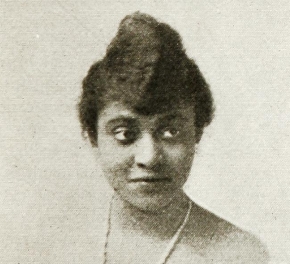
Photograph from The Crisis (July 1915), public domain, via Wikimedia Commons. Source: CultureTechLens
Rights basis: Public domain
For fifty years, the authoritative record of Black society life in America was kept by a working journalist, and the New York Public Library catalog record that verifies this entry gives her in one line: Geraldyn "Gerri" Hodges Major, who made Black society her primary journalistic beat. She was born in 1894 and died in 1984, raised and educated in Chicago, and from 1953 she worked for a quarter-century at Johnson Publishing Company — as society editor and associate editor for Ebony, then for Jet, and in 1967 as a senior staff editor of Ebony. With Mollie Moon and Doris Saunders she co-authored Black Society, published by Johnson Publishing in 1976, and her column "Gerri Major's Society World" ran in Jet for decades; she arrived at the office to file her final column at age ninety, days before she died.
The career began earlier than Johnson Publishing. The reference record places her as a society editor at the Pittsburgh Courier's New York office in 1925 and as editor and publisher of "The Four Hundred" listing in 1930, with earlier work attached to the Amsterdam News and a run of Black newspapers — the NYPL summary names the Amsterdam News among them — before the Johnson years. The nickname attached to her, "Gerri-Go-Round," and the University of Chicago Magazine's description of her as a jetsetter before there were jets, capture the working reality behind the beat: she traveled the circuit of Black social life — debutante balls, charity galas, clubwomen's conventions, weddings, funerals — and reported it as news, with the discipline of a wire desk. Society editing, in her hands, was documentation: births into and marriages across the Black professional class, the organizations they founded, the money they raised, and the standards they set.
Black Society, the book she made with Mollie Moon — founder of the National Urban League Guild and wife of NAACP leader Henry Lee Moon — and Doris Saunders, drew on that lifetime of columns. Its premise, stated in the book and quoted in the magazine profile, is that society editors hold a unique archive: "There is little about the state of the black nation-within-a-nation that society editors don't know" — a claim for the column as a primary source on Black institutional life. Her public service ran alongside the journalism; the reference record credits her as chair of the program committee responsible for African American participation in the American Common section of the 1939 New York World's Fair.
In the CultureTechLens graph, Major's two edges link her to Once Upon a Time in Harlem as a filmed party guest of 1972 and to the Harlem Renaissance Reunion Party event record of the same year — graph links stated here as such; she would have been in her late seventies at that filming, a society editor still filing, which the graph's own account of that gathering supports by her presence among its named Harlem Renaissance-era figures. Her NYPL catalog record stands as the verification spine for a simple reason: the institution that archives Black print culture catalogs her papers and her book, and describes her beat in the flat language of a catalog — Black society, primary beat — which is exactly the description of a fifty-year documentary practice. CultureTechLens carries her as a person record on that basis: not a socialite, but the society page's historian, whose columns and whose 1976 book remain working sources on the Black social world she covered. Her own house closed the record the way she would have: Jet, the magazine she served for a quarter-century, carried her obituary in 1984, and the University of Chicago Magazine profile that preserves the "Gerri-Go-Round" nickname also preserves the manner of her working life — a society editor still traveling her circuit and still filing, at ninety, days before her death.
Sources for this record
- Black Society — Catalog Record (Major, Geraldyn Hodges) — New York Public Library
Claims supported: Master verification source: Geraldyn 'Gerri' Hodges Major (1894–1984), American journalist; 'Black society was Major's primary journalistic beat'; wrote for the Amsterdam News and other Black newspapers; for 25 years from 1953 at Johnson Publishing Company as society editor and associate editor for Ebony and then Jet; senior staff editor of Ebony in 1967; co-author, with Mollie Moon and Doris Saunders, of Black Society (Johnson Publishing, 1976). - Gerri Major — Wikipedia
Claims supported: Society editor at the Pittsburgh Courier's New York office in 1925; editor and publisher of 'The Four Hundred' (1930); chair of the program committee for African American participation in the American Common section of the 1939 New York World's Fair. - Gerri Major's Society World — Columnist Profile and Black Society Coverage — University of Chicago Magazine
Claims supported: Weekly column 'Gerri Major's Society World'; nicknamed 'Gerri-Go-Round'; described as a 'jetsetter' before there were jets; the Black Society (1976) line: 'There is little about the state of the black nation-within-a-nation that society editors don't know'; filed her final column at age 90, days before her death; Jet obituary.
Citations
Wikipedia. "Gerri Major." Accessed October 25, 2026. https://en.wikipedia.org/wiki/Gerri_Major.
University of Chicago Magazine. "Gerri Major's Society World." Accessed October 25, 2026. https://mag.uchicago.edu/taxonomy/term/351/feed.
Published October 25, 2026, from the head-verified staged record in the Entity Depth Program (Batches 004–008). Source: CultureTechLens
More person records
Browse the full directory: all entity records
Record CTL-E-5609 · CultureTechLens Knowledge Graph · evidence grade: VERIFIED · 3 sources · first published October 25, 2026, from the head-verified Entity Depth staged record CTL-P-1380 (canonical master ID — canonical merge pending the founder’s classification sitting).
Directory: all entity records · the knowledge graph
Cite this record
Chicago: CultureTechLens. “Gerri Major (CTL-E-5609).” CultureTechLens Knowledge Graph. Chicago, IL: CultureTechLens, 2026. https://culturetechlens.com/graph/entities/ctl-e-5609/
APA: CultureTechLens. (2026). Gerri Major (CTL-E-5609) [Entity record]. CultureTechLens Knowledge Graph. https://culturetechlens.com/graph/entities/ctl-e-5609/
MLA: CultureTechLens. “Gerri Major (CTL-E-5609).” CultureTechLens Knowledge Graph, 2026, https://culturetechlens.com/graph/entities/ctl-e-5609/
Citation guidance for teachers, journalists, and funders: How to Cite Us.
From the Archive
The archive in pictures
The people, places, and institutions this work documents. Photographs from the CultureTechLens research record — rights-cleared, credited, and cited like everything else here.



Trust & evidence
Evidence before authority. CultureTechLens publishes its methods, its limits, and its corrections alongside its findings. Claims carry grades — VERIFIED, SUPPORTED, PROVISIONAL, DISPUTED, UNRESOLVED — and unknowns are never reported as zero.
Every claim graded. Every source named. Every correction public — see the corrections log.