 CULTURETECHLENS
Harry Belafonte
VERIFIED evidence grade of this record
CULTURETECHLENS · “Culture, Clearly Seen.” · Black Cultural Intelligence
Research record
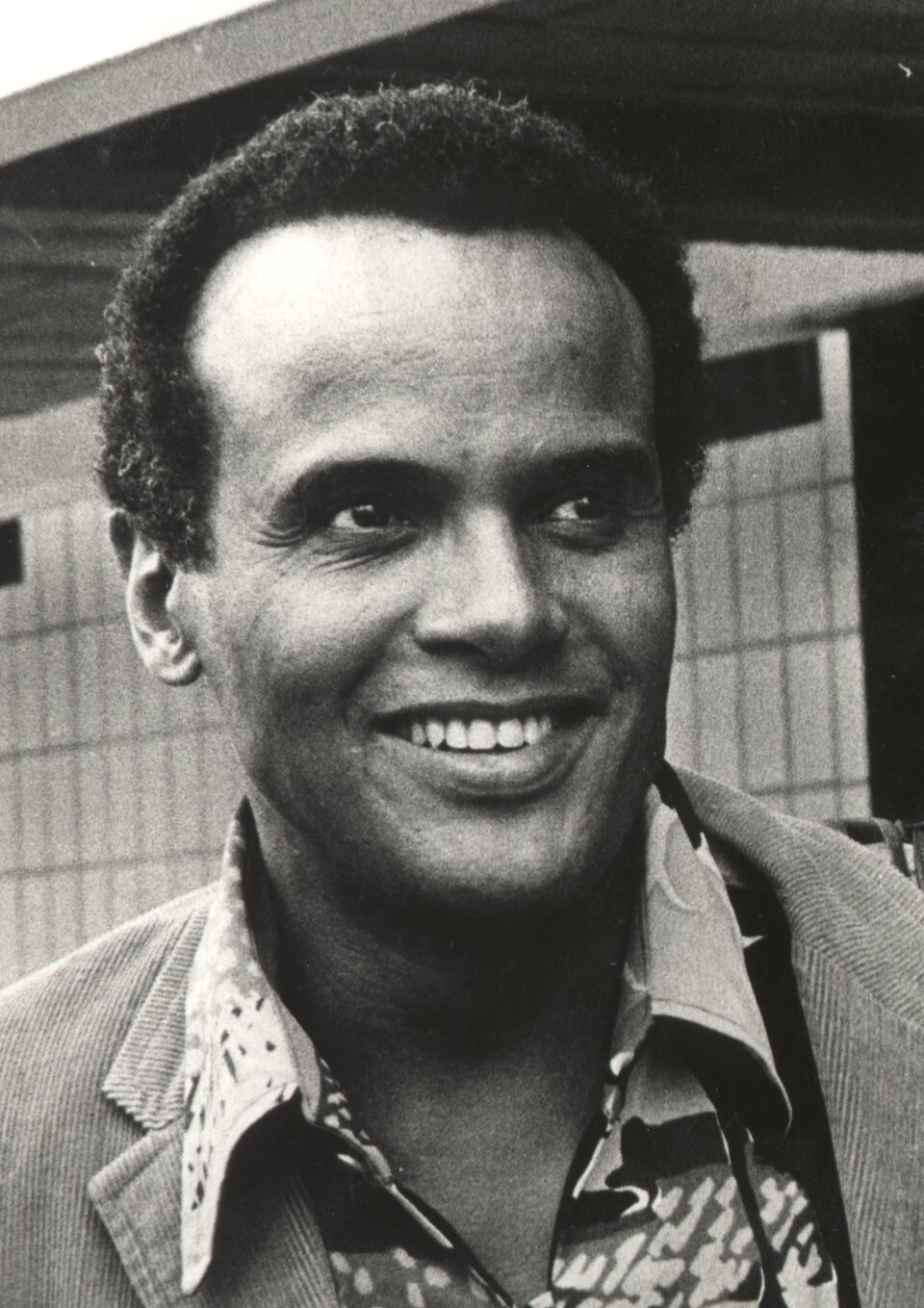
Photo: Unknown author, Public domain, via Wikimedia Commons · Source: CultureTechLens
Rights basis: Public domain
Harry Belafonte (March 1, 1927 – April 25, 2023) lived the double career that this graph's own summary of him states in one line: singer, actor, civil rights activist; King of Calypso; the first Black Emmy winner. The graph's verification for the entry is his 1954 Tony Award — Best Performance by an Actor in a Featured Role in a Musical, for John Murray Anderson's Almanac, per the official Tony Awards record — and that early stage honor is a useful anchor, because Belafonte's fame is so large that records about him tend to dissolve into superlatives. This entry keeps the sequence dated and the claims sourced, in keeping with the program's rule.
Born Harold George Bellanfanti Jr. in Harlem to Caribbean immigrant parents, he spent part of his childhood in Jamaica, served in the United States Navy during the Second World War, and studied acting at the New School's Dramatic Workshop alongside Sidney Poitier, with whom his career would remain intertwined. He began as a pop singer, turned to folk material, and in 1956 released Calypso, the album that made him an international figure: the first LP by a single artist to sell a million copies, carrying "Day-O (The Banana Boat Song)," "Jamaica Farewell," and "Mary's Boy Child" into the world's repertoire. The "King of Calypso" title the graph carries comes from that moment, though Belafonte himself spent later years pointing out the music's roots and his own role as its popularizer rather than its inventor.
His screen career ran in parallel: Carmen Jones (1954), Island in the Sun (1957), Odds Against Tomorrow (1959) — a noir he produced through his own company, HarBel, founded to force the industry to make pictures it would not otherwise finance — and, later, Buck and the Preacher (1972) and Uptown Saturday Night (1974) with Poitier, and a final appearance in Spike Lee's BlacKkKlansman (2018), in this graph's director's filmography. On television, Tonight with Harry Belafonte brought him the 1960 Emmy that the graph's summary records as a first for a Black performer.
The activism was not a sideline but a structure. Belafonte was a close confidant of Martin Luther King Jr., financed movement travel, posted bail — including King's in Birmingham in 1963 — helped organize the celebrity presence at the 1963 March on Washington, supported SNCC, and carried the movement's case to the entertainment industry whose doors he had personally forced. Paul Robeson, whom he counted a mentor, supplied the model: the artist as citizen, at personal cost. Later decades extended the same posture — anti-apartheid organizing, UNICEF goodwill ambassadorship from 1987, the USA for Africa effort behind "We Are the World," and outspoken criticism of American administrations into his nineties. The honors followed the same double track: Kennedy Center Honors in 1989, the National Medal of Arts in 1994, the Jean Hersholt Humanitarian Award in 2014 — the non-competitive Oscar that makes him one of the few EGOT holders, with the Oscar's humanitarian form stated precisely — and induction into the Rock and Roll Hall of Fame in 2022. He died in New York in 2023, aged ninety-six, the graph's 1927–2023 dates closing over a career this entry can only outline.
The concert record supplies the missing middle of the career. Belafonte's live albums from Carnegie Hall — the 1959 concert album Belafonte at Carnegie Hall above all — were landmarks of the early LP era, proof that a Black artist's concert program, folk songs and spirituals and calypso together, could anchor the catalog of a major label; the Carnegie Hall album spent years on the charts and entered the Grammy Hall of Fame. His production company HarBel, formed in the 1950s, made him one of the first Black performers to own a piece of his own film production, financing work — Odds Against Tomorrow among it — that the studios' own ledgers would not carry. Ownership, again, is the through-line this archive keeps finding: the singer who would not only perform the material but capitalize its making, in an industry that preferred him as labor.
Sources for this record
- Winners — 1954 (official Tony Awards winners record) — The Tony Awards (American Theatre Wing)
Claims supported: Belafonte's 1954 Tony Award for Best Performance by an Actor in a Featured Role in a Musical; the graph's master verification source for this record. - Harry Belafonte — Wikipedia
Claims supported: The full biography: Harlem birth and Jamaica childhood, Calypso as the first million-selling LP by a single artist, the filmography, the King relationship and movement work, the honors including the Hersholt Award's non-competitive form, and the April 25, 2023 death.
Citations
"Harry Belafonte." Wikipedia. Accessed October 25, 2026. https://en.wikipedia.org/wiki/Harry_Belafonte.
Published October 25, 2026, from the head-verified staged record in the Entity Depth Program (Batches 004–008). Source: CultureTechLens
More person records
Browse the full directory: all entity records
Record CTL-E-5610 · CultureTechLens Knowledge Graph · evidence grade: VERIFIED · 2 sources · first published October 25, 2026, from the head-verified Entity Depth staged record CTL-P-0823 (canonical master ID — canonical merge pending the founder’s classification sitting).
Directory: all entity records · the knowledge graph
Cite this record
Chicago: CultureTechLens. “Harry Belafonte (CTL-E-5610).” CultureTechLens Knowledge Graph. Chicago, IL: CultureTechLens, 2026. https://culturetechlens.com/graph/entities/ctl-e-5610/
APA: CultureTechLens. (2026). Harry Belafonte (CTL-E-5610) [Entity record]. CultureTechLens Knowledge Graph. https://culturetechlens.com/graph/entities/ctl-e-5610/
MLA: CultureTechLens. “Harry Belafonte (CTL-E-5610).” CultureTechLens Knowledge Graph, 2026, https://culturetechlens.com/graph/entities/ctl-e-5610/
Citation guidance for teachers, journalists, and funders: How to Cite Us.
From the Archive
The archive in pictures
The people, places, and institutions this work documents. Photographs from the CultureTechLens research record — rights-cleared, credited, and cited like everything else here.



Trust & evidence
Evidence before authority. CultureTechLens publishes its methods, its limits, and its corrections alongside its findings. Claims carry grades — VERIFIED, SUPPORTED, PROVISIONAL, DISPUTED, UNRESOLVED — and unknowns are never reported as zero.
Every claim graded. Every source named. Every correction public — see the corrections log.